
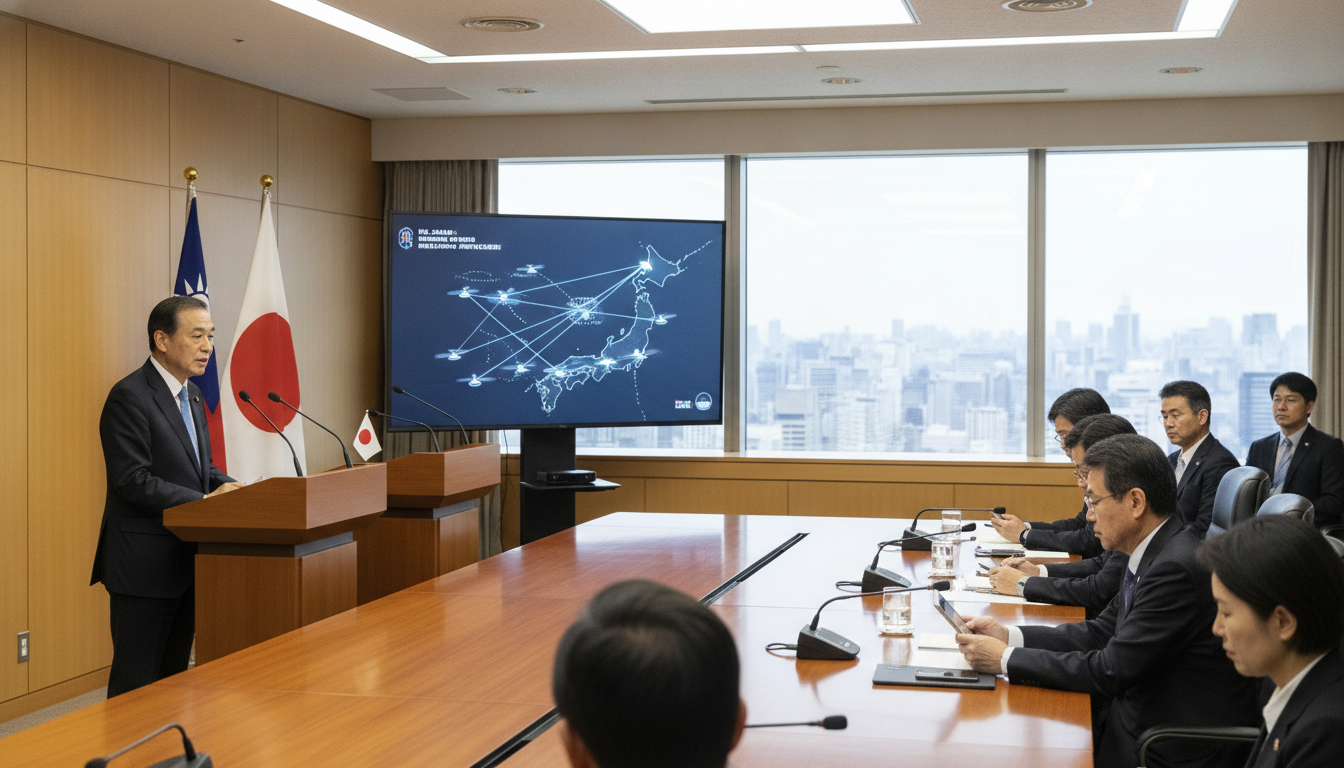
Japan-Taiwan drone cooperation urged as industry chief calls for harmonized rules
Industry chief urges Japan-Taiwan drone cooperation, calling for harmonized regulations and eased defense cooperation rules as business ties deepen further.
Japan-Taiwan drone cooperation was urged by the head of a prominent Japanese industry association during an interview in Taichung, where he said Tokyo should align its drone rules with Taiwan and relax limits on defense-related cooperation.
The official’s remarks come amid growing commercial links and technology exchanges between Japanese and Taiwanese firms in unmanned systems.
Industry Chief Calls for Harmonized Drone Regulations
The industry association chief said harmonized drone regulations would remove barriers to investment, testing and supply-chain integration between Japan and Taiwan.
He argued that consistent rules on certification, airspace access and export controls are essential for businesses to scale production and for civil and dual-use technologies to be developed responsibly.
Interview Took Place in Taichung Amid Regional Tech Talks
The comments were made during a sit-down interview in Taichung, where Japanese and Taiwanese industrial cooperation has been expanding in areas such as robotics and avionics.
The official told reporters that current Japanese restrictions on certain forms of defense cooperation with Taiwan should be reviewed to reflect stronger commercial and technological ties.
Taiwan Exhibits Drone Technology at Japan Drone 2026
Taiwan’s drone industry has been visible at recent regional events, including a booth that showcased Taiwanese systems at the Japan Drone 2026 and International Advanced Air Mobility Expo in Chiba on June 5.
A Reuters photograph of the event captured the scale of Taiwanese participation, underscoring why industry leaders are pressing for regulatory alignment to support cross-border demonstration and procurement.
Business Links Increasing Faster Than Policy Change
Japanese and Taiwanese firms have deepened supply-chain relationships for semiconductors, sensors and components used in unmanned aircraft, creating practical needs for shared technical standards.
Industry representatives say the pace of commercial integration outstrips the tempo of government policymaking, leaving companies exposed to uncertainty over certification, export licensing and liability frameworks.
Calls to Amend Japan’s Defense Cooperation Rules
The association chief recommended that Tokyo consider clarifying or easing rules that limit certain forms of collaboration with Taiwan where activities are civilian or dual-use rather than clearly military.
He emphasized that legal safeguards and oversight mechanisms could allow for responsible cooperation without undermining Japan’s broader security policies.
Security Sensitivities and Diplomatic Balancing
Any move to adjust cooperation with Taiwan will require Tokyo to manage diplomatic sensitivities, particularly with Beijing, which views enhanced ties with the island through a strategic lens.
Officials and analysts note that changes will likely be incremental, tied to clear legal definitions, export-control safeguards and coordination with allied partners to reduce escalation risks.
The industry leader’s appeal reflects a wider debate in Tokyo about how to support domestic industries, maintain supply-chain resilience and respond to regional technological competition.
As Japanese and Taiwanese companies press for smoother regulatory pathways, policymakers will face pressure to reconcile economic opportunities with complex security considerations, and businesses will watch closely for concrete policy shifts.

