
Japan to Launch e-Waste Collection Pilot Using Local Delivery Firms
Government pilot to expand e-waste collection by smaller ground transport companies, aiming to boost rare-metal recycling and secure supplies for industry.
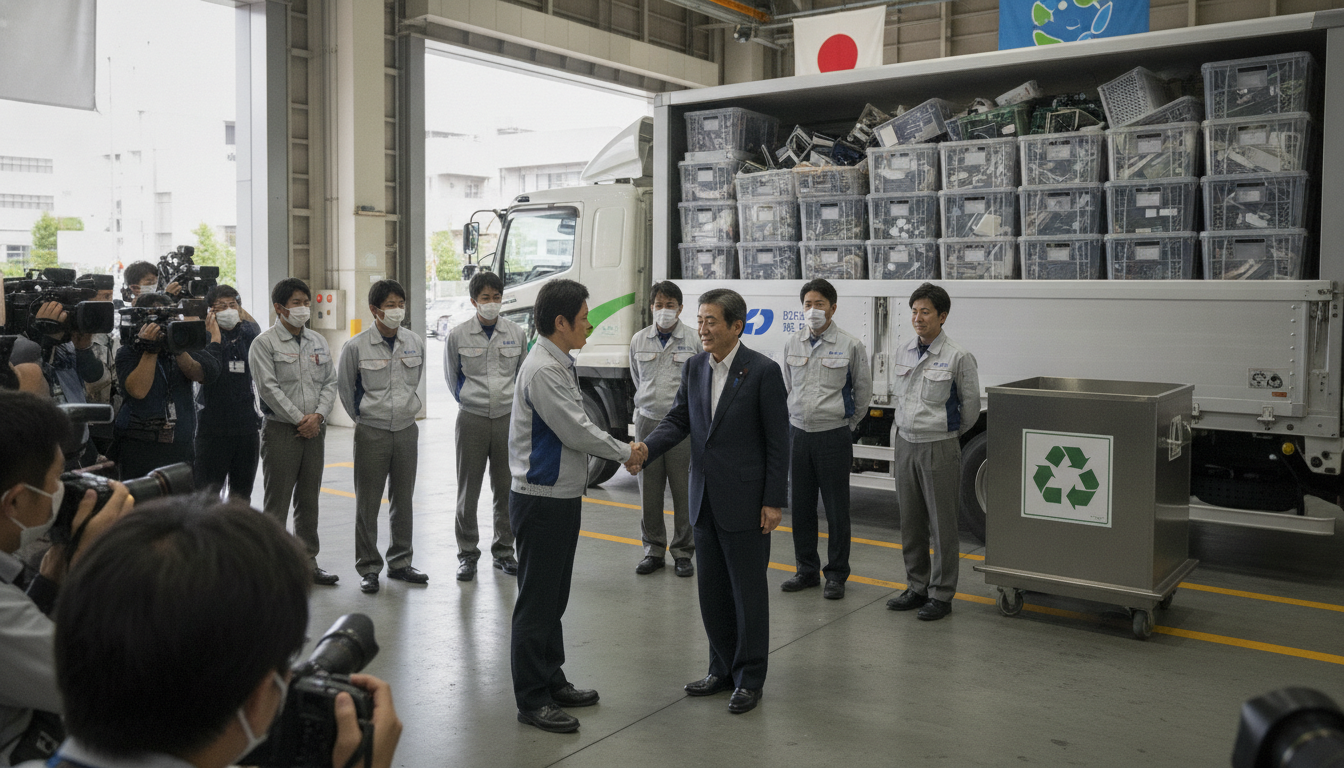
The Japanese government will launch an e-waste collection pilot that enlists smaller ground transport companies to pick up discarded electronic devices for rare-metal recycling. The e-waste collection pilot is intended to broaden collection networks beyond large recyclers and leverage last-mile delivery firms to increase recovery rates. Yamato Transport will be one of five companies overseeing the pilot, reflecting a shift toward using logistics providers in circular-economy efforts.
Government initiative and objectives
The pilot is part of a wider government drive to recycle rare metals contained in consumer electronics and to reduce reliance on imported critical minerals. Officials say improving domestic recovery of materials such as gold, palladium and rare-earth elements will strengthen supply chains for high-tech and automotive sectors. The program also aims to create more efficient, traceable channels for household and small-business e-waste to reach certified recycling facilities.
Expanded role for delivery and ground transport firms
Under the plan, smaller ground transport companies that were previously restricted from handling certain types of waste will be permitted to participate in collection and consolidation. Delivery companies will collect items from homes and offices and transfer them to processing hubs managed by the pilot’s partner recyclers. Yamato Transport’s involvement signals a prominent logistics player taking on an oversight role while local carriers handle much of the door-to-door work.
Regulatory easing and operational safeguards
Regulatory adjustments have eased constraints that limited non-specialist carriers from handling electronic waste, while introducing safeguards on handling, storage and transport. Participating firms will be required to follow standardized labeling, data-wiping protocols for devices containing storage media, and chain-of-custody documentation to ensure materials reach approved recyclers. The government has emphasized compliance with environmental and data-protection rules to prevent illegal dumping and information breaches.
Collection methods and logistics design
The pilot will test a mix of collection methods, including scheduled pickup by parcel drivers, drop-off points at local distribution centers, and special collection drives coordinated with municipal waste programs. Organizers expect the last-mile delivery network to increase convenience for households and small businesses that do not currently separate or transport e-waste to specialized centers. Collected items will be sorted by type and condition before being forwarded to processors that extract metals through mechanical and chemical recovery processes.
Industry aims and recycling targets
Authorities and industry stakeholders say the program seeks measurable gains in material recovery rates and reduced landfill disposal of electronics. The pilot will track volumes of recovered metals and the proportion of devices successfully routed to certified recyclers, providing data to shape national recycling targets. Supporters argue that improving domestic recycling capacity can reduce raw-material import costs and insulate manufacturers from global supply shocks.
Challenges and quality-control concerns
Experts caution the pilot will need to manage contamination, improper disassembly and the varied composition of modern electronics, which complicate efficient metal recovery. Ensuring delivery firms adhere to handling protocols and that recovered streams are free from hazardous components will be essential to safeguard workers and downstream processes. Extending training, auditing and clear incentives for carriers will be critical to maintaining quality and avoiding waste diversion to unregulated facilities.
Potential economic and environmental impacts
If successful, the e-waste collection pilot could lower the environmental footprint of consumer electronics by increasing material recirculation and cutting emissions associated with long-distance transport of scrap. The initiative may also create new revenue streams for logistics firms and recyclers through material resale and value-added service fees. Observers say the pilot could set a model for integrating private delivery networks into national circular-economy strategies.
The pilot’s outcomes will inform whether the government scales the program nationwide and how rules are adjusted to balance accessibility, safety and economic viability.

