
Japan Meteorological Agency Warns of Imminent Linear Precipitation Zone over Northern Saga
JMA warns of an imminent linear precipitation zone over northern Saga. Residents should follow evacuation orders and prepare for life‑threatening heavy rain.
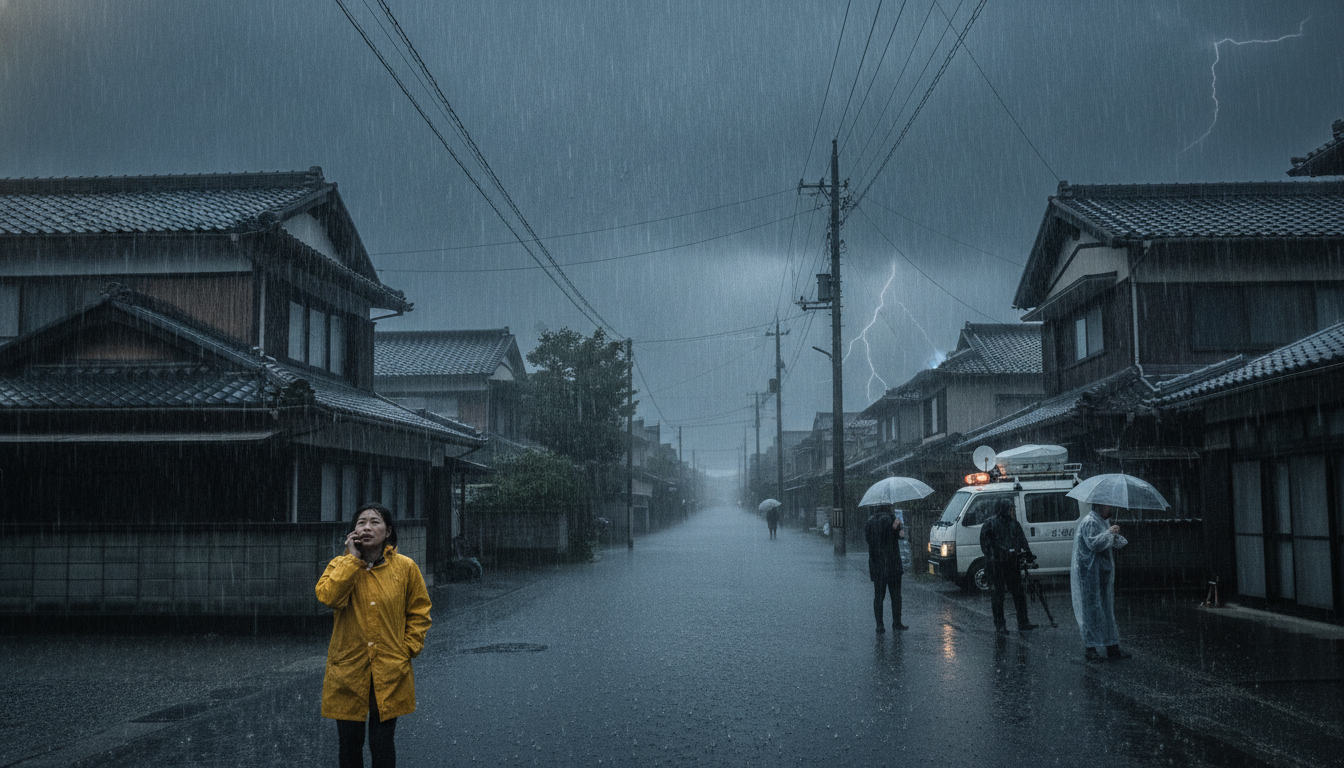
The Japan Meteorological Agency (JMA) issued a weather emergency at 10:19 p.m., warning that a linear precipitation zone is likely to form over northern Saga within the next three hours. The agency said the developing band of intense thunderstorms could bring extremely heavy, concentrated rainfall and sharply elevate the risk of floods and landslides. Local governments and emergency services were urged to relay evacuation information to residents, and people near rivers and steep slopes were asked to monitor conditions closely.
Alert Issued for Northern Saga
The JMA released a "pre‑linear precipitation zone" advisory specifically for northern parts of Saga Prefecture, citing strong convective activity and organized thunderclouds. The advisory indicates a high probability that those storm cells will align to form a sustained rain band capable of producing prolonged downpours. Officials warned that once such a band establishes, rainfall rates can exceed levels typically seen in ordinary showers or thunderstorms.
Immediate Risks: Flooding and Landslides
Authorities emphasized that very heavy rain in a concentrated area raises the immediate threat of flash flooding in low‑lying neighborhoods and river basins. The JMA highlighted the elevated danger of landslides where slopes have been saturated from previous rainfall or where soil conditions are unstable. Emergency services cautioned that both rapid inundation and slope failure can pose direct risks to life, emphasizing the need for swift response to evacuation directives.
Areas Most at Risk and Timing
The advisory named northern Saga as the primary area of concern and specified the heightened likelihood of formation within three hours of the announcement. Rivers, streams, and coastal estuaries in the affected zone are particularly vulnerable to sudden rises in water level, and district roads that follow river valleys may be cut by fast‑moving floodwaters. Residents living close to cliffs, embankments, or narrow valleys were singled out as needing to assess their immediate safety and consider relocation to higher ground if instructed.
Guidance from Local Authorities and JMA
Both the JMA and municipal governments urged residents to follow official evacuation information issued by local authorities and to keep tuned to public broadcasts, emergency alerts, and local municipal channels. People were asked to check the situation around them—such as rapidly rising water, unusual sounds from slopes, or blocked drainage—and to evacuate without delay when advised. Those responsible for others, including elderly family members or people with limited mobility, were advised to make assistance plans in advance and act sooner rather than later.
What a Linear Precipitation Zone Is
A linear precipitation zone, often formed when multiple thunderstorms align and feed off the same atmospheric energy, can produce very concentrated rainfall over a narrow corridor for several hours. This phenomenon differs from scattered showers because it maintains organized convection along a band, allowing intense downpours to persist over the same locations. The JMA noted that such bands are capable of triggering sudden hazards even where overall regional rainfall totals may appear moderate.
Preparation Steps for Residents
Practical preparations include gathering essential items—medications, important documents, a battery‑powered radio, water, and mobile chargers—and moving them to higher shelves or to a safe, elevated location. Residents should avoid riverbanks, steep embankments, and drainage channels, and refrain from travel unless necessary, as roads may become impassable or dangerous in a short time. Following local evacuation orders promptly and using designated evacuation centers or higher ground is the most effective way to reduce risk.
Local officials and the JMA reiterated that conditions can change rapidly once a linear precipitation zone forms, and urged residents to stay alert to successive advisories and instructions from authorities. Taking immediate protective actions and heeding evacuation guidance are the best ways to protect life and property while emergency services monitor and respond to developing conditions.

