
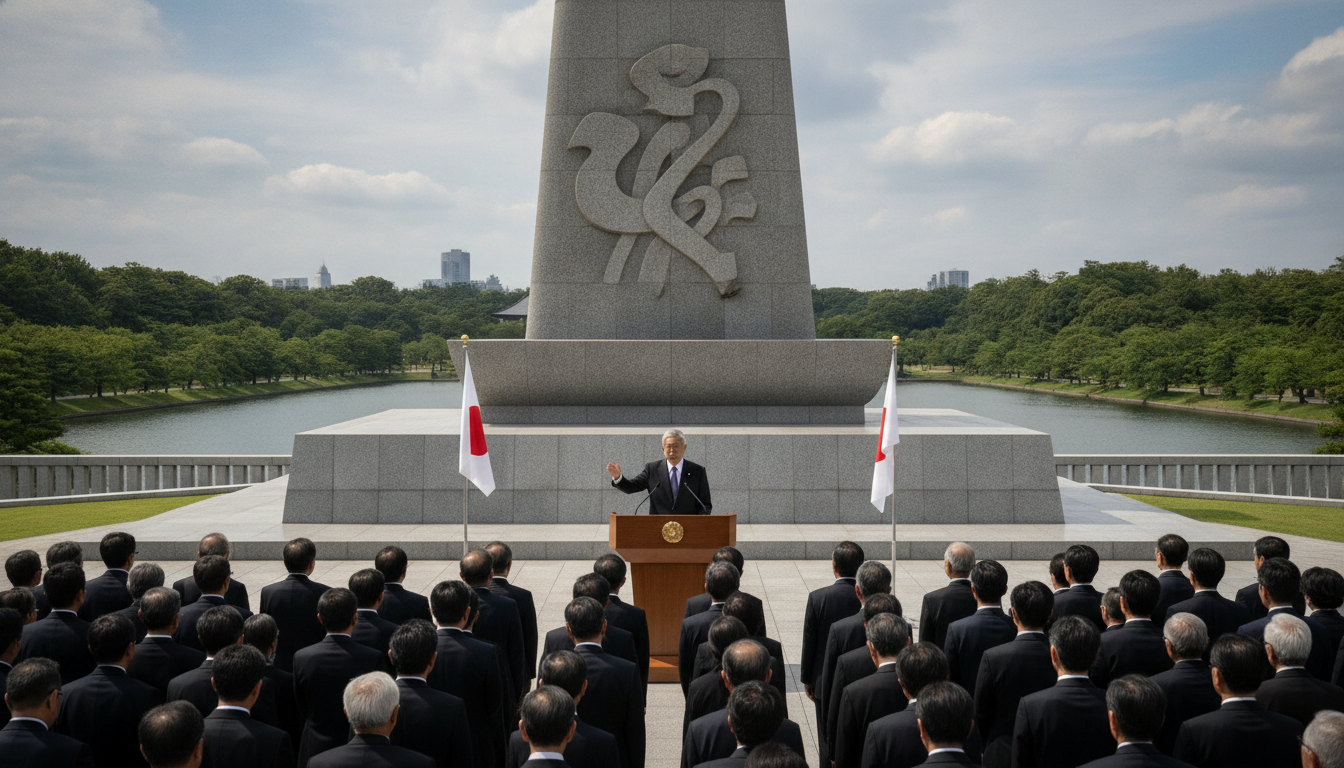
Takaichi’s speech at memorial sidesteps "reflection," highlights a stronger Japan
Prime Minister Takaichi’s speech at the Aug. 15 national memorial avoided the customary language of "reflection" and "no war" pledges, instead stressing a vision of a stronger, more assertive Japan on the international stage.
Takaichi’s speech at the national memorial
Prime Minister Takaichi delivered the government-hosted address at Tokyo’s Nippon Budokan on August 15, framing Japan as a reliable partner and a “shining lighthouse” in the Indo-Pacific. The speech emphasized Japan’s capacity to contribute to solutions for global challenges and to be a country others can depend on. Notably, the address did not include the words typically interpreted as an explicit apology or a binding pledge against future war. That omission marked a clear rhetorical choice and set the tone for reaction across politics and society.
Omission of ‘reflection’ and ‘no war’ wording
For decades, many postwar prime ministers have used language expressing “deep reflection” over wartime actions and affirmations of a commitment to peace. In contrast, Takaichi’s address refrained from that phrasing, substituting language that stressed resilience and national strength. Observers noted the absence of terms that have traditionally been read as acknowledgments of wartime responsibility. The change in wording is likely to be read both domestically and internationally as a deliberate shift in emphasis.
The speech’s wording and nuance
Takaichi inserted a line pledging to prevent the recurrence of wartime calamities, but the exact verb choice differed from past formulas and drew attention for its nuance. Officials close to the administration framed the change as reflecting a preference for active prevention over literal expressions of contrition. That linguistic distinction—between affirming non-repetition and invoking formal “reflection”—has become a focal point for analysts tracking shifts in official postwar rhetoric. The subtlety of phrasing means reactions will turn on how audiences interpret both words and omissions.
Alignment with conservative precedent
Commentators and some ruling party lawmakers described the speech as consistent with a conservative approach that downplays language seen as self-critical. Takaichi has previously voiced skepticism about generational responsibility for wartime actions, and her address resonated with those views by emphasizing national dignity and strength. A number of senior conservative figures have long argued that expressions suggesting collective culpability undermine public confidence. The speech thus reinforced a line of thinking within the party that favors projecting a robust national posture.
Contrast with past prime ministerial addresses
The memorial address tradition has included markedly different tones in recent decades. In the early 1990s, leaders included explicit condolences and expressions of deep remorse for the suffering caused by Japan’s wartime conduct. Subsequent administrations often retained references to reflection and a vow to avoid future wars. Over time, however, language has evolved with each cabinet, and Takaichi’s address represents a departure from the phrasing that became customary after those earlier declarations. The shift highlights how wording at symbolic ceremonies can signal broader changes in historical interpretation and policy orientation.
Reactions from opposition and civil groups
Opposition parties and some civic organizations criticized the omission, arguing that explicit reflection remains essential to rebuilding trust with neighbors and preserving the postwar peace commitment. Critics said that ritualized language matters not only for domestic politics but also for diplomatic relations with countries that suffered under Japan’s wartime actions. Supporters of the prime minister countered that projecting strength and offering concrete cooperation on regional security and humanitarian issues better serves both national interest and international contribution. The exchange underscores the political sensitivity of memorial language in Japan’s contemporary debate.
The rhetorical choices in Takaichi’s speech on Aug. 15 are likely to reverberate beyond the memorial hall, shaping political discourse in the months ahead. How the administration balances emphasis on national resilience with the expectations of wartime victims and regional partners will be a key measure of its diplomatic and domestic strategy. The wording used at state ceremonies has become a barometer for broader shifts in Japan’s postwar narrative and for debates about how the country presents itself to a changing regional order.

