
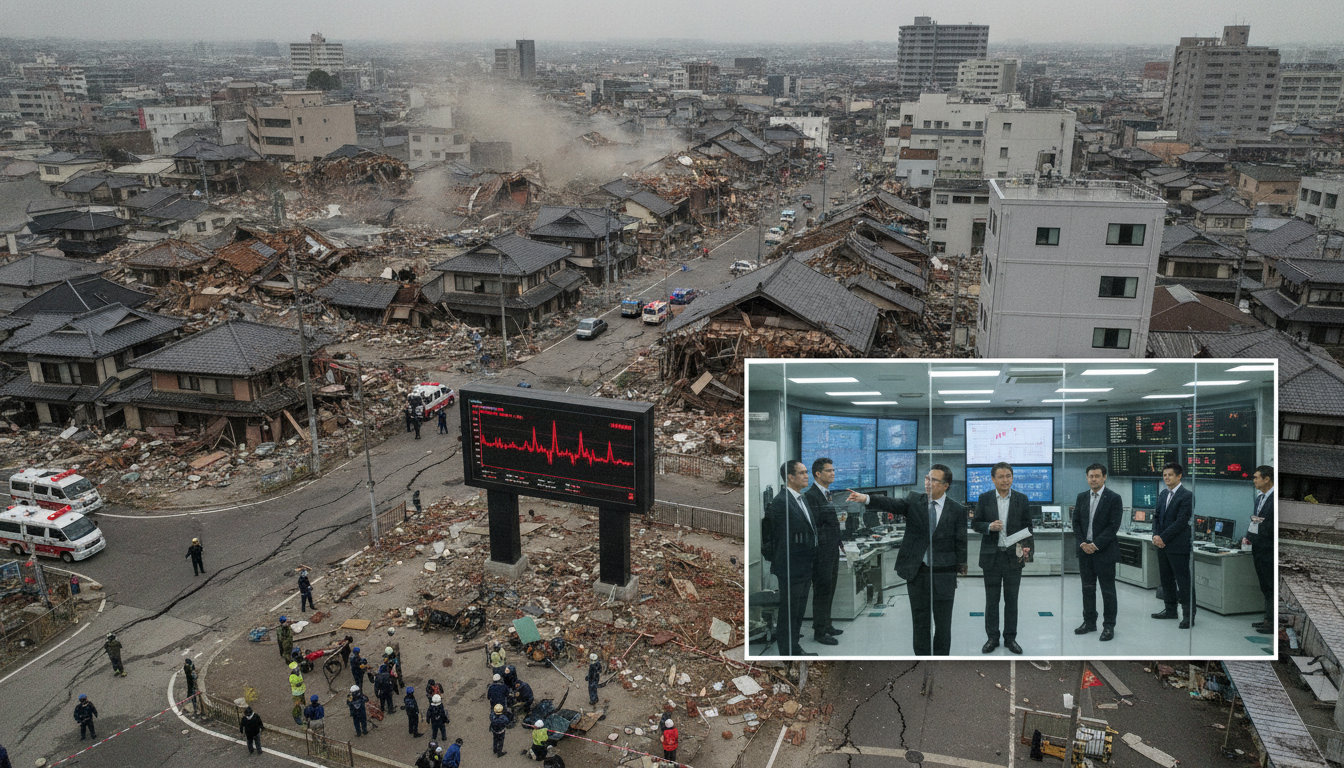
Kumamoto earthquake: Magnitude 7.1 quake registers maximum intensity 7 in Kyushu
Kumamoto earthquake: A magnitude 7.1 quake struck Kyushu on July 28, 2026, registering intensity 7. Authorities and TSMC are assessing impact across Kyushu.
A powerful Kumamoto earthquake struck Japan’s southwestern prefecture of Kumamoto on the afternoon of July 28, 2026, registering the highest level of 7 on the Japan Meteorological Agency’s seismic intensity scale. The Japan Meteorological Agency (JMA) recorded the main shock at 4:35 p.m. local time, followed four minutes later by a magnitude 4.5 tremor. Officials warned residents to remain alert as assessments and emergency checks began across affected communities. Initial statements from corporate and public agencies indicate a rapid mobilization to determine damage and ensure safety.
Magnitude 7.1 Earthquake Strikes Kumamoto
The Japan Meteorological Agency reported the main quake measured magnitude 7.1 and produced the maximum seismic intensity of 7 in parts of Kumamoto prefecture. The intensity 7 reading denotes extremely strong ground shaking capable of causing severe damage to buildings and infrastructure. The second recorded tremor, magnitude 4.5, occurred at 4:39 p.m. and was recorded as an immediate aftershock by the JMA. Authorities have emphasized that official data remain preliminary as on-the-ground surveys continue.
Immediate Seismic Data and Timeline
According to the JMA, the initial rupture was recorded at 4:35 p.m. on July 28, 2026, with seismic waves propagating across western Kyushu. The agency’s bulletin provided magnitude and intensity figures and advised local governments to commence emergency protocols. Telecommunications and monitoring systems transmitted data to municipal disaster response centers to coordinate early checks. Local officials have been relying on the JMA’s updates to prioritize search, rescue, and infrastructure inspections.
Potential Impact on Kyushu Semiconductor Hub
Kumamoto prefecture lies on Kyushu island, a region that hosts significant manufacturing activity, including a production hub for Taiwan Semiconductor Manufacturing Co. (TSMC). A TSMC spokesperson told Kyodo News the company is currently assessing its facilities and personnel following the quake. Industry observers noted that any prolonged disruption to production sites in Kyushu could affect supply chains, although company-led assessments will determine the scale of operational impact. Infrastructure inspections at industrial parks and transport links are being treated as a priority to establish whether manufacturing can continue safely.
2016 Kumamoto Quakes and Damage Memory
Kumamoto was devastated by a series of major earthquakes in April 2016 that resulted in nearly 300 deaths and widespread damage to homes, roads, and public utilities. That history has informed local preparedness measures and emergency planning in the prefecture, and officials cite the 2016 events as a reason for swift mobilization. Emergency response teams and municipal authorities have previously maintained protocols for rapid building inspections and temporary sheltering after strong quakes. Residents and local leaders have urged calm while recalling lessons learned from the earlier disaster.
Emergency Response and Assessments Underway
Local governments in Kumamoto mobilized emergency services and disaster response units to begin preliminary checks of critical infrastructure and vulnerable communities. Fire departments, municipal staff, and regional authorities have been coordinating via established disaster management channels. Public advisories have focused on immediate safety: avoiding damaged structures, checking for gas leaks, and following official instructions. Relief organizations and welfare offices are standing ready to provide support should evacuations or sheltering be required.
In the hours following the quake, transportation authorities and utility companies began assessing operations to identify service interruptions and structural damage. Rail and road operators typically conduct rapid inspections after high-intensity tremors, and similar procedures have been initiated in the affected zones. Utility firms will prioritize restoring services where outages are reported and will communicate repair timelines once damage assessments are complete.
Japan’s Meteorological Agency continues to monitor seismic activity and provide updates on aftershocks and seismic risk in the region. Local leaders have asked residents to heed official communications and to report damage to municipal hotlines. Companies with employees and facilities in Kumamoto and surrounding prefectures have been advised to confirm staff safety and report operational status to relevant authorities.
The situation remains fluid as teams complete damage surveys and companies finalise their facility checks, and authorities will release further information as verified assessments are completed.

