
Three-day food stock proves insufficient at Kumamoto nursing home after quake
Kumamoto nursing home Suishouen faced depleted three-day food stock after a July 28 quake, forcing rationing and emergency measures for residents and staff.
The special nursing home Suishouen in Toyono, Uki City, Kumamoto Prefecture, found its three-day food stock running dangerously low within a day of the July 28 earthquake. The facility’s deputy director, Masumi Yamashita, said water and food reserves had nearly run out by noon the day after the quake, leaving staff scrambling to maintain care. The episode has highlighted strains on the standard three-day emergency stock guideline for facilities that serve large numbers of vulnerable residents.
Quake at 4:27 p.m. overturned cookware and cut utilities
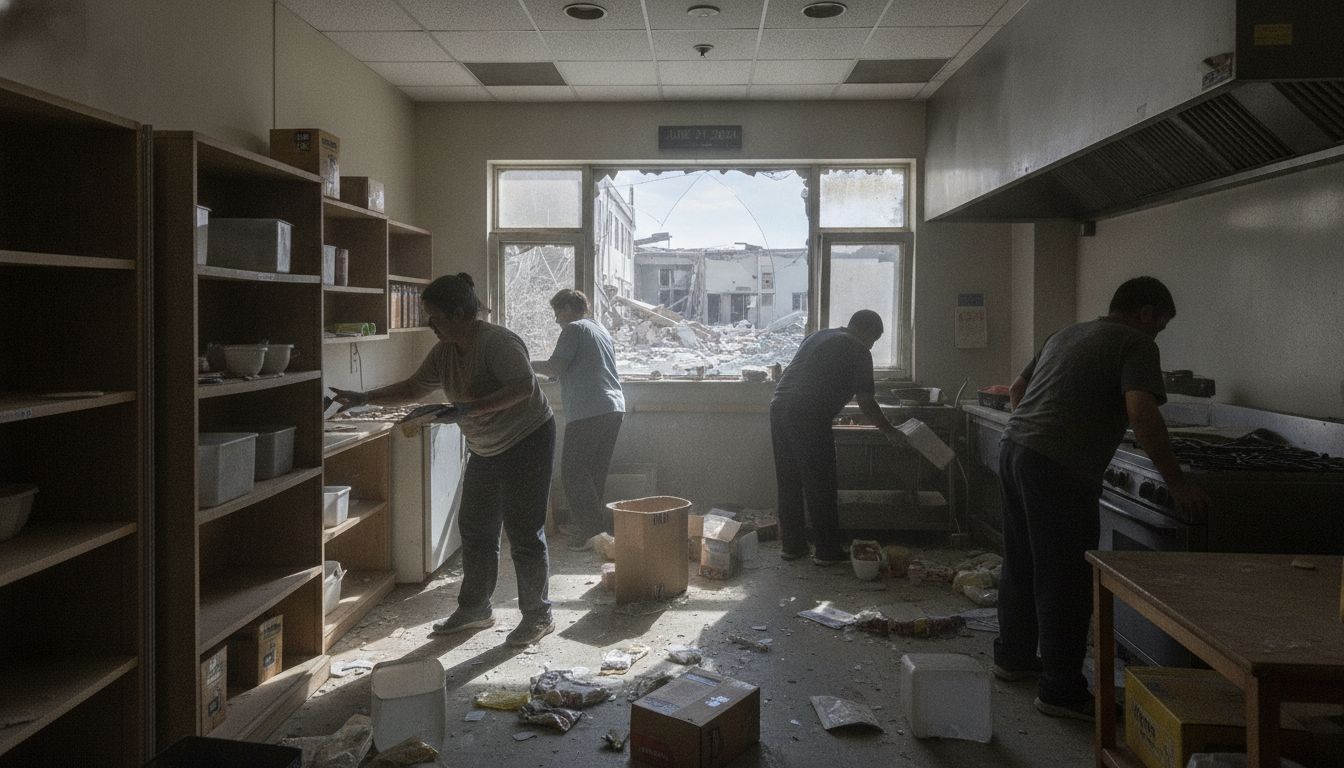
At 4:27 p.m. on July 28, a quake registering seismic intensity 7 struck while staff were preparing the evening meal at Suishouen. Pots and plates were toppled, and about 60 residents gathered together in the center of a large ward as staff checked for injuries. Power and water were cut off, preventing normal meal preparation and immediately shifting reliance to stored emergency provisions.
With kitchens unusable, staff moved to distribute pre-positioned supplies and retort-pack meals designed for emergency use. The disruption to utilities also complicated hygiene and care routines for residents, many of whom require assistance with feeding and medication.
Detailed inventory of the three-day stockpile
Suishouen’s emergency inventory had been calculated to cover either three days for both residents and staff or six days for residents alone. The stock included 540 two-liter bottles of drinking water, 720 packs of white rice porridge, 120 retort curry meals and 240 small packets of furikake seasoning. Nutritionally planned menus overseen by a facility dietitian were intended to sustain roughly 60 residents and about 40 staff for three days.
Those figures reflected a careful, pre-quake approach to emergency provisioning, with attention to hydration and soft-food needs common among elderly care residents. Nonetheless, the supplies were finite and depended on assumptions about occupancy and the continuity of utilities and distribution capacity.
Unexpected influx nearly doubled the facility’s occupancy
The facility also faced an unexpected surge in the number of people it had to shelter after the quake. Reports from staff indicate that residents from a nearby affiliated facility that had been damaged were brought to Suishouen, creating an occupancy level close to double the usual number. That surge placed immediate extra pressure on water and food stores and on staff already coping with disrupted infrastructure.
As occupancy rose, managers and care workers had to prioritize basic needs across a larger population than the stockpile had been intended to serve. The facility’s deputy director described the situation as “barely manageable” when supplies dwindled by the first noon after the quake.
Rationing, menu changes and care challenges
Because cooking was not possible without electricity and running water, the nursing home relied on retort-packed porridge and other shelf-stable items from the stockpile. Typical evening meals before the disaster would have included several dishes per resident, but staff shifted to simplified servings geared to hydration and ease of consumption. Rationing measures were implemented to stretch water and food until external assistance could arrive.
These operational adjustments also affected staffing tasks and shift patterns, as more hands were needed for distribution, feeding assistance and monitoring. The dietary plan prepared in advance helped guide choices, but the altered conditions required real-time judgment on portions, special dietary needs and how to maintain dignity and nutrition for residents under strain.
Facility’s prior role as a community disaster hub complicated response
Suishouen had previously functioned as a local disaster-prevention hub, a role that increased expectations for its capacity to shelter and support residents and neighbors in crisis. That community role contributed to the decision to accept evacuees from other damaged facilities, but it also magnified the impact when the facility’s own reserves were strained. Staff and local officials faced the dual responsibility of caring for institutional residents while supporting broader emergency needs.
The episode underscores the operational tension many such facilities face in rural and regional Japan, where care homes often serve as community anchors but may lack redundant infrastructure or large-scale external support in the immediate aftermath of a disaster.
The rapid depletion of the three-day food stock at Suishouen has prompted staff to question whether existing emergency planning standards adequately reflect the realities of large care facilities and the possibility of multiple-site damage in one locality. The experience at Suishouen illustrates how assumptions built into emergency stock calculations can be overturned by cascading effects of earthquakes, infrastructure loss and the need to shelter displaced residents from nearby sites.
The situation at Suishouen calls attention to broader preparedness challenges for nursing homes and similar institutions: the need to reassess stockpile quantities, logistical plans for distribution under utility outages, and contingency arrangements when a facility becomes a de facto community shelter. Staff at the nursing home say the day-to-day imperative now is to stabilize care while local authorities and relief organizations coordinate resupply and longer-term recovery support.

