
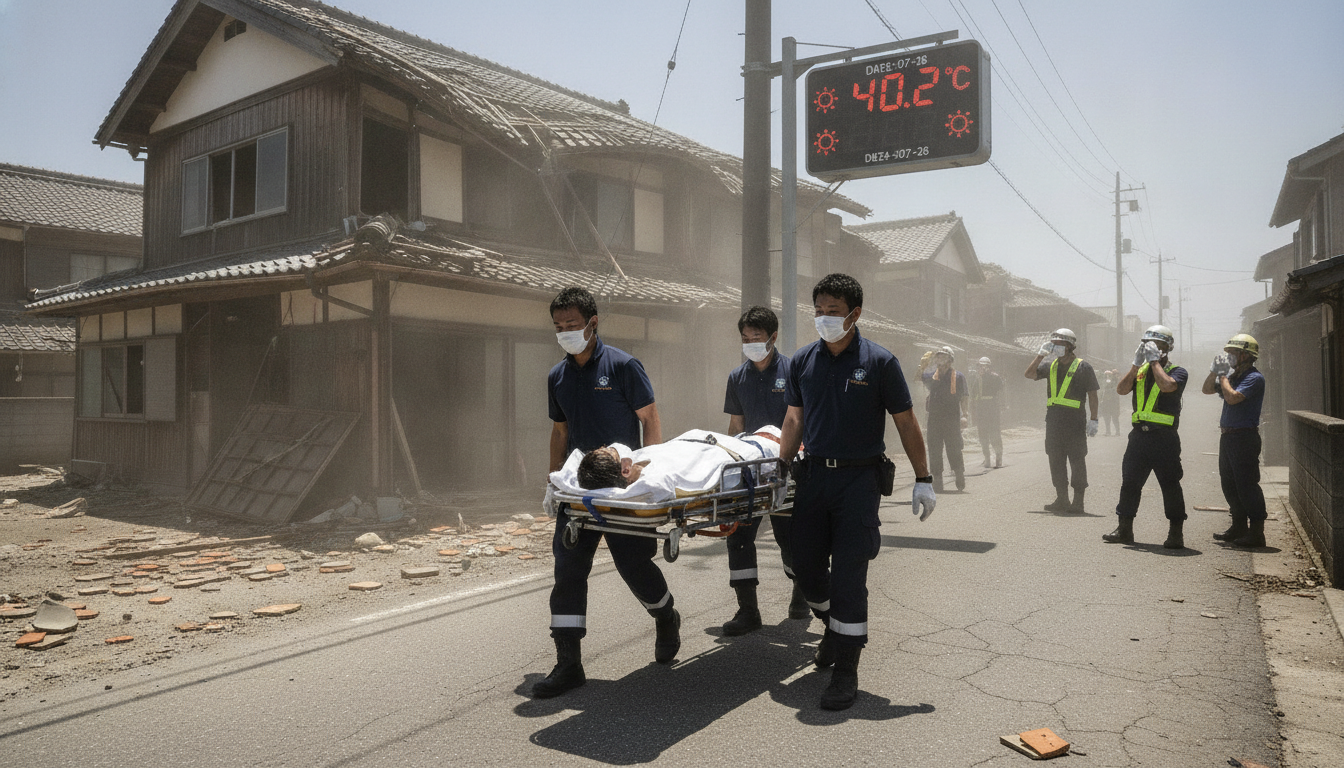
Woman evacuating in car dies of suspected heatstroke as Kumamoto earthquake survivors face intensifying heat
Kumamoto earthquake survivors faced dangerous heat on Aug. 2, 2026, as a 70-year-old woman who evacuated in her car died of suspected heatstroke and authorities warned of soaring temperatures and water shortages.
The prefectural disaster response center announced on August 2 that a woman in her 70s who had been sheltering in her car was hospitalized with heatstroke symptoms on July 30 and died the same day, marking the first suspected disaster-related death linked to the Kumamoto earthquake. The announcement came as rescue and recovery operations were strained by a forecast of extreme heat and continuing disruptions to utilities across affected areas.
First suspected disaster-related death confirmed
A prefectural statement on August 2 identified the deceased as a woman in her 70s who had evacuated and was found in a vehicle with an empty gas tank. Medical teams transported her to hospital on July 30 after she showed signs consistent with heatstroke, and she was pronounced dead that day. Officials described the case as the first confirmed death with a suspected link to post-quake conditions, and investigators are reviewing circumstances to determine whether the death will be classified as disaster-related.
Local authorities said the heatwave complicated evacuation choices for many residents who sheltered in vehicles to stay close to damaged homes or because of damaged buildings. Officials warned that seeking refuge in cars during temperatures that have peaked and are forecast to climb further can pose serious risks without adequate ventilation, hydration, and power for cooling.
Extreme heat and forecasts adding pressure on recovery
Meteorological forecasts warned that some areas could reach 40°C on August 3, intensifying concerns for evacuees and recovery workers. Survivors described exhausting, sun-blasted mornings spent sorting debris and salvaging belongings while battling relentless heat. Many reported dizziness, fatigue and the practical limits of sustained labor under high temperatures.
Rescue and recovery crews have repeatedly paused heavy work for hydration breaks and to rotate volunteers, but local leaders emphasized that heat adds a layered emergency onto the physical damage left by the quake. Experts and officials urged all evacuees to prioritize cooler spaces, frequent fluid intake, and to avoid prolonged exposure to direct sunlight during the hottest hours.
Damage and daily life in Hikawa and Yatsushiro
In schools of towns like Hikawa, where the quake produced a maximum seismic intensity of 7, residents cataloged collapsed rooms and crushed living spaces. One 73-year-old man returned to his destroyed home to retrieve important documents and found the kitchen and entrance buried by the collapse of the upper floor. He said afternoon temperatures made prolonged cleanup impossible and expressed anxiety about how to rebuild a livable life.
In Yatsushiro, an 85-year-old resident laboring to clear his home bore deep bruises from being thrown against a wall during the tremor and lamented the sweltering conditions that thwarted progress. With furniture and appliances heaved onto doorsteps, many households are improvising outdoor staging areas that offer little protection from the sun, compounding the physical and psychological strain on older residents in particular.
Evacuation centers coping with water outages and crowding
Municipal shelters continue to host thousands of evacuees while parts of the prefecture face widespread water outages. Authorities reported roughly 4,000 evacuees in Yatsushiro alone, with the largest shelter — the Yatsushiro Toyooka Chiken Arena — operating under hot, constrained conditions. Shelter managers said the combination of disrupted supplies and rising temperatures has heightened the risk of heat-related illness among those staying in gymnasiums or temporary facilities.
Local governments have focused on ensuring medical checks at shelters and advising evacuees on heatstroke prevention, but logistics remain difficult where water lines and power infrastructure are damaged. Officials called on residents to seek assistance from shelter staff if they feel unwell and reiterated protocols for cooling and rehydration.
Community groups and businesses mobilize cooling relief
Community responses have provided rapid, practical relief amid the summer heat. A family and friends from Kikuyo, whose own homes were affected by the 2016 Kumamoto earthquake, turned surplus summer-festival supplies into relief for evacuees, preparing roughly 800 servings of shaved ice at a shelter to help people cool down. A local carpenter shared that his grandchildren brightened at the first shaved-ice treat since the quake, describing the small comforts as powerful morale boosters.
Volunteer teams from universities and civic groups have been instrumental in home cleanup and distribution efforts, pausing frequently to rest and rehydrate. A university disaster-support circle reported bringing battery-powered fans and cooling vests to sustain work in scorching conditions. Social welfare councils have seen strong volunteer interest but at times halted new sign-ups to manage coordination and safety amid the heat.
Prefectural death toll and ongoing investigations
Prefectural officials said the confirmed death toll linked directly to the earthquake rose by two, bringing the total to 38 people as authorities continue to verify the relationship between deaths and the disaster. Two additional deaths remain under review. Officials emphasized that classifications of disaster-related fatalities require careful medical and situational assessment, and inquiries remain ongoing.
Authorities urged residents and volunteers to exercise caution in the coming days, noting that extreme temperatures and disrupted services could give rise to further health emergencies. Rescue coordinators called for community vigilance, regular welfare checks on isolated elderly residents, and prompt reporting of heat-related symptoms at shelters and clinics.
The combined pressures of structural damage, broken utility networks and scorching summer heat have left many survivors fatigued and uncertain about the path forward. Local leaders said steady relief supplies, expanded medical checks at evacuation sites, and targeted outreach to vulnerable residents would be priorities as recovery shifts from immediate search-and-rescue to longer-term restoration tasks.

