
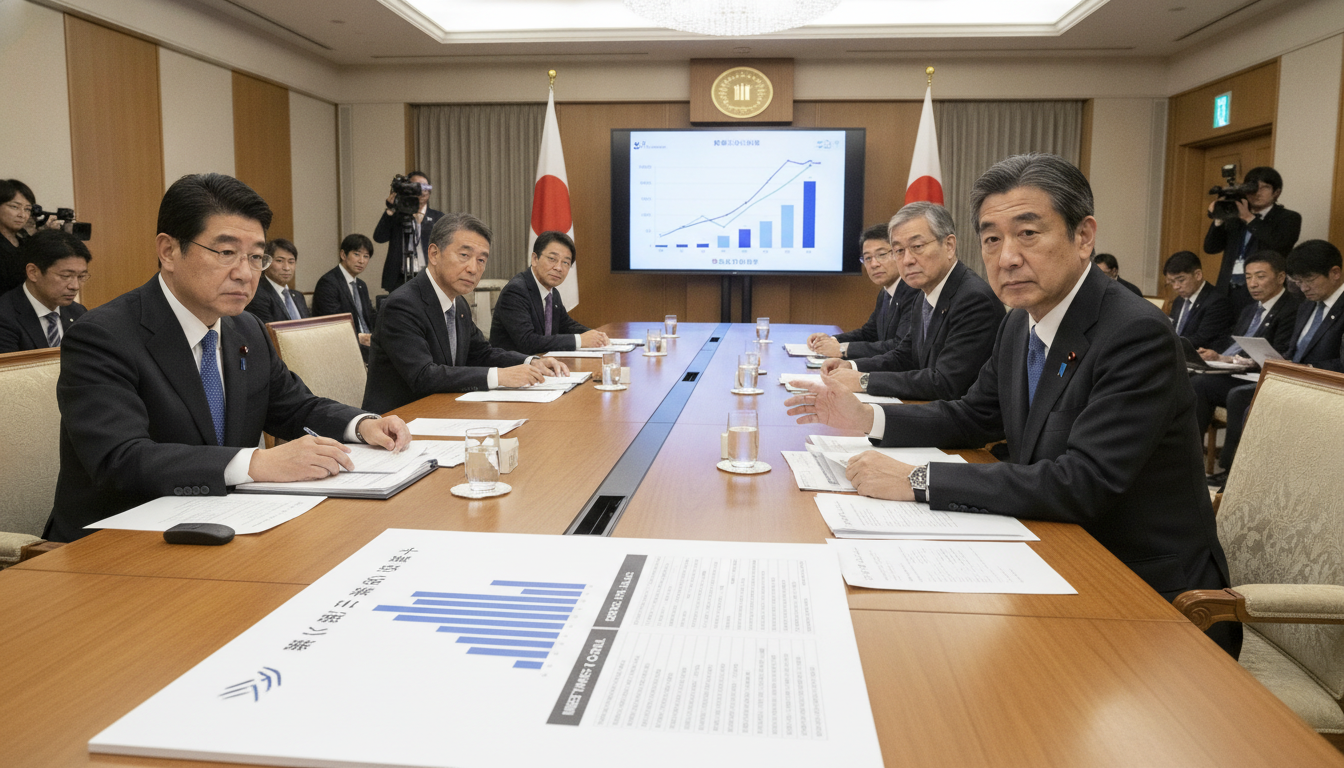
LDP Draft Seeks Multi-Year Targets and Flexible Debt-to-GDP Ratios to Guide Japan’s Fiscal Policy
Japan’s ruling Liberal Democratic Party proposed on June 18, 2026, a draft calling for multi-year management of the primary balance and greater flexibility in using a debt-to-GDP ratio to guide fiscal discipline.
The shift, promoted by Prime Minister Sanae Takaichi’s policy agenda, aims to move away from one-year budget targets and what the draft describes as “excessive austerity and insufficient investment in the future.”
LDP Draft Recommends Multi-Year Primary Balance Targets
The draft compiled by an LDP policy body on Thursday recommends managing the primary fiscal balance over a multi-year horizon rather than focusing on a single fiscal year.
Party officials argue that a multi-year approach would allow the government to smooth investment cycles and align spending with long-term growth objectives.
The proposal frames this change as part of a broader reorientation of fiscal rules to accommodate strategic public investment while maintaining overall discipline.
Draft Signals Flexibility on Debt-to-GDP Ratio
The document endorses greater flexibility in how the debt-to-GDP ratio is used as a policy guide, rather than treating a single numerical ceiling as an absolute constraint.
That approach would formally recognise that temporary deviations from a target ratio can be justified by capital spending aimed at boosting future growth.
The draft explicitly calls for an end to the long-term trend of “excessive austerity and insufficient investment in the future,” linking the change to competitiveness and demographic pressures.
Prime Minister Takaichi’s Policy Agenda Drives Change
Prime Minister Sanae Takaichi has made fiscal policy reform a central element of her government’s platform and has pushed the LDP to revise long-standing rules.
Party sources say the draft reflects direction from the executive branch and is intended to give the cabinet more room to pursue growth-oriented measures without being constrained by annual accounting conventions.
Officials also signal that the proposal is designed to present a coherent framework for balancing fiscal sustainability with investments in technology, defence, and social services.
Market and Credit Implications Under Review
Financial markets and credit-rating observers will closely scrutinise any move toward more flexible debt-to-GDP guidance, with attention focused on how flexibility is defined and constrained.
Economists note that market confidence depends on credible medium-term plans that demonstrate how higher near-term deficits will be offset by growth and, eventually, fiscal consolidation.
The draft’s emphasis on multi-year targets could reassure investors if tied to transparent rules, but it could also raise concerns if specifics on enforcement and exit strategies are not clearly articulated.
Budget Process and Political Response Inside Japan
If adopted, the proposal would alter how annual budgets are drafted and debated in the Diet by embedding multi-year targets into domestic fiscal planning.
Within the LDP, the plan could ease tensions between factions prioritising investment and those focused strictly on deficit reduction, although resistance is expected from voices wary of loosening constraints.
Opposition parties are likely to press for detailed costings and safeguards to prevent protracted deficit expansion under the banner of flexibility.
Implementation Steps and Timeline Ahead
The draft will undergo internal consultation within the LDP and is expected to be discussed at party committees and by relevant ministries before any formal government adoption.
Ministries of Finance and Economy will play a key role in translating policy language into operational targets, reporting frameworks, and budgetary rules.
Stakeholders including municipal governments, institutional investors and business groups will also be invited to comment as the proposal moves toward possible inclusion in the next fiscal framework.
Japan’s public debt has long been among the highest in advanced economies, making the design and credibility of any new fiscal rule especially important.
Proponents of the draft say clearer multi-year guidance and a flexible approach to the debt-to-GDP ratio can reconcile the need for investment with long-term sustainability.
Critics caution that without concrete enforcement mechanisms, broad flexibility risks eroding confidence rather than strengthening it.
The coming weeks will reveal whether the LDP can turn the draft into a concrete policy package and how the government will balance short-term fiscal leeway with the imperative of maintaining market trust.

