
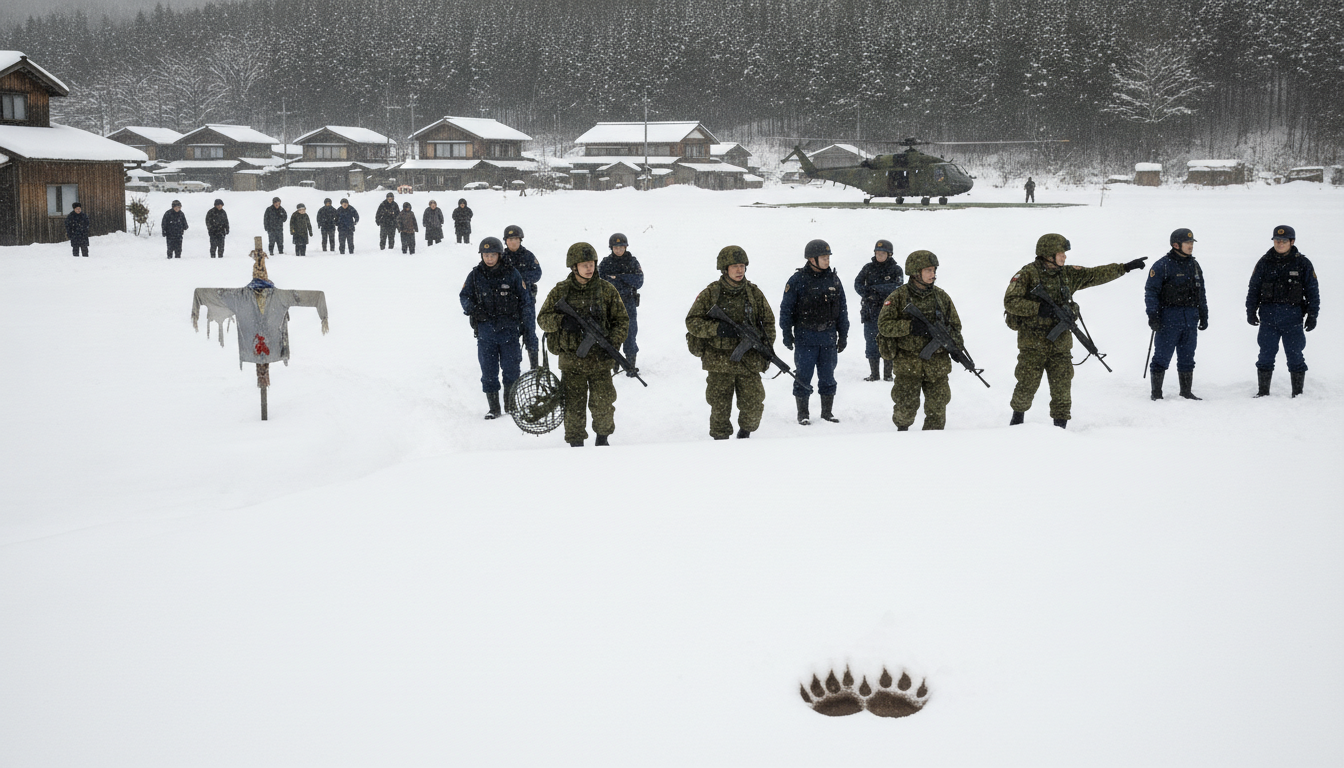
Bear Attacks in Tohoku Surge as Hunters Decline, Forcing Local Authorities to Seek Military Aid
Bear attacks in Tohoku have risen sharply, doubling national injuries in recent years and concentrating danger in Akita and Iwate as hunter numbers fall and local officials request military support.
The increase in bear attacks in Tohoku has become acute, with human injuries and property damage mounting across seven prefectures. National data compiled by the Environment Ministry show the three-year total of bear-related human injuries rose from 269 in the period ending fiscal 2010 to 542 in the three years ending fiscal 2025. This surge has placed exceptional pressure on already shrinking hunting and management capacity in the region.
Concentration of incidents in Tohoku and prefectural hotspots
The Environment Ministry’s figures indicate that almost 90 percent of the national rise in bear injuries is concentrated in the seven prefectures of Tohoku.
Within that region, Akita and Iwate stand out: together they accounted for an increase of 185 people injured over the measured interval. Local authorities report that the scale and speed of the rise have outpaced traditional wildlife-control measures.
Fewer hunters, much greater burden per hunter
Officials and regional analyses show a steep decline in the number of active hunters available to respond to bear incidents, increasing the workload on those who remain.
Estimates cited by prefectural offices put the per-hunter burden at more than five times what it was 15 years ago, reflecting both fewer personnel and a higher frequency of call-outs for captures, relocations and emergency interventions.
Urban encroachment and changing patterns of encounters
Recent data show that a growing share of bear attacks and sightings are occurring in city and residential areas rather than only in remote mountain zones.
Excluding the immediate post-hibernation period in spring, roughly half of the incidents recorded in fiscal 2023–2024 took place within human settlements, underscoring that bears are increasingly entering everyday living spaces and raising public-safety concerns.
Railway collisions and transport risks rise
The rise in bear activity has extended to transportation networks, with Japan’s passenger rail operators reporting a record number of collisions between trains and bears last fiscal year.
Interviews with the six JR passenger companies revealed 157 incidents, about 1.9 times higher than five years earlier, prompting rail operators to introduce new mitigation measures such as specialized capture equipment for trackside response.
Legal change in 2025 and operational limits on shooting
In response to expanding risk, the national government amended the Wildlife Protection and Management Act in 2025 to permit the use of firearms for culling in populated areas if a municipal leader deems it necessary.
Even so, prefectural officials stress that practical constraints remain: the deployment of rifles or shotguns near homes and schools requires trained personnel, strict safety protocols and careful public communication, limiting how broadly the new authorization can be exercised.
Requests for Self-Defense Force support and local measures
Faced with an overwhelming caseload, Akita Prefecture’s governor declared last autumn that local manpower was insufficient and formally requested assistance from the Self-Defense Forces.
Local governments across Tohoku are also expanding non-lethal responses such as increased patrols, early-warning systems and public guidance on avoiding encounters, while coordinating with forestry agencies and police to prioritize high-risk neighborhoods.
Public officials say combining short-term operational responses with longer-term ecological and demographic strategies is essential. Measures under consideration include habitat management, population monitoring, and incentives to sustain or rebuild licensed hunter capacity in rural communities.
The rise of bear attacks in Tohoku has highlighted a complex intersection of wildlife behavior, rural depopulation and urban expansion, creating new challenges for public safety and wildlife management that officials say will require sustained national and local coordination.

