
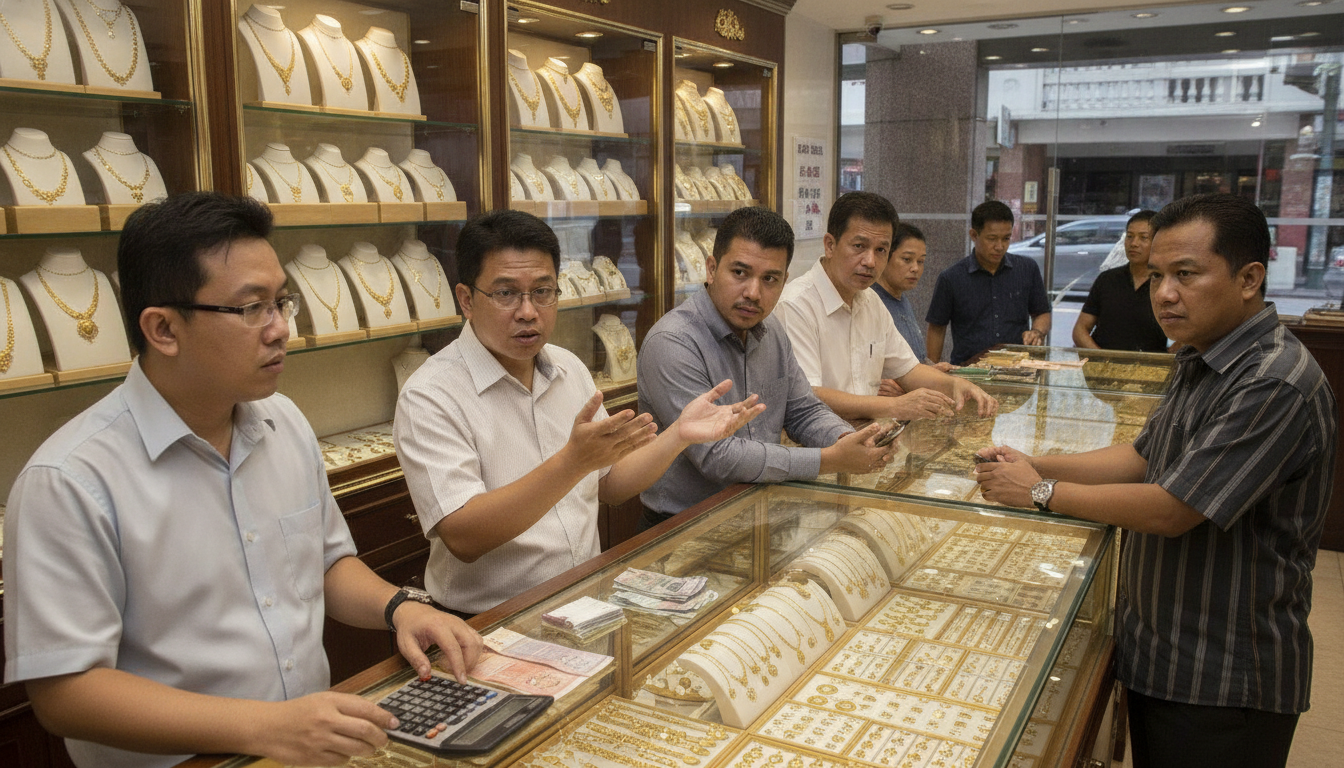
Gold Prices Squeeze Malaysia’s Jewellery Retailers as Profits Rise but Cash Tightens
Rising gold prices squeeze Malaysia’s jewellery retailers, forcing design shifts and new financing as profits rise but working capital tightens nationwide.
KUALA LUMPUR — Malaysia’s jewellery sector is facing widening strains on working capital as elevated gold prices require retailers to commit larger sums to inventory even while sales and profit margins grow. A major jewellery retailer and industry observers say the climb in bullion values has made it more expensive to hold raw gold stocks and to finance the transformation of metal into finished goods. The pressure is prompting firms to rethink product lines, production volumes and short-term financing arrangements to preserve liquidity.
Bullion Rally Tightens Cash for Retailers
Rising gold prices have increased the upfront cost of stock, forcing retailers to lock more cash into holdings that used to turn over more quickly. Industry sources report that firms must now pay higher sums to acquire raw gold and to pay for refining and manufacturing before any revenue is recognized. That imbalance has compressed working capital, raising the need for external finance or for changes in inventory strategies.
Retailers say the impact is most acute for businesses that keep substantial finished-goods inventories or that operate showrooms with high turnover expectations. Smaller independent stores with limited access to credit are particularly vulnerable, while larger chains are leveraging relationships with banks and suppliers to bridge short-term cash gaps.
Inventory Costs and Manufacturing Bottlenecks
Turning raw bullion into finished jewellery involves several cash-intensive steps, from melting and alloying to stone-setting and polishing. Each stage ties up funds for days or weeks, and higher bullion values magnify those financing requirements. As a result, production cycles that were manageable at lower gold prices now create bottlenecks for working capital management.
Manufacturers are also reporting delays and higher input costs for components such as clasps and settings, which compound the cash strain. Some workshops are prioritizing faster-moving designs to reduce inventory dwell time, while others are staggering production to spread costs across multiple accounting periods.
Product Strategy: Stronger, Lighter, Affordable Designs
A major jewellery company has accelerated efforts to produce items described internally as stronger, lighter and more affordable as a response to the bullion squeeze. Retailers are shifting toward lighter-weight pieces and simpler designs that require less gold per item, helping to preserve margins while keeping retail prices competitive. The trend also includes increased use of alloys and refined manufacturing techniques to maintain perceived quality without matching past gold weights.
Design pivots are aimed at both retail demand and operational resilience, with some chains introducing tiered collections that mix lower-gold items with higher-value signature pieces. Retailers believe this strategy can sustain sales volumes while limiting the capital tied up in each unit of inventory.
Financing and Trade Credit Responses
To bridge the gap between purchase, production and sale, many retailers are tapping bank lines, arranging supplier credit and offering more pre-order or layaway options to customers. Industry observers note a rise in short-term lending specifically structured for inventory financing and in negotiated payment terms with wholesalers. Larger players are leveraging corporate credit facilities to smooth cash flow, while smaller operators increasingly seek short-term loans or partner financing.
Some firms are also exploring digital solutions such as convertible inventory financing and third-party logistics arrangements that reduce on-balance-sheet exposure. However, access to affordable financing is uneven, which could widen competitive disparities within the sector.
Impact on Prices and Consumer Demand
Retail prices have risen in many outlets as businesses pass through some of the bullion-driven cost increases to customers. Nonetheless, demand patterns are mixed: cultural and investment demand for gold remains a stabilizing force for certain customer segments, while more price-sensitive buyers have shifted toward lighter pieces or alternative metals. Retailers caution that sustained price increases could dampen discretionary purchases and change the product mix for months to come.
Promotional strategies and flexible payment plans are being used to maintain footfall, but retailers emphasize that margin preservation remains a delicate balance between competitiveness and solvency. Market observers say consumer reaction will be a key determinant of how much of the higher bullion cost is ultimately absorbed by buyers.
Market Outlook and Industry Warnings
If gold prices remain elevated or continue rising, working capital pressures are likely to persist and could force further operational changes across the sector. Industry specialists warn that without adjustments to financing, inventory policies, or product design, smaller retailers could face liquidity crunches. Larger firms may gain market share by securing better credit and optimizing supply chains.
Trade groups are urging policymakers and financial institutions to consider tailored financing solutions to support the jewellery value chain, arguing that the sector contributes to employment and retail activity. Retailers say they are closely monitoring bullion markets and are prepared to adjust production and pricing as conditions evolve.
Looking ahead, Malaysia’s jewellery retailers face a test of adaptability as they balance higher gold prices with the need to maintain sales and protect cash flow. The sector’s immediate response—shifting toward lighter designs, securing flexible financing and managing inventory more tightly—will shape which firms emerge most resilient in a higher-bullion environment.

