
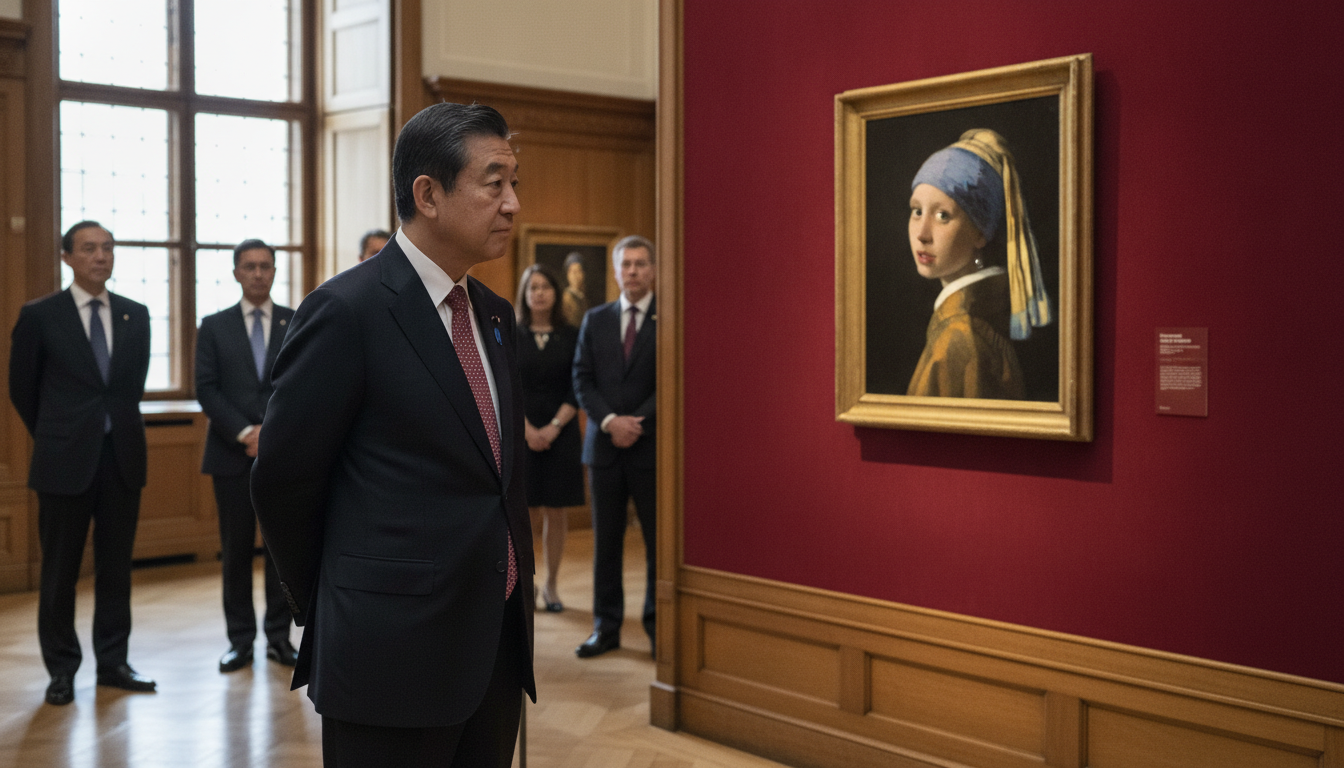
Emperor Views Vermeer’s ‘Girl with a Pearl Earring’ at Mauritshuis During Netherlands Visit
On June 18, 2026, the Emperor of Japan viewed Vermeer’s "Girl with a Pearl Earring" at the Mauritshuis during an official visit, ahead of the painting’s scheduled Osaka exhibition.
The Emperor of Japan visited the Mauritshuis museum in The Hague on June 18, 2026, to view Johannes Vermeer’s renowned work "Girl with a Pearl Earring." The viewing took place as part of an official state visit to the Netherlands and was timed to coincide with a diplomatic luncheon. The painting, one of Vermeer’s most celebrated works, provided a cultural highlight during the royal itinerary.
Visit to Mauritshuis Museum
The Emperor arrived at the Mauritshuis to join a lunch hosted by Dutch Prime Minister Rob Jetten, entering the exhibition galleries with a small official entourage. Museum staff arranged for a private viewing in front of the small but iconic canvas, allowing the Emperor to observe the work at close range. The atmosphere in the gallery was described as respectful and focused on the painting’s artistic qualities.
The museum visit formed one element of a day of formal events in The Hague, with security and protocol handled by both Japanese and Dutch officials. Curators from the Mauritshuis were present to provide context on the painting’s conservation and display, underscoring the work’s importance in the museum’s collection. The private setting allowed for conversation about the painting’s history and its technical attributes.
Lunch Hosted by Prime Minister Rob Jetten
The luncheon preceding the viewing was organized by Prime Minister Rob Jetten and included senior Dutch officials and members of the royal household. Discussion at the event blended ceremonial exchange with remarks on bilateral cultural cooperation between Japan and the Netherlands. Officials emphasized the role of cultural heritage in strengthening diplomatic ties.
Guests at the lunch later proceeded to the gallery where the painting is displayed, creating a smooth transition from formal hospitality to shared appreciation of art. Japanese diplomats and museum staff coordinated timing to ensure the viewing complemented the broader schedule of state events. The arrangement reflected careful planning by both governments.
Meeting with King Willem-Alexander and Photo Opportunity
During the visit, the Emperor stood before Vermeer’s painting alongside King Willem-Alexander of the Netherlands, and the group agreed to pose for commemorative photographs. The brief photo session followed private remarks among the dignitaries and was conducted with respect for the museum’s rules and the artwork’s fragility. Images from the encounter were released by official parties to mark the cultural exchange.
The participation of both heads of state highlighted the ceremonial dimension of the visit and placed art at the center of bilateral symbolism. Dutch and Japanese officials noted that such public cultural gestures serve as visible signs of longstanding ties between the two nations. The photograph in front of the painting underscored the shared interest in preserving and celebrating world cultural heritage.
‘Girl with a Pearl Earring’ and the Emperor’s Previous Viewing
The Emperor previously saw the painting when it traveled to Japan in 2012, making the June 18 encounter a notable "reunion" with the work after more than a decade. Curators pointed to the painting’s enduring public appeal and its capacity to draw viewers across generations and national boundaries. Observers said the Emperor’s renewed viewing underscored the personal and cultural continuities that such masterpieces can evoke.
Vermeer’s small-scale, luminous portrait has long attracted international loans and scholarly attention, and its transfer between collections is carefully managed. Museum officials noted that the current arrangement followed standard conservation and loan procedures, ensuring the painting’s safety while enabling international audiences to see a rare masterpiece in person.
Upcoming Osaka Exhibition and Loan Arrangements
The Mauritshuis has arranged for the painting to travel to Japan later this year, where it will be included in a Vermeer exhibition scheduled for August–September 2026 at the Osaka Nakanoshima Museum. The exhibition is being organized by multiple institutions, including the Asahi Shimbun among the hosts, and will mark the painting’s return to Japan after a long absence linked to museum renovations. Organizers expect strong public interest and have outlined conservation protocols for the loan period.
Japanese museum authorities and exhibition organizers are preparing logistics for display, visitor flow, and conservation oversight, mindful of the painting’s international profile. Advance ticketing, visitor guidance, and interpretive programming are being planned to accommodate museumgoers while protecting the work. The loan reflects ongoing cultural exchange agreements and the shared interest in making major works accessible to domestic audiences.
Cultural Diplomacy and Bilateral Relations
Officials from both countries characterized the viewing as a soft-power moment that complements political and economic talks on the state visit agenda. Cultural diplomacy, they said, can open avenues for deeper cooperation in areas such as education, conservation, and museum exchanges. The Emperor’s presence at a major Dutch cultural institution was framed as a gesture reinforcing long-standing ties between Japan and the Netherlands.
The visit also served to remind observers of the broader history of artistic exchange and mutual interest in cultural heritage preservation. Both governments signaled intentions to pursue further collaborative initiatives in arts and culture, building on the visibility generated by the state visit and the high-profile loan.
The Emperor’s viewing of Vermeer’s "Girl with a Pearl Earring" combined ceremonial statecraft with a quiet appreciation of art, linking Japan and the Netherlands through a shared moment before a masterpiece on June 18, 2026.

