
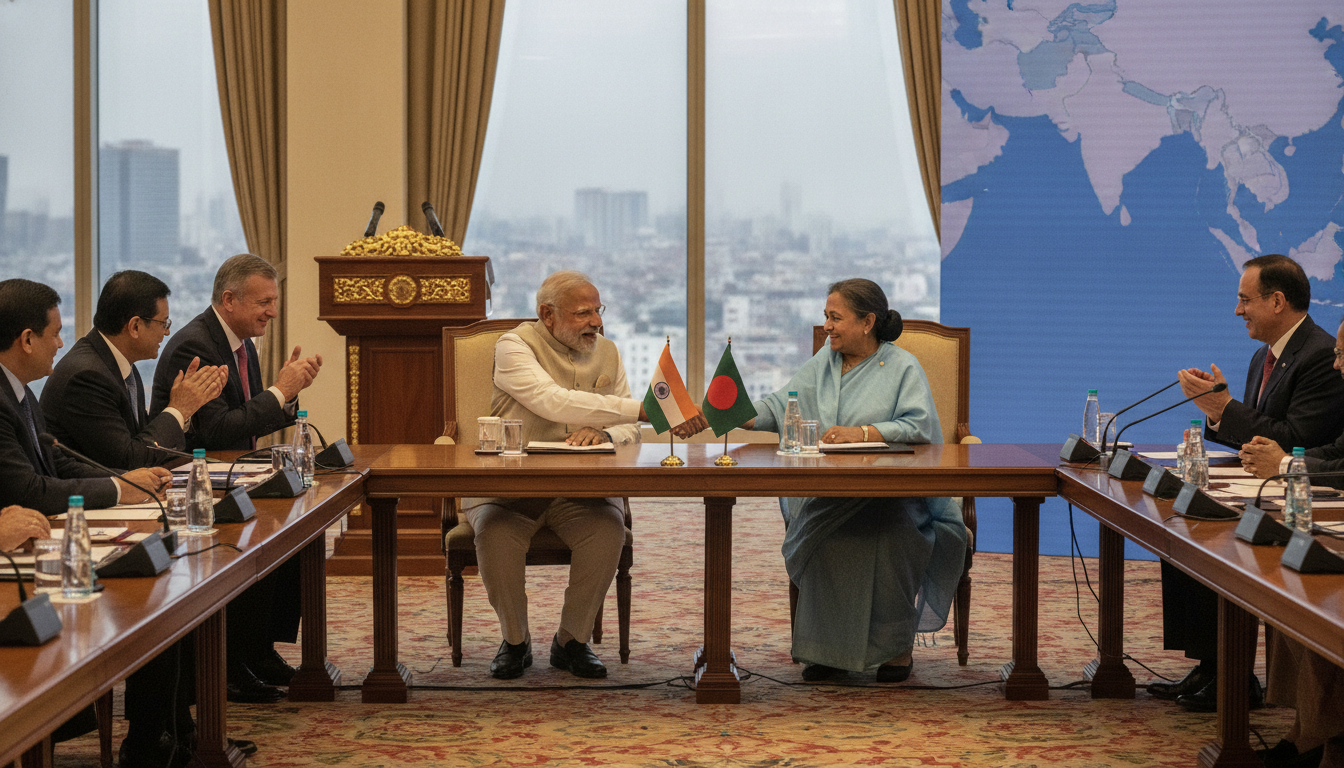
BJP regional election wins open diplomatic window for Modi with Bangladesh and Nepal
Modi’s BJP regional election wins offer New Delhi a diplomatic opening to deepen ties with Bangladesh and Nepal on border management, trade and infrastructure.
India’s ruling Bharatiya Janata Party’s recent regional election wins in states that border Bangladesh and Nepal have created a new diplomatic runway for Prime Minister Narendra Modi, analysts say. The BJP regional election wins have been framed in New Delhi as both a domestic validation and an opportunity to reset neighbourly relations ahead of key policy moves. Officials in New Delhi and capitals in Dhaka and Kathmandu are expected to use the breathing space to pursue talks on trade, connectivity and cross-border security.
Election Results Give Diplomatic Opening
The BJP’s gains in the border states strengthen New Delhi’s hand at a moment when bilateral agendas with Bangladesh and Nepal require political traction. Party officials argue that electoral stability in nearby Indian states reduces domestic friction and makes cooperative projects more politically feasible.
Diplomats and policy advisers see the results as a chance to restart stalled negotiations and bolster pragmatic cooperation. The immediate diplomatic priority is to convert electoral momentum into concrete, negotiable packages that address both economic and security concerns.
Outcomes in Border States Reflect Local Concerns
Voter choices in the affected states were shaped by local issues—economic development, infrastructure and management of border incidents. Regional administrations that now align more closely with New Delhi may find it easier to coordinate cross-border initiatives such as trade facilitation and transport links.
Local leaders will also face expectations to deliver faster implementation of projects, which could include improved road and rail connections and streamlined border procedures. How state governments engage with central authorities will influence the pace and tone of negotiations with Dhaka and Kathmandu.
Responses from Kathmandu and Dhaka
Officials in Kathmandu signalled interest in maintaining stable relations while protecting Nepal’s strategic autonomy, according to diplomatic contacts. Nepalese leaders have historically balanced engagement with India and other partners; the new electoral context in India may encourage stepped-up talks on connectivity and investment.
Bangladesh’s leadership similarly conveyed a preference for steady, businesslike relations with New Delhi, prioritizing trade and seamless border management. Authorities in Dhaka have been attentive to practical outcomes such as transit agreements and improved customs cooperation that can boost commerce.
Strategic Priorities for New Delhi
New Delhi’s immediate checklist is likely to include border security coordination, trade facilitation and infrastructure linkages with both neighbours. Officials will aim to show tangible progress quickly, using the electoral mandate to justify expedited negotiations and implementation.
Energy and transport corridors, streamlined customs procedures and confidence-building measures on border incidents are expected to top the agenda. Indian policymakers are also mindful that successful small-scale agreements can create momentum for more politically sensitive, larger deals.
Economic and Security Implications
Improved cooperation could ease trade frictions and expand market access for businesses on all sides of the border. For India, smoother trade flows with Bangladesh and Nepal would support regional supply chains and create opportunities for states that now have stronger political alignment with the central government.
Security implications are equally salient; enhanced communication between border forces and joint mechanisms to tackle smuggling and transnational crime are likely to be pursued. New Delhi will need to balance assertive security measures with diplomatic engagement to avoid escalating tensions.
Political Calculus Ahead of National Cycle
For the BJP, translating regional victories into foreign-policy wins carries electoral as well as governance value, reinforcing the party’s image as able to manage both domestic and external challenges. Modi’s team will be keen to demonstrate that political capital earned at the ballot box produces results in neighbours’ capitals.
Opposition parties and regional actors will watch closely, framing any deals in domestic political terms. How New Delhi manages expectations at home while negotiating reciprocal arrangements abroad will shape narratives ahead of the next national electoral milestones.
The coming weeks are likely to see a flurry of diplomatic contacts, technical talks and targeted announcements as New Delhi, Dhaka and Kathmandu test the political and administrative currents created by the BJP regional election wins and seek practical areas of cooperation.

