
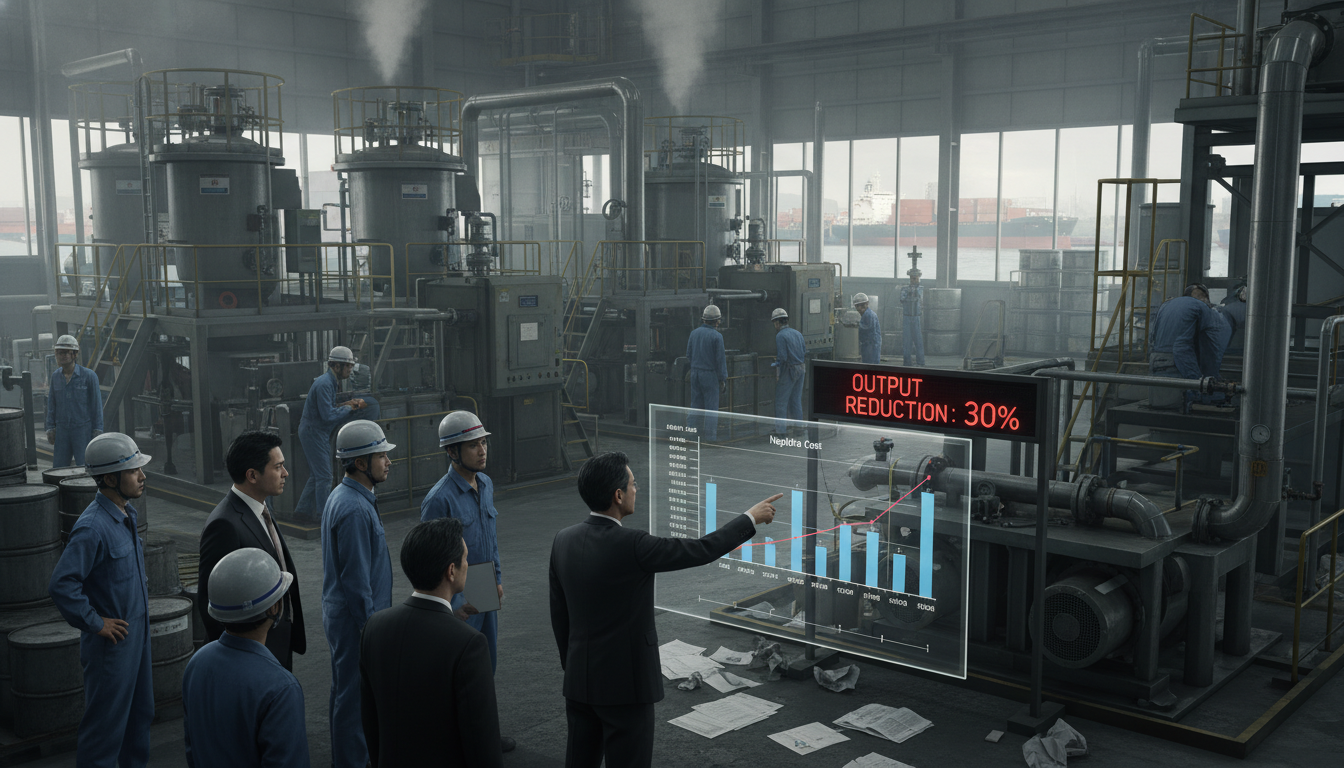
Naphtha shortage pushes up prices and forces production cuts across Japan
Japan grapples with a naphtha shortage that is driving up costs for plastics and finished goods, hitting manufacturers and consumers alike.
Tokyo — A shortage of naphtha, a key petroleum derivative used to make plastics and a wide range of consumer products, is forcing Japanese manufacturers to raise prices and trim production, despite the government’s public assurance of a four-month supply. The naphtha shortage is rippling through industries that rely on plastic resins and chemical feedstocks, pushing costs higher for items from bathtubs to laundry detergent.
Government Affirms Four Months’ Supply
Prime Minister Sanae Takaichi has said the country maintains roughly four months of naphtha reserves, a figure intended to reassure markets and consumers. Officials argue that strategic reserves and emergency procurement channels reduce the immediate risk of catastrophic shortages.
Industry representatives respond that a quantity estimate does not insulate companies from shorter-term disruptions in feedstock deliveries or volatile spot prices. Traders and manufacturers report that pipeline constraints and export dynamics are tightening physical availability even as the government cites reserve levels.
Manufacturers Raise Prices and Scale Back Production
Several manufacturers have begun passing higher input costs to customers while also reducing output to cope with limited feedstock availability. Producers of plastic components and consumer goods say price increases are unavoidable when naphtha-based resin supply is restricted.
Factories making household appliances, personal care items and industrial parts have announced partial suspensions or slower production runs to prioritize higher-margin products. The combination of price hikes and output cuts is creating immediate bottlenecks in supply chains and shifting inventory strategies across sectors.
Everyday Goods Face Steep Cost Increases
Shortages of petroleum derivatives are translating into higher retail prices for a range of everyday items, including plastic bathtubs, disposable containers, cleaning agents and pharmaceutical packaging. Companies that rely on plastic packaging are reporting double-digit increases in input costs, which they say will be reflected on shelves in coming months.
Consumers and retailers are already noticing price adjustments in categories such as laundry detergent and mouthwash where packaging and formulation depend on naphtha-derived chemicals. Smaller manufacturers and importers warn that prolonged pressure on raw materials could lead to wider inflation in household goods.
Raw Materials and Supply Chain Pressures
The naphtha shortage highlights vulnerabilities in Japan’s petrochemical supply chain, where a small number of refineries and cracker facilities dominate domestic resin production. Any disruption in naphtha feedstock flows — whether from maintenance, reduced refinery runs, or international market shifts — quickly affects downstream manufacturers.
Logistics bottlenecks and competition for spot cargoes have exacerbated the situation, forcing some firms to seek alternative feedstocks or higher-cost imports. Industry analysts say that until feedstock distribution stabilizes, manufacturers will face a choice between absorbing costs, raising prices, or cutting production further.
Policy Options and Industry Responses
Government options to ease the situation include releasing additional strategic stocks, arranging emergency imports, or incentivizing priority allocations for essential industries. Officials have signaled willingness to coordinate with producers, but industry groups say more targeted measures will be needed to prevent prolonged shortages.
Companies are also responding by adjusting product mixes, extending lead times, and negotiating long-term contracts to secure naphtha and resin supplies. Some firms are accelerating investment in recycling and alternative materials as hedges against feedstock volatility, although such shifts take time to implement at scale.
Japan’s business community is urging clearer communication and faster policy moves to restore market confidence. Trade associations emphasize the need for predictable allocations and transparent reporting on reserve levels to allow firms to plan production and pricing more effectively.
The full economic impact will depend on how long constrained feedstock availability persists and whether global market conditions ease. If naphtha flows normalize, companies expect to roll back emergency pricing and resume fuller production, but prolonged tightness would deepen cost pressures across manufacturing and consumer sectors.
For now, manufacturers, retailers and policymakers must balance short-term measures to secure supplies with longer-term strategies to reduce vulnerability to future petrochemical disruptions. The naphtha shortage has underscored the tight coupling between refinery outputs and everyday goods, making feedstock stability a priority for Japan’s industrial competitiveness in the months ahead.

