
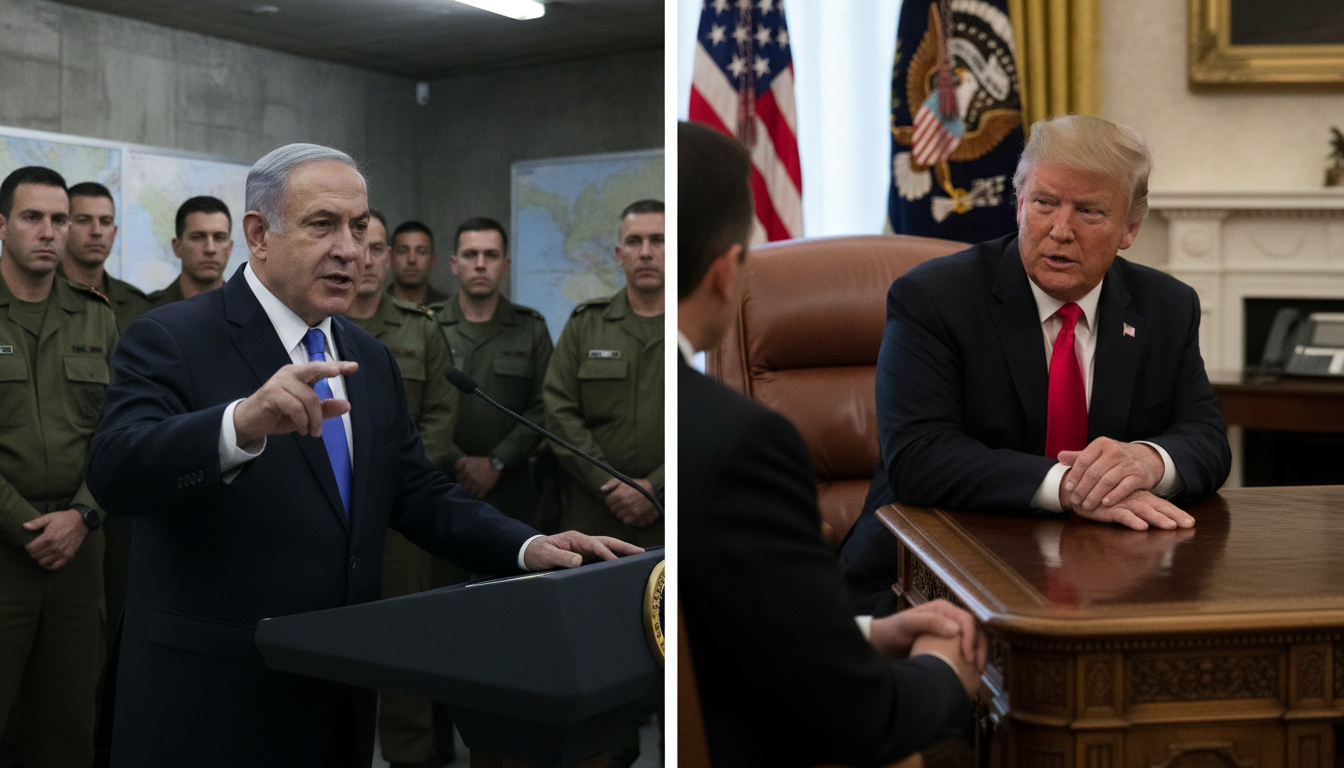
Netanyahu-Trump Meeting Exposes Deep Divisions Over Iran Strikes
Netanyahu-Trump meeting at the White House on July 28, 2026 revealed stark rifts over continuing strikes on Iran, as Washington signals interest in diplomacy.
The Netanyahu-Trump meeting at the White House on July 28, 2026 was the first face-to-face encounter between the two leaders since air strikes against Iran began at the end of February 2026. President Donald Trump signaled a willingness to halt further bombardment and open negotiations, while Prime Minister Benjamin Netanyahu pressed for continued military pressure. The session exposed a widening gap over the “endgame” of joint operations and underscored growing strain in U.S.-Israeli coordination over the Iran campaign.
Meeting schedule and public statements
White House officials said Netanyahu met with President Trump on the same day that the Ukrainian president had a separate audience at the White House. A White House press secretary identified only as Levitt described both discussions as “positive and constructive.” Israeli and U.S. officials declined to release detailed transcripts of the private talks, leaving the contours of the dispute reliant on briefings and media reporting.
Israeli media reported additional specifics soon after the meeting. Channel 12 in Israel, quoting senior Israeli sources, said Netanyahu warned Trump that Iran’s nuclear infrastructure was being repaired and argued there was no option but to carry out more strikes. The differing public emphases from both capitals highlighted the diplomatic tightrope the two governments now face.
Roots of the disagreement over the Iran campaign
The divergence between Trump and Netanyahu reflects a shift in U.S. calculations since the strikes began in late February 2026. Israeli officials had worked closely with the Trump administration in the months leading up to the operation, including multiple high-level consultations. According to Israeli accounts, Netanyahu met repeatedly with Trump during that period as the allies finalized plans.
After the campaign commenced, however, Iran broadened the conflict beyond initial expectations. Officials in both countries say Iranian forces expanded operations around the region and maritime chokepoints such as the Strait of Hormuz were affected, complicating Washington’s strategic objectives. Those developments prompted a reassessment in the White House about whether continuing kinetic action would produce the desired outcome.
Netanyahu’s arguments for maintaining pressure
Netanyahu arrived in Washington to attend the funeral of U.S. Senator Lindsey Graham and used the opportunity to press his case at the White House. Israeli leaders argued that a pause in military pressure would permit Tehran to restore capabilities and that only sustained strikes could keep Iran’s nuclear program from reconstituting, according to Israeli media briefings.
For Netanyahu, the core concern is to deny Iran the time and space to rebuild sensitive sites and supply chains. Israeli aides framed that argument as urgent and operational, emphasizing technical assessments of facilities and repair activity. Those assessments, as cited by Israeli outlets, formed the basis of the prime minister’s appeal for a more aggressive, continuing campaign.
Trump’s evolving posture and strategic calculations
President Trump, by contrast, has publicly signaled greater openness to halting strikes in favor of negotiations with Tehran. U.S. officials described a president shaken by the broader regional fallout from the strikes, including disruptions to maritime traffic and expanded Iranian activity. That environment, they say, has diminished the appeal of an extended air campaign and increased interest in a diplomatic pathway to secure U.S. objectives.
Trump’s willingness to explore talks has reportedly caused friction with Netanyahu, who has favored military pressure. Inside the White House, advisers weighing the risks of escalation and economic consequences argued that a negotiated freeze could yield more stable results than open-ended bombardment. The president’s recalibration reflects both strategic caution and concern about sustaining public and allied support for continued operations.
Implications for alliance coordination and regional stability
The meeting underscored immediate challenges for U.S.-Israeli coordination on a high-stakes security issue. Divergent endgames—cessation and negotiation versus continued strikes—could complicate operational planning and intelligence sharing in the coming weeks. Analysts caution that lack of alignment between Washington and Jerusalem raises the risk of unintended escalatory dynamics across the Middle East.
Outside actors are likely to watch closely whether the United States and Israel can bridge their differences or drift into disparate courses of action. For regional governments and global markets, the path chosen by the two close partners will determine the intensity of future conflict risk and the contours of any diplomatic settlement. Both capitals face domestic political pressures that may further shape their approaches.
The Netanyahu-Trump meeting made clear that, despite shared objectives against Iran’s nuclear ambitions, the allies remain divided on how to achieve them. The coming days and weeks will test whether policy consultations can narrow those gaps or whether the disagreement will deepen, with consequences for military planning and regional diplomacy.

