
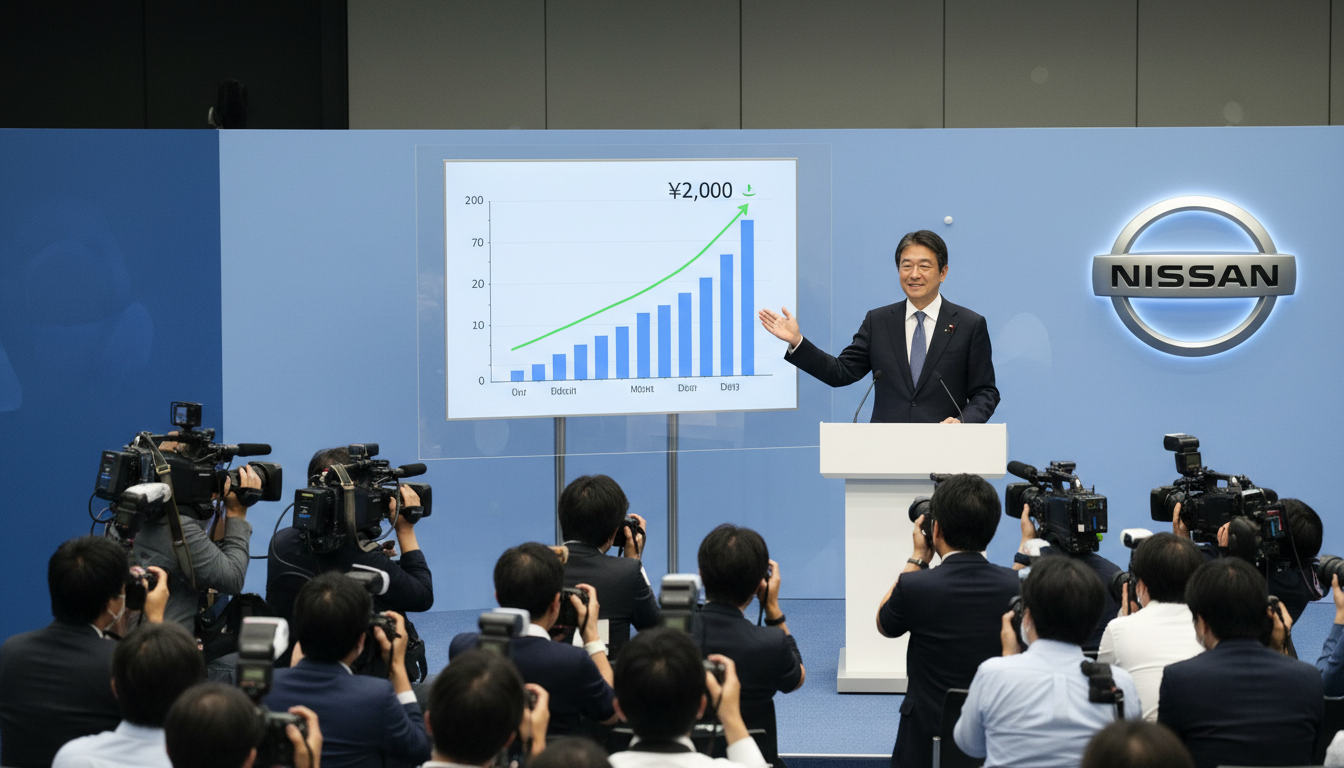
Nissan Net Profit Forecast Signals First Return to Black in Three Years
Nissan’s net profit forecast of 20 billion yen for the fiscal year ending March 2027 signals a recovery under its Re:Nissan plan and renewed leadership, marking the automaker’s first projected profitable year in three years.
Nissan’s advance forecast, which pins a net profit of 20 billion yen (about $127 million) for the year ending March 31, 2027, represents a turning point after a prolonged period of losses and reflects early gains from the company’s restructuring efforts. The Nissan net profit forecast underscores management’s commitment to restoring profitability through operational tightening and strategic refocusing, priorities emphasized since Ivan Espinosa became president and CEO last year. Executives framed the outlook as tentative but meaningful, saying the figure reflects both cost reductions and steadier demand for key models.
Nissan Forecasts Return to Profit
The company’s guidance marks the first return to the black in three fiscal years, an outcome Nissan said stems from a combination of expense discipline and selective product investment. Management cited improvements in margin management and the phasing out of loss-making activities as contributors to the modest projected gain. While the forecast is modest in absolute terms, it carries symbolic weight for investors and suppliers who have watched Nissan’s turnaround plans unfold.
Early Impact of the Re:Nissan Restructuring
Re:Nissan, the multi-year restructuring program launched under the new leadership team, has focused on streamlining operations, rationalizing model lineups and reallocating resources to higher-return segments. Company statements indicate the plan has begun to reduce fixed costs and align production with demand, which helped narrow losses in recent quarters. Executives emphasize that the plan remains a work in progress and that continued execution will be necessary to convert preliminary improvements into sustained profitability.
Leadership and Strategic Shifts Under Ivan Espinosa
Since taking the helm last year, President and CEO Ivan Espinosa has prioritized operational fixes and clearer financial targets, reshaping management priorities toward cash generation and efficiency. His approach has involved tightening capital allocation and pressing for faster decision-making across product and manufacturing teams. By signaling a concrete profit target, Nissan’s leadership aims to restore credibility with investors while keeping internal focus on measurable results.
Analyst Attention and Market Implications
Analysts and market observers have given close attention to the Nissan net profit forecast as a barometer of how credible the turnaround plan is in practice, noting that a return to profitability would ease pressure on the company’s balance sheet. Some market participants have voiced cautious optimism that improved unit economics and disciplined spending could support earnings stability going forward. At the same time, most commentators stress that the forecast is modest and that future quarters will be decisive for assessing whether the recovery is durable.
Operational and External Risks That Remain
Despite the positive signal from Nissan’s forecast, the automaker still faces several operational and external risks that could affect its path to sustained profits. Global demand fluctuations, input-cost inflation, volatile currency movements and intensifying competition in electric vehicles and SUVs all pose potential headwinds. Nissan will also need to manage supply-chain volatility and dealer inventory levels to avoid the swings that have complicated profitability in recent years.
Product Focus and Investment Priorities
Management has indicated it will concentrate investment on models and technologies with clearer routes to margin improvement, while trimming back lower-return projects, a strategy intended to balance near-term results with longer-term competitiveness. Electrification remains a strategic priority, but executives say future spending will be calibrated to market conditions and to the pace at which profitable EV programs can be scaled. The company’s decisions on timing and scope of new launches will be central to whether forecasted gains translate into a multi-year recovery.
The Nissan net profit forecast offers a signal that the company’s restructuring and leadership changes are beginning to produce measurable results, but translating a modest profit into a sustained turnaround will require continued execution, favorable market conditions and careful capital discipline.

