
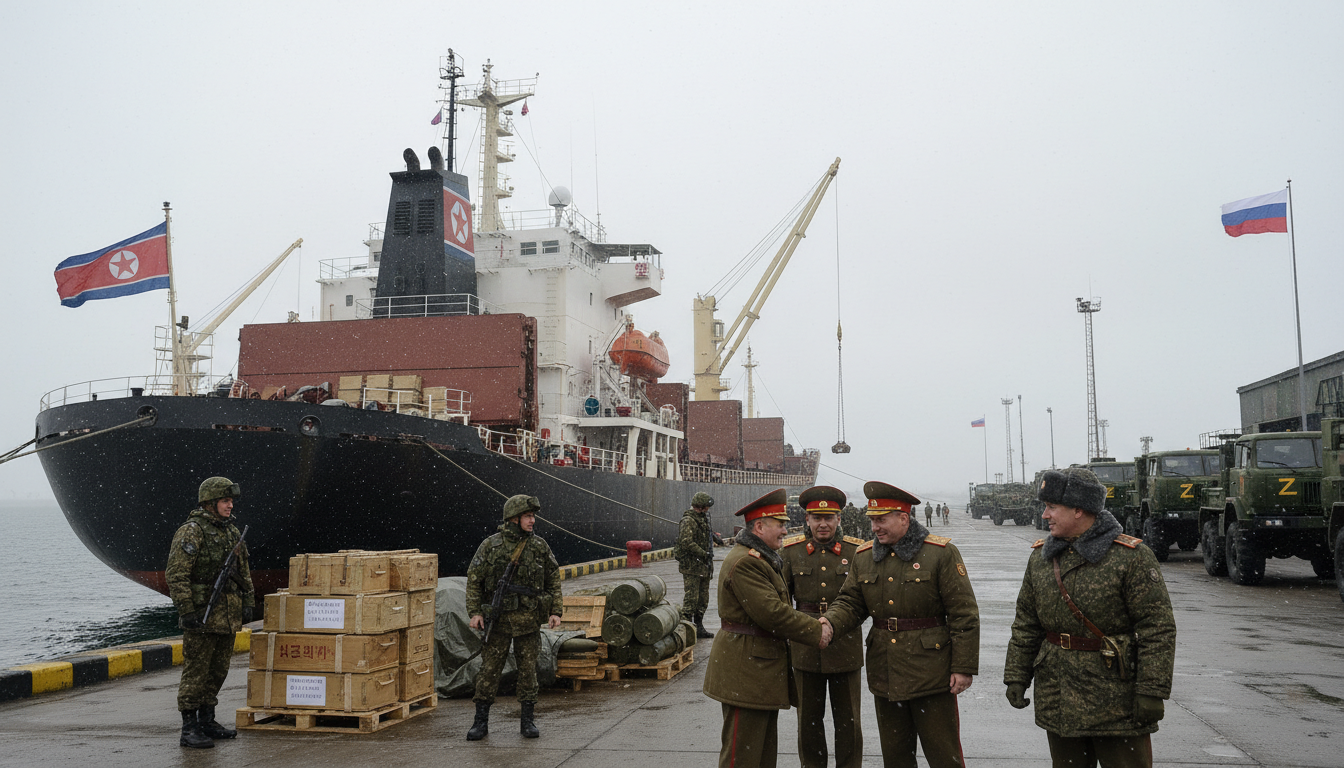
North Korea’s military support for Russia yields energy and foreign-currency windfall
North Korea’s military support for Russia has reportedly delivered energy shipments and foreign currency to Pyongyang, bolstering the regime’s finances and altering regional risk calculations.
North Korea’s military support for Russia has translated into a steady flow of fuel and hard currency that analysts say is shoring up the isolated state’s economy while sustaining Moscow’s war effort in Ukraine. The exchanges appear to include weaponry and personnel in return for energy supplies and cash payments, according to multiple reports and diplomatic assessments. The arrangement, though opaque, marks a significant shift in how Pyongyang leverages its military assets to bypass sanctions and meet essential economic needs.
Nature of the exchanges between Pyongyang and Moscow
Reports indicate that the transactions are transactional rather than formal alliance commitments, with North Korea providing weapons and military personnel in exchange for diesel, refined fuel and foreign-currency payments. Observers say the trade lines are a mixture of state-directed shipments, commercial intermediaries and covert transfers that complicate enforcement of international sanctions. While precise volumes and sums remain unverified publicly, the pattern suggests a reciprocal relationship structured around immediate material needs for both capitals.
Types of military support being supplied
The military assistance reportedly encompasses a range of materiel and human resources, from conventional munitions to mobilized fighters and technical specialists. Analysts tracking the conflict in Ukraine say Pyongyang’s contributions are likely aimed at items that can be produced or sourced domestically and exported discreetly. The transfers are described in open reporting as complementary to Russia’s own production capacity rather than a single decisive source of weaponry, yet they nonetheless relieve pressure on Moscow’s logistical chain and diversify its procurement routes.
How sanctions and trade networks are being exploited
Sanctions intended to isolate North Korea have driven the regime toward more creative and clandestine means of acquiring fuel and revenue. Diplomats and sanctions monitors point to the use of third-country intermediaries, ship-to-ship transfers at sea, and falsified paperwork as recurring tactics in these exchanges. Such practices complicate international monitoring and enforcement, allowing Pyongyang to secure goods it cannot obtain through normal channels and to convert military support into usable cash and energy supplies.
Economic impact on Pyongyang
The inflow of foreign currency and fuel is providing a tangible economic lifeline for the North Korean leadership, easing some pressures caused by years of sanctions, pandemic controls and poor harvests. Access to diesel and refined petroleum supports essential transport, agricultural machinery and state enterprises, while hard currency enables purchases on global commodity markets and payment for critical imports. For the regime in Pyongyang, these tangible benefits help sustain domestic stability and the military-industrial complex that remains the core of state power.
Regional and diplomatic repercussions
The reported cooperation has raised alarm among neighboring states and Western capitals, which see the transactions as a destabilizing factor that undermines sanctions regimes and regional security. South Korea and Japan have reiterated concerns about illicit arms flows and the erosion of collective pressure designed to constrain both nuclear and conventional threats from Pyongyang. The developments also complicate diplomatic channels, reducing incentives for denuclearization talks while increasing the urgency of coordinated monitoring and enforcement measures.
Challenges for verification and international response
Confirming the full scope of North Korea’s military support for Russia is hampered by deliberate secrecy, opaque banking links and the use of proxy firms. International bodies and intelligence services face an uphill task in assembling incontrovertible evidence suitable for formal action. Policymakers must therefore weigh responses that blend targeted sanctions, maritime inspections and multilateral diplomatic pressure, while avoiding steps that could inadvertently escalate tensions or push trade further underground.
The strategic exchange between Pyongyang and Moscow illustrates how military cooperation can be converted into economic relief for an isolated regime, with implications for the balance of power in Northeast Asia and beyond. As investigators and governments piece together transaction routes and actors, the immediate priority for regional states will be strengthening information-sharing and interdiction efforts to limit further erosion of international sanctions.

