
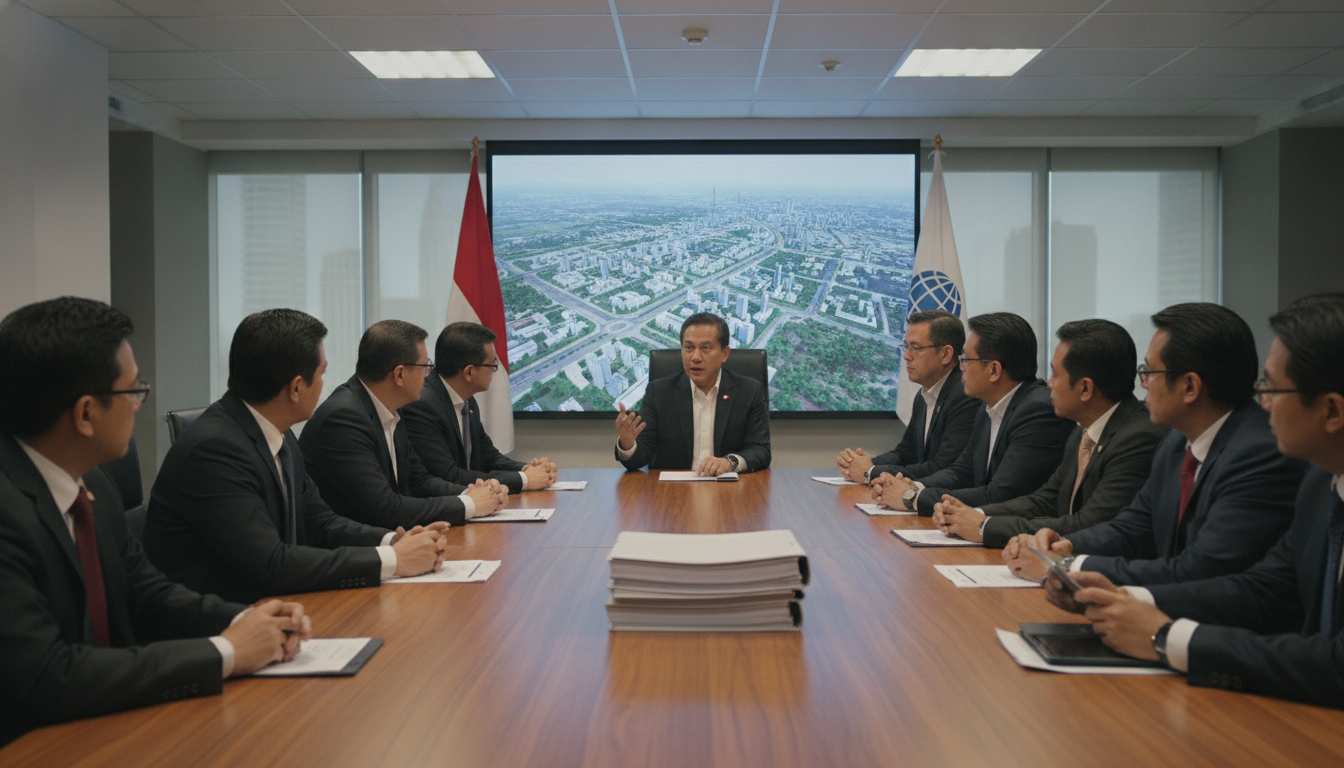
Investors Press for Implementation Certainty in Nusantara New Capital $26bn Project
Investors are holding back until they see clear implementation certainty for the Nusantara new capital project, citing the $26bn scale and unresolved execution details as barriers to fresh commitments.
Investors Seek Implementation Certainty
A deputy chairman of the Indonesian Chamber of Commerce and Industry warned that domestic and foreign investors are increasingly selective about the Nusantara new capital project as they assess contractual clarity and delivery risk. Business leaders say they want concrete timelines, firm regulatory frameworks, and transparent procurement processes before deploying significant capital to the $26bn programme. Without those assurances, many potential backers are prioritising completed projects and lower-risk opportunities elsewhere.
Project Scale and Location
The Nusantara new capital sits on the island of Borneo and has been planned as a major national relocation and development effort with an estimated $26bn price tag for core infrastructure and public facilities. Planners envision administrative, residential, and commercial districts built on largely undeveloped land, requiring extensive roads, utilities, and environmental mitigation. The sheer size of the undertaking amplifies concerns about sequencing, governance arrangements, and long-term operational budgets.
Private Sector Conditions for Investment
Private investors and project lenders are signalling specific preconditions tied to legal certainty and risk allocation, according to business lobby feedback. Key demands include standardized land titles, enforceable concession contracts, and dispute resolution mechanisms that limit political and regulatory unpredictability. Investors also seek clearer exit routes and predictable revenue streams, especially for projects relying on public-private partnership models.
Construction Progress and Public Spaces
Visible development in Nusantara has included high-profile public landmarks and early infrastructure works, which have attracted visitors and media attention. One notable sight has been the illuminated Garuda Palace at dusk, which drew tourists and local onlookers in late July. Officials and developers promote such completed elements as signals of momentum, but investors say symbolic milestones are not a substitute for contractual certainty and integrated delivery plans.
Financing Complexities for a $26bn Build
Financing a multibillion dollar capital move requires a blend of public funding, domestic bank lending, international financing and private capital, and experts say assembling such a mix is inherently complicated. Lenders and equity investors need transparent cashflow models for each subproject and assurances about sovereign or municipal support where project revenues are uncertain. Currency risk, interest rate exposure, and the potential need for guarantees or first-loss structures are among the financial issues under scrutiny.
Risk Allocation and Government Guarantees
How risk is apportioned between the state and private partners will determine investor appetite, business groups say. Where governments offer limited guarantees or backstop commitments, private capital is likelier to participate, provided procurement processes are open and competitive. Conversely, vague or contingent government promises can leave investors exposed to unforeseen obligations and dampen enthusiasm for long-term commitments.
Local Economic Opportunities and Concerns
Supporters argue the Nusantara new capital could generate thousands of jobs and spur economic activity in East Kalimantan, creating markets for construction, services and tourism. Local businesses and regional administrations may benefit from procurement and supply chain linkages if projects are managed transparently and procurement is localized where feasible. However, stakeholders caution that absent firm implementation plans, initial enthusiasm can dissipate and delay the anticipated flow of local investment and employment.
A senior business lobbyist noted that investor decisions increasingly hinge on visible legal and contractual milestones rather than promotional milestones alone, a dynamic that could slow the pace of private financing if not addressed. The coming months will test whether government authorities can convert symbolic progress into the detailed, enforceable agreements that investors are demanding for the Nusantara new capital.

