
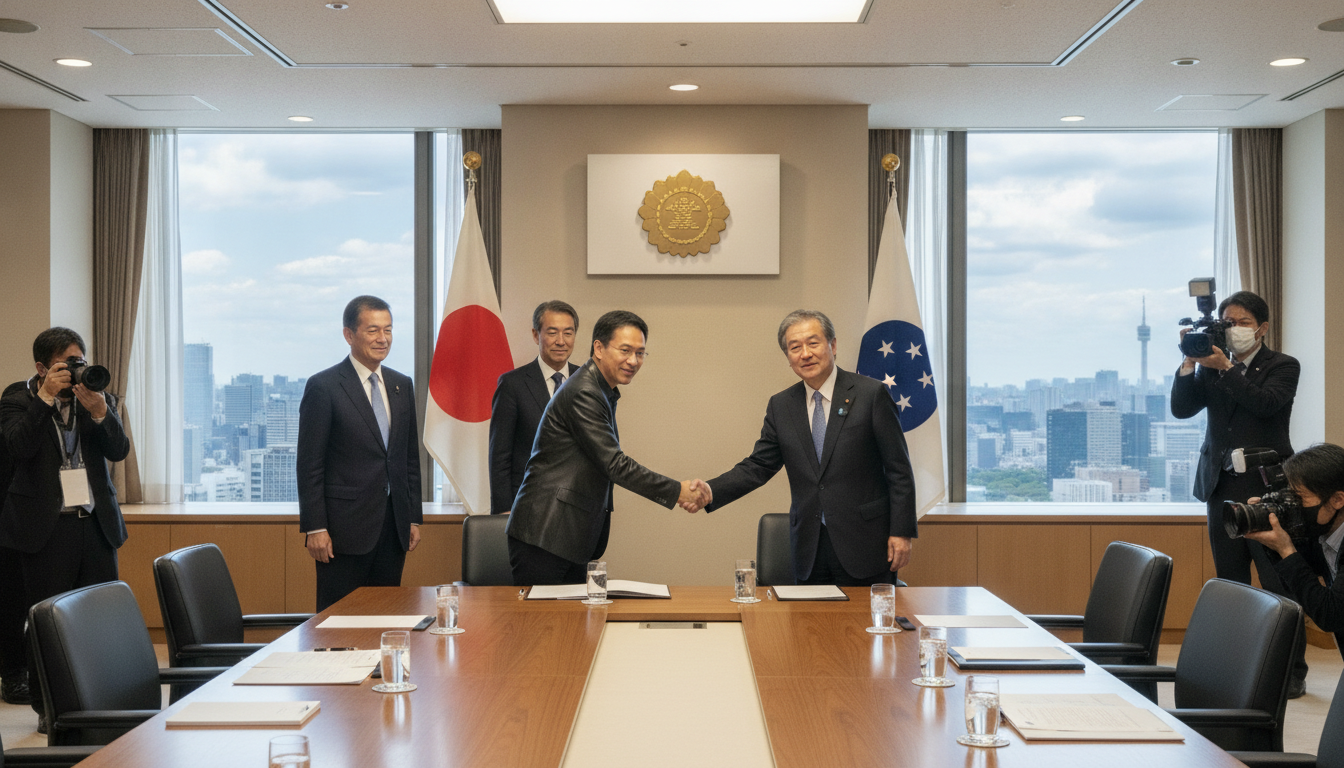
Nvidia visit to Japan: Jensen Huang presses AI and chip case as Tokyo prepares fresh investments
During a high-profile Nvidia visit to Japan, CEO Jensen Huang met government officials on July 16 as Tokyo accelerates plans to boost AI and semiconductor investments. The Nvidia visit to Japan highlights growing industry efforts to secure a role in Japan’s planned funding and procurement strategies. Global technology firms are intensifying outreach to shape the terms of future support and partnerships.
Huang meets METI minister in Tokyo
Ryosei Akazawa, Japan’s minister of economy, trade and industry, received Jensen Huang in Tokyo on July 16, according to images and accounts from the meeting. The session underscored Japan’s interest in securing technology partnerships that can bolster domestic AI capabilities and chip supply chains. Company representatives used the visit to press for collaboration on research, investment and manufacturing projects.
Firms step up pitches as government readies funding
Executives from multiple global technology firms have increased their outreach to Japanese ministries as the government signals larger public spending on AI and semiconductors. Industry participants describe the current window as a critical opportunity to influence procurement, incentives and collaborative research programs. The crescendo of sales pitches reflects both the size of planned public commitments and Japan’s strategic desire to reduce reliance on a narrow set of foreign suppliers.
Government priorities and policy signals
Tokyo’s stated priorities center on accelerating domestic AI adoption, strengthening semiconductor manufacturing capacity, and securing supply chains for critical components. Officials have emphasized a mix of direct investment, subsidies and regulatory measures to attract technology partners and private capital. While specific program details remain under negotiation, the government’s posture communicates an appetite for tying public support to technology transfer, local job creation and resilience goals.
Nvidia’s strategic aims in Japan
For Nvidia, the visit advances several objectives: deepening ties with Japanese corporations, exploring joint research in generative AI and semiconductors, and positioning the company for participation in state-backed projects. The company’s chip portfolio and AI software are seen as potential anchors for advanced computing initiatives within Japan’s manufacturing and services sectors. Nvidia’s outreach follows a broader pattern of technology leaders courting Tokyo as nations worldwide compete for advanced-chip investment and AI talent.
Industry competition and collaboration dynamics
The wave of executive visits reflects both competition and collaboration among foreign and domestic firms seeking partnerships with Japanese companies and ministries. Some firms emphasize fab construction and equipment supply, while others highlight software platforms, cloud services and AI training ecosystems. Japanese incumbents, research institutions and start-ups are weighing offers that range from joint ventures to long-term supply agreements, carefully balancing technological gains against national security and industrial policy objectives.
Potential impacts on supply chains and innovation
If Tokyo follows through with large-scale investment, analysts expect accelerated deployment of AI systems across industry and an uptick in semiconductor-related investment on Japanese soil. Enhanced public backing could attract more manufacturing capacity, spur workforce development programs, and stimulate joint research on next-generation chips and AI architectures. However, observers caution that successful outcomes will depend on clear program design, transparency in procurement, and effective coordination between government and private partners.
Japan’s bid to fortify its technological base comes as global competition for advanced semiconductors and AI leadership intensifies. The Nvidia visit to Japan adds momentum to Tokyo’s ambitions by bringing a leading chip and AI vendor directly into discussions about how public funds and industrial strategy will be allocated. For policymakers and companies alike, the coming months will be decisive in shaping whether these conversations translate into concrete projects and sustained domestic capacity.
International firms now face a strategic choice: deepen local commitments through investment, joint R&D and talent development, or risk losing access to a market where government incentives will favor established partners. The outcome of these negotiations will influence not only Japan’s industrial trajectory but also broader regional supply-chain arrangements and global competition in AI and semiconductors.

