
Osaka Metropolis Plan Faces Renewed Opposition as Komeito Launches Citywide Dialogues
Komeito begins city-wide dialogues opposing the Osaka Metropolis Plan, warning of democratic risks after Governor Yoshimura’s push for simultaneous elections.
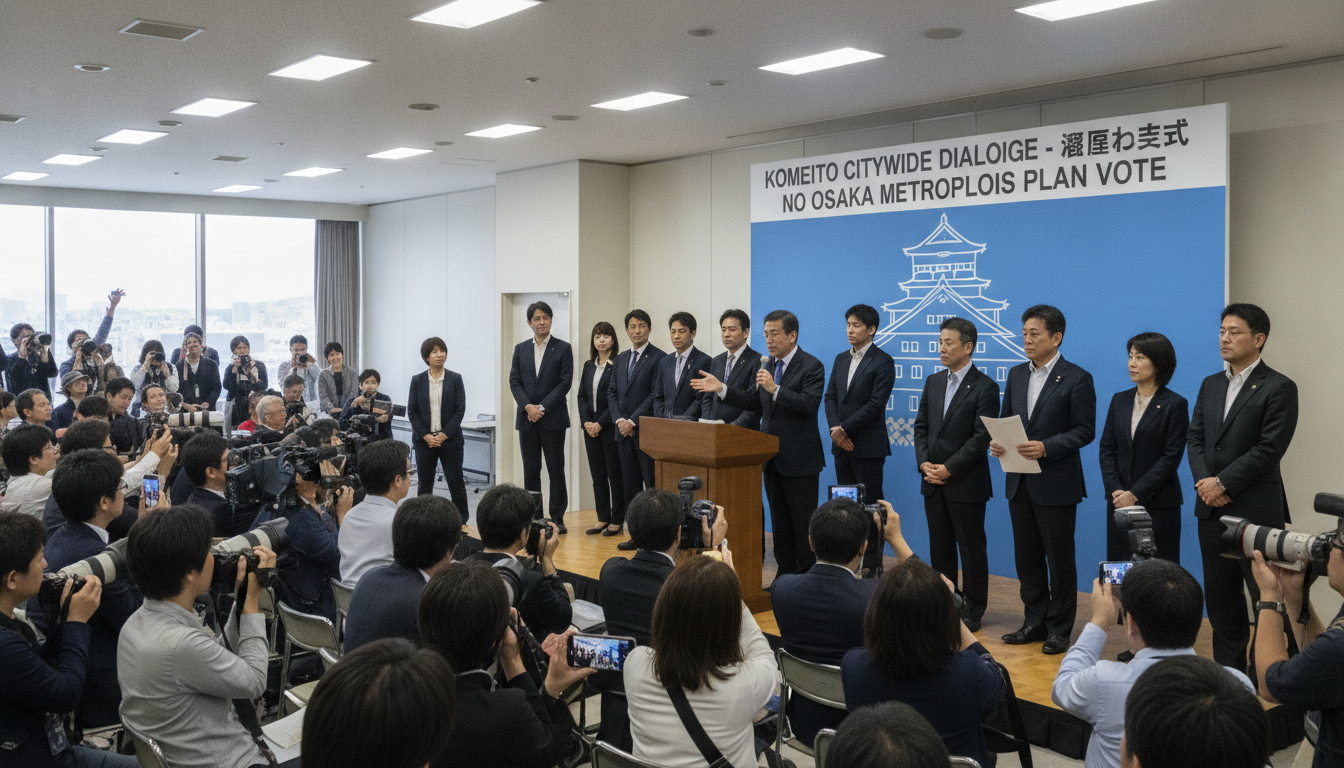
The Komeito Osaka city assembly group on July 25, 2026, launched a series of citizen dialogue meetings aimed at opposing the Osaka Metropolis Plan, the proposal to reorganize Osaka City into special wards similar to Tokyo’s 23 wards.
The opening session in Higashisumiyoshi ward drew local councilors, Diet members and journalists as speakers, and the party said it will use the meetings to outline what it sees as procedural and governance risks.
Komeito opens a 16-stop outreach campaign
Komeito officials said the citizen dialogues will be held at 16 venues across Osaka through early September, targeting residents in each ward.
The party framed the campaign as an effort to deepen public understanding of the plan’s implications and to build opposition ahead of any potential third referendum on the matter.
The first event took place at a ward community hall on the evening of July 25 and drew an audience of local residents and activists.
Organizers said they plan to rotate panelists and tailor sessions to address municipal services, fiscal effects and democratic process concerns.
Panel line-up and core criticisms presented
Panelists at the opening included local city councilors, a House of Representatives member from the Centrist Reform Union, a House of Councillors member from the Democratic Party for the People, and independent journalists.
Speakers focused on legal, administrative and democratic issues they argue have not been fully addressed in public debate over the Osaka Metropolis Plan.
Participants raised concerns including potential dilution of citizen representation, uncertainties around fiscal redistribution, and disruptions to local services during a structural transition.
Several panelists also flagged procedural questions about how future referendums and related elections would be scheduled and coordinated.
Same-day election bid sparks sharp rebuke
The dialogue came a day after the Diet passed a law related to the broader “sub-capital” concept on July 24, 2026, which included an attached resolution urging that any resident referendum and related local elections be scheduled to avoid overlap.
Shortly after the law’s passage, Osaka Governor Hirofumi Yoshimura of the Japan Innovation Party reiterated his intention to pursue simultaneous elections, prompting sharp criticism from Komeito speakers.
Panelists said the governor’s immediate declaration ignored the spirit of the attached resolution and risked undermining deliberative democratic processes.
Speakers described the move as “an insult to parliamentary democracy” and pledged to “absolutely stop” plans for same-day elections if pursued, language that underlined the intensity of opposition in the room.
Historical context and prior referendums
The Osaka Metropolis Plan has already been put to voters twice in previous resident referendums and was rejected on both occasions, opponents noted during the meeting.
Komeito and allied critics argued those earlier defeats reflect persistent public skepticism that, they say, has not been resolved by subsequent political negotiations or legislative changes.
Supporters of the plan, led by the Japan Innovation Party, argue the reorganization would streamline administration and improve competitiveness, while opponents warn of service disruption and weakened local accountability.
The recent passage of related legislation in the Diet has heightened the debate by introducing new legal frameworks that advocates say could hasten implementation, and critics say could be used to compress the timing of public votes.
Political stakes and the calendar ahead
With Komeito mobilizing residents through a series of dialogues, the political contest over the Osaka Metropolis Plan appears set to intensify through the summer and into early autumn.
The scheduled 16 meetings will give opposition parties and civic groups repeated opportunities to make their case in communities across the city.
How the governor’s office, Osaka Prefecture and municipal actors respond to both the outreach campaign and the legal wording on election scheduling will be a key factor in whether a third referendum is called and when it would be held.
Analysts say timing and voter turnout will be critical variables if the proposal returns to the ballot, and both sides are likely to focus heavily on mobilizing their bases.
The Komeito dialogue series seeks to expand public scrutiny of procedural issues and to frame the Osaka Metropolis Plan as not only a technical reorganization but a matter with wide democratic consequences.
As the campaign proceeds through the 16 venues, attention will center on whether the party can translate community meetings into a broader movement against a renewed push for the plan, and whether proponents will press ahead with plans for synchronized elections despite the attached Diet resolution.

