
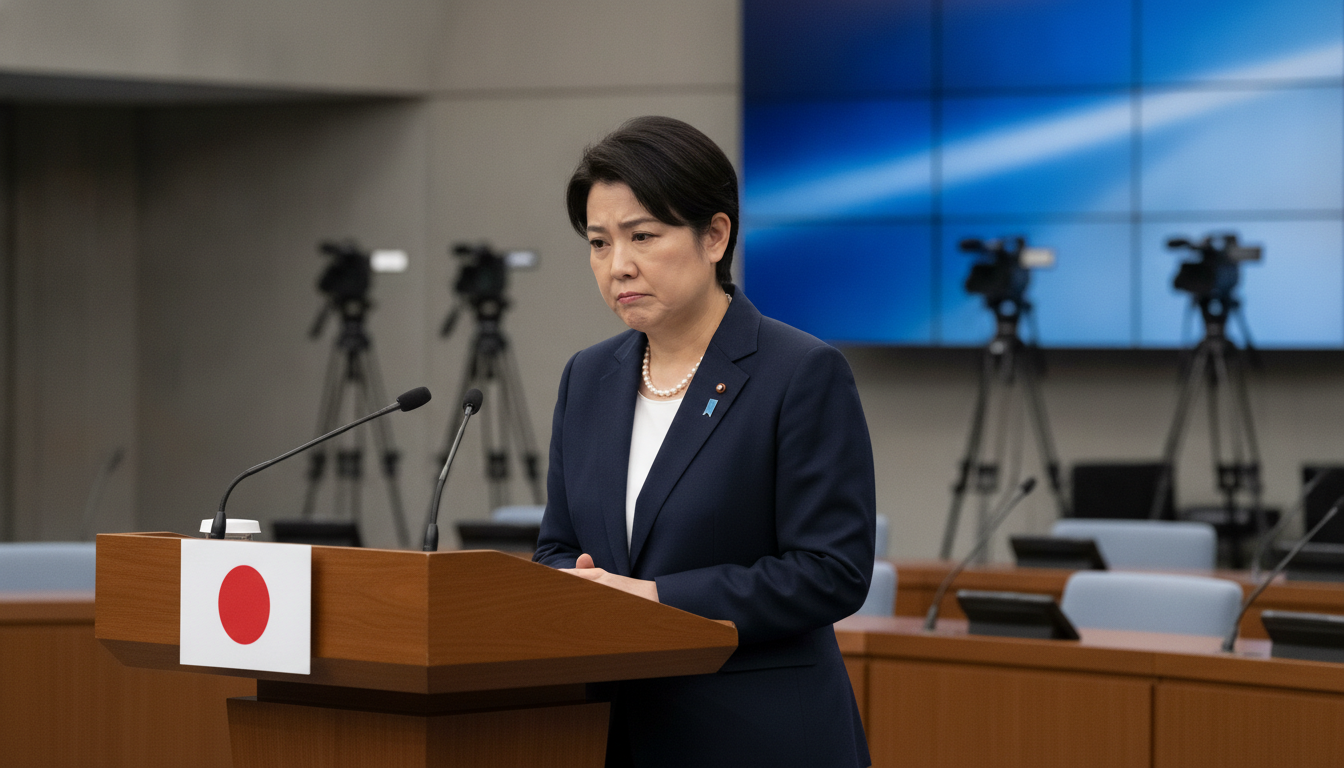
Cabinet approval rating falls to 53% as Takaichi says she cannot identify cause
Prime Minister Sanae Takaichi told the House Budget Committee on July 27, 2026 that she cannot determine the reasons for a recent drop in the cabinet approval rating after media polls showed a decline to 53%. The phrase "cabinet approval rating" is central to the debate unfolding in the Diet.
Takaichi’s response in the Diet
Prime Minister Takaichi appeared before the lower house budget committee on July 27 and was asked to explain why multiple media surveys conducted in late July showed falling support for her cabinet. She said, "I find it difficult to analyze personally the causes of the declines," and added that she could not identify the reason for the lower numbers.
When pressed about specific factors identified in polls, Takaichi said that she considers survey questions about policy proposals and that she takes the public’s views into account, but reiterated that she did not know the underlying causes of the slipping approval. Her reply highlights a widening gap between public polling and the government’s account of political performance.
Poll results and historical context
An Asahi Shimbun survey carried out on July 18–19 showed cabinet approval slipping from 60 percent in June to 53 percent in mid‑July. That figure marks the first time support has dropped into the 50s since the cabinet took office in October 2025. Other major media outlets reported similar downward trends in their late‑July polling.
Analysts note that a single survey does not necessarily predict long‑term political fortunes, but consecutive surveys from different organizations pointing in the same direction raise concerns for the ruling coalition. The decline has prompted renewed scrutiny of the government’s messaging and policy priorities ahead of the legislative calendar this summer.
Opposition accuses Takaichi of prioritizing social media
The secretary‑general of the Centrist Reform Union, identified in Japanese as 階猛, challenged the prime minister in the Diet and criticized what he described as a misalignment between government priorities and citizens’ everyday hardships. He cited rising living costs and industrial disruptions, arguing that the government had focused more on social media outreach than on direct parliamentary explanation.
階猛 said that while the prime minister has publicly described working patterns that include "zero to three hours of sleep" as evidence of diligence, that narrative has failed to translate into heightened public trust. He accused the government of advancing legislation such as the national flag desecration penalty bill, measures to reduce proportional representation seats, and the Deputy Capital Law on the basis of party advantage rather than broad public consensus.
Public concerns driving the polling shift
Opposition and civil society figures have pointed to concrete pressures on households that may be shaping public opinion. Poll respondents cited increases in everyday costs that have forced some to restrict air conditioning or cut back on meals. Industry groups and workers have also reported production and logistics disruptions tied to a shortage of naphtha, a feedstock used in manufacturing, which has impacted business operations.
Policy observers say a combination of economic discontent and perceptions of political priorities can depress approval even when the government highlights legislative achievements. The surveys’ policy‑specific questions appear to have captured public unease about living standards and the pace of economic relief measures.
Legislative strategy and political fallout
Ruling parties moved several high‑profile bills through the Diet in recent months, and critics argue that a focus on legislating contested proposals has alienated parts of the electorate. The Deputy Capital Law, debated as part of plans to distribute government functions, passed by narrow margin earlier this month, drawing scrutiny for its slim majority and expedited timetable.
The prime minister’s defenders counter that advancing party‑backed legislation is a legitimate exercise of parliamentary authority and that policy reforms require decisive action. Still, the combination of contentious bills and sliding polling numbers has fueled debate within and outside the Diet about whether the government’s strategy should pivot toward greater public engagement and clearer explanations of policy benefits.
Political analysts emphasize that how the prime minister and her cabinet respond in the coming weeks—through direct outreach, policy adjustments, or clearer communication on economic measures—could determine whether the dip in the cabinet approval rating stabilizes or deepens.
Public trust and the government’s next steps will be closely watched as lawmakers return to key committee sessions and as further polls are expected through August. The interplay between legislative priorities, economic pressures, and media coverage will likely shape both short‑term approval trends and the broader political landscape in Tokyo this summer.

