
Puppy Yoga Classes in Sydney Help Socialize Adoptable Dogs and Ease Human Stress
Sydney puppy yoga pairs stress-relief classes with adoptable puppies, socializing animals and offering participants relaxation, community engagement and support.
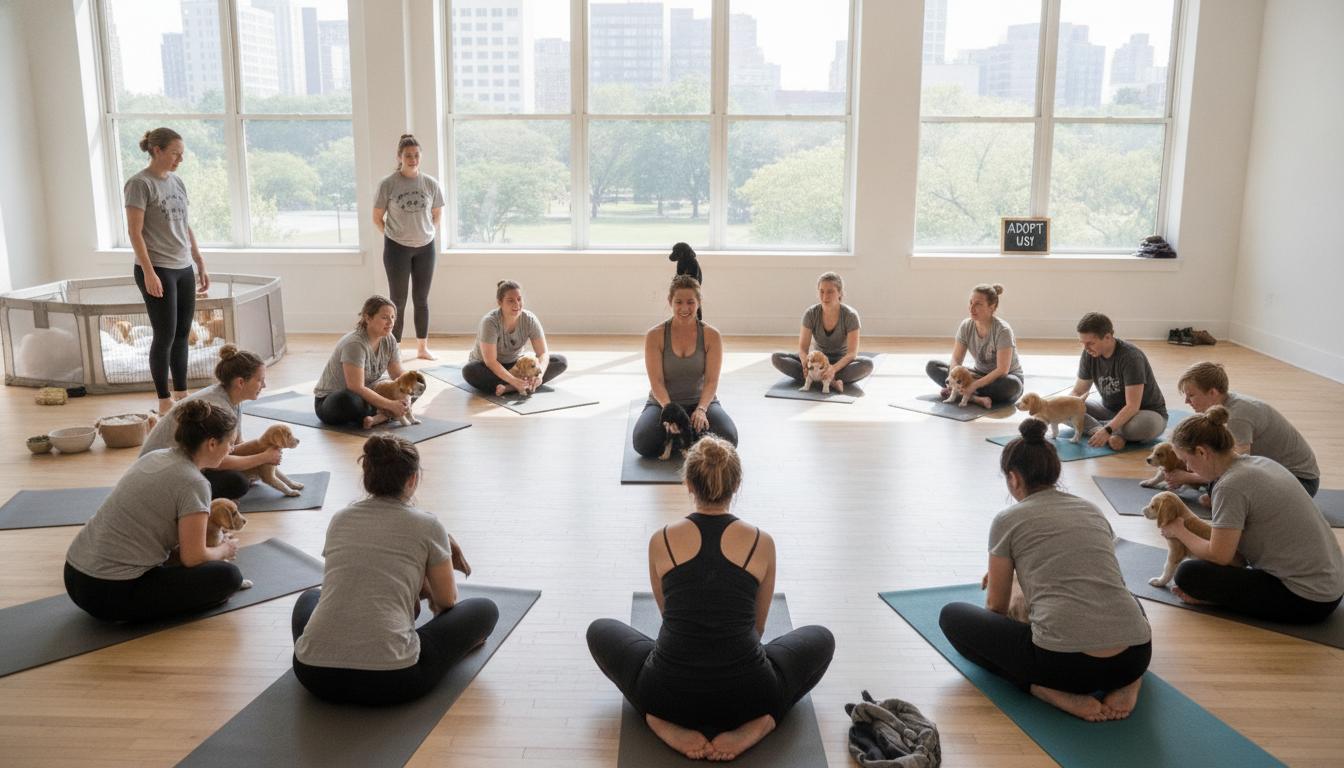
A growing number of Sydney yoga studios are integrating puppies into their classes, a trend organizers say enhances animal socialization while providing stress relief for participants. The phenomenon, popularly called "puppy yoga," brings adoptable dogs into gentle group sessions where they interact with people during breathing exercises, poses and relaxation periods. Organizers and instructors describe the arrangement as mutually beneficial: puppies gain exposure to new sights and handling, and attendees report a reduction in anxiety and an uplift in mood.
Puppy Yoga Classes Expand in Sydney
Doga Sydney, founded by instructor Victor Nguyen and co-founder Lily Wang, stages regular sessions in which a small group of adoptable puppies roam among mats while participants move through a standard yoga sequence. Sessions begin with breathwork, progress through standing and floor poses, and end with stretches and stillness, replicated within a dog-friendly environment. The puppies are free to approach, be petted, or nap beside attendees, and staff supervise interactions to ensure animal comfort and participant safety.
Class sizes are intentionally limited and held in spaces adapted to reduce noise and sudden movements that might stress the animals. Organizers note that the controlled, calm atmosphere used for conventional yoga helps acclimate young dogs to human handling and to being around multiple people. Instructors and volunteers rotate responsibilities—managing the group flow, removing a nervous animal when needed, and providing basic care between classes.
How Sessions Support Socialization and Adoption
Co-founder Lily Wang emphasizes that the primary aim of the program is to prepare puppies for adoption by exposing them to varied human contact. She says the sessions help socialize animals before they are placed in new homes, allowing shelter partners to observe how individual dogs respond to people and different situations. This informal assessment can guide adopters and shelter staff when matching dogs with households, improving the chances of successful placements.
Organizers report that many puppies attending the classes are pulled from rescue networks or foster care, where opportunities for sustained social contact can be limited. Puppy yoga thus functions as both enrichment and screening: calm, sociable animals can be highlighted to potential adopters, while shy or anxious puppies receive gradual exposure and follow-up support. Volunteers note that seeing animals interact positively with a diverse group of people often accelerates interest from prospective adopters.
Participant Experience and Instructional Approach
Participants say the presence of puppies changes the tone of a typical yoga class, adding moments of spontaneous connection and gentle distraction. Many attendees come seeking stress relief, and instructors incorporate simple, low-impact movements to keep both humans and animals comfortable. Sessions are framed as mindful experiences rather than rigorous workouts, with an emphasis on breathing, gentle stretches, and short periods of quiet where participants can relax and interact privately with the animals.
Instructors at Doga Sydney and similar programs train to manage dual needs: maintaining the flow of a yoga session while monitoring puppy welfare. They adapt instructions, such as opting for seated or supine poses when a pup curls up nearby, and they encourage participants to avoid forcing interactions. Safety briefings at the start of each class explain how to approach and handle the animals, and staff remain ready to separate a dog that shows signs of stress.
Health Benefits for Humans and Animals
Anecdotal evidence from attendees points to immediate mood improvements and reductions in perceived stress after participating in puppy yoga. Participants frequently report feelings of calm and increased social connection following a session, outcomes that instructors and program founders cite as central to the classes’ appeal. Organizers also point to the restorative qualities of pet interaction—gentle touch and eye contact with animals often lower physiological markers of stress in short-term settings.
For the animals, exposure to different people, sounds and human movement within a supervised setting provides crucial habituation that can reduce fear-based behaviors later in life. When managed responsibly, these interactions contribute to puppies’ behavioral development and make them more adaptable soon after adoption. Program coordinators stress, however, that animal welfare remains the priority, and they limit session frequency for individual pups to prevent overstimulation.
Partnerships with Shelters and Animal Welfare Groups
Puppy yoga classes commonly operate in partnership with local shelters, foster networks and animal welfare charities that supply adoptable dogs and offer behavioral advice. These collaborations create a pipeline from rescue to adoption that organizers say increases the visibility of animals who might otherwise remain in kennels. Shelters benefit from the additional socialization and from the chance to showcase animals in a relaxed, home-like environment.
Financial support generated by class fees and related fundraising events is often directed back to partner organizations to cover veterinary care, spay and neuter services, and transportation. Organizers emphasize transparency about how funds are used and work to ensure that the program reinforces, rather than replaces, formal adoption processes. Volunteers and shelter representatives attend sessions to answer questions from potential adopters and to facilitate follow-up meetings for those interested in taking a dog home.
Community response has been broadly positive, with repeat bookings common among both yoga practitioners and first-time visitors attracted by the chance to meet adoptable animals. The model—combining public wellbeing with tangible animal welfare outcomes—has prompted interest from other cities and from organizations exploring similar initiatives.
Doga Sydney and its partners say they will continue refining the program to prioritize animal welfare while meeting public demand for mindful, community-oriented activities. They urge prospective participants to book through official channels, observe handling guidelines, and consider adoption as a long-term commitment rather than a one-off experience.

