
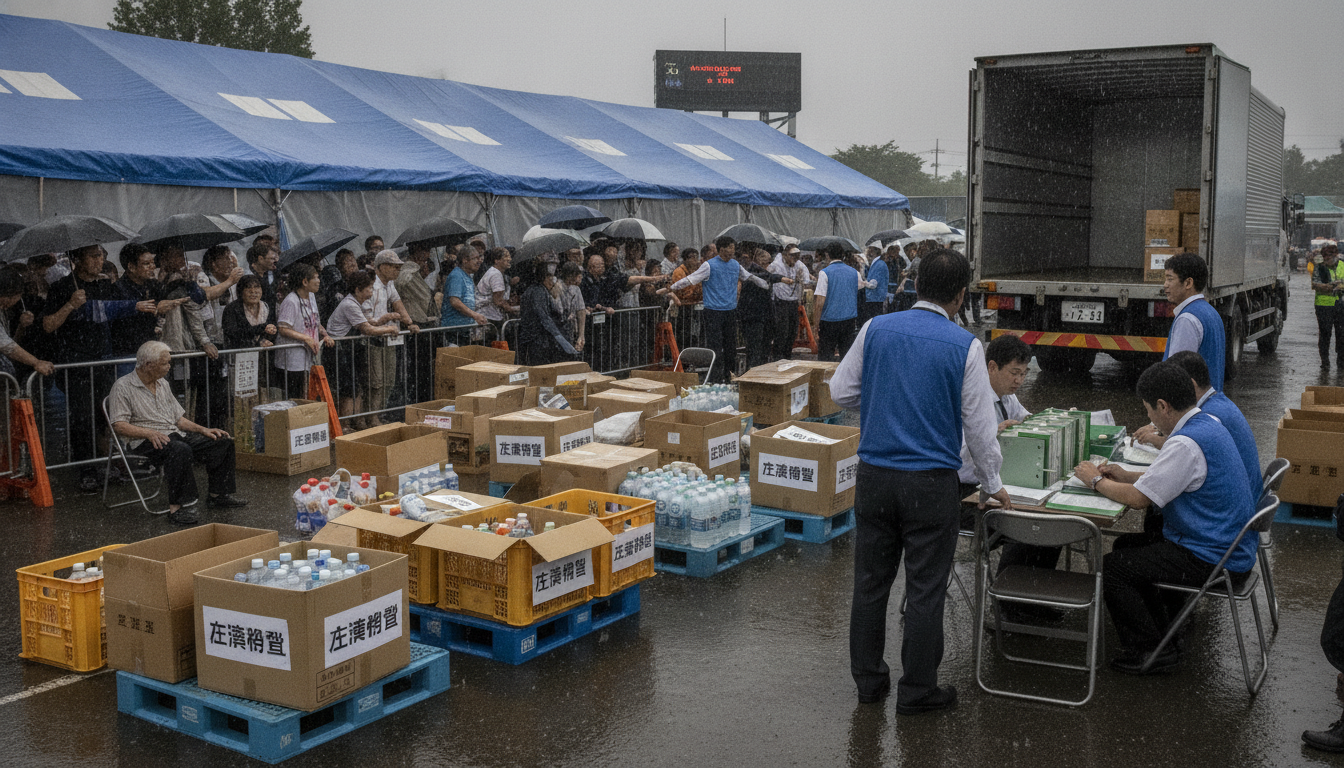
Relief supplies failing to reach Kumamoto shelters amid chaotic distribution
Relief supplies for Kumamoto earthquake evacuees are failing to reach shelters; logistical gaps, poor needs assessment and extreme heat worsen conditions.
Immediate shelter conditions in Kumamoto on August 1, 2026
Evacuation centers across Kumamoto prefecture still host large numbers of residents coping with disruption to housing and services after recent seismic activity. Many shelters report cramped sleeping arrangements and insufficient privacy, with evacuees sleeping side by side on gymnasium floors. The mismatch between what is delivered and what people urgently need has become a central complaint among both evacuees and local staff.
Supply piles near some municipal centers show unopened boxes of items that are not immediately useful, while basic necessities remain scarce. Volunteers and shelter managers say coordination gaps prevent timely transfer of goods from warehouses to the people who need them. These on-the-ground reports have raised fresh concerns about the effectiveness of current relief logistics.
Government push‑type distribution policy and objectives
The central government adopted a push‑type distribution approach, sending large shipments of relief supplies to affected prefectures with the aim of rapid deployment. The strategy prioritizes speed and volume, aiming to avoid shortages that can occur when distribution is left entirely to local authorities. Officials argue the approach prevents critical gaps in the early days after a disaster.
However, the push‑type model assumes accurate situational awareness at the receiving end, including clear estimates of shelter populations and specific needs. In Kumamoto this assumption appears to have broken down in places, leading to surpluses of certain goods and frustrating shortages of others. The result is a growing debate among policymakers and relief coordinators about how to balance speed with precision.
Logistical bottlenecks and communication failures
Transport and distribution chains are encountering multiple bottlenecks between central warehouses and evacuation centers, according to municipal officials. Trucks delivered pallets to regional hubs but lacked destination-specific delivery lists, causing delays while staff sorted and rerouted supplies. Communication systems that should provide real‑time shelter population figures and inventory levels have been patchy, hampering efficient matching of items to needs.
Local governments also face staffing shortages as many municipal employees are themselves coping with damage to homes and infrastructure. That reduces capacity to manage incoming freight and to distribute items within shelters. The combination of constrained personnel, unclear delivery instructions and limited storage at some shelters is lengthening the time between arrival of goods in the area and their arrival at the hands of evacuees.
Shortages hitting infants, elderly and medically vulnerable
Among the most urgent problems are shortages of infant formula and items for the elderly and infirm. Caregivers at several shelters reported running low on ready‑to‑use milk and supplies tailored to infants and small children. Elderly evacuees have voiced complaints about limited access to hygiene facilities and the inability to bathe, which exacerbates health and dignity concerns in prolonged stays.
Public health workers warn that crowded conditions and limited access to tailored supplies raise the risk of heat‑related illness and infection, particularly for vulnerable groups. With high summer temperatures already straining shelter life, the gap between what is needed and what arrives is intensifying pressures on medical teams and volunteer caregivers.
Local responses and civil society efforts
Municipal governments, local nonprofits and volunteer groups have been improvising to fill immediate gaps, organizing ad hoc deliveries and community kitchens. Some towns have repurposed school buses and volunteer vehicles to shuttle priority items from regional hubs to remote shelters. Grassroots networks are also using social media and messaging apps to identify urgent needs and match donations to specific centers.
Nevertheless, volunteer efforts are stretched thin and often lack the logistical capacity to handle large shipments or refrigerated items. NGOs press for clearer lines of authority and better integration with municipal distribution plans so their efforts can be multiplied rather than duplicated. Coordination meetings involving local governments, prefectural officials and civil society have been convened to streamline response operations.
Calls for tactical changes and oversight
Relief coordinators and some municipal leaders are urging a shift toward a hybrid model that combines the speed of push‑type shipments with needs‑driven targeting. Recommendations include establishing real‑time shelter registration systems, predesignated distribution points within municipalities and clearer labeling and manifests for incoming shipments. There are also calls for contingency plans that prioritize perishable and infant supplies in initial loads.
National officials have acknowledged challenges and said they will review distribution procedures, while emphasizing the importance of volume in the immediate aftermath of a major disaster. Observers note that meaningful improvements will require faster information flows from shelters to regional warehouses and more on‑the‑ground logistics support from prefectural authorities.
The situation in Kumamoto highlights the complex balance between rapid mass mobilization and the need to deliver the right goods to the right people at the right time. As temperatures rise and the emergency response moves into its second week, pressure is mounting to close the logistical and communication gaps that keep vital relief supplies from reaching vulnerable evacuees.

