
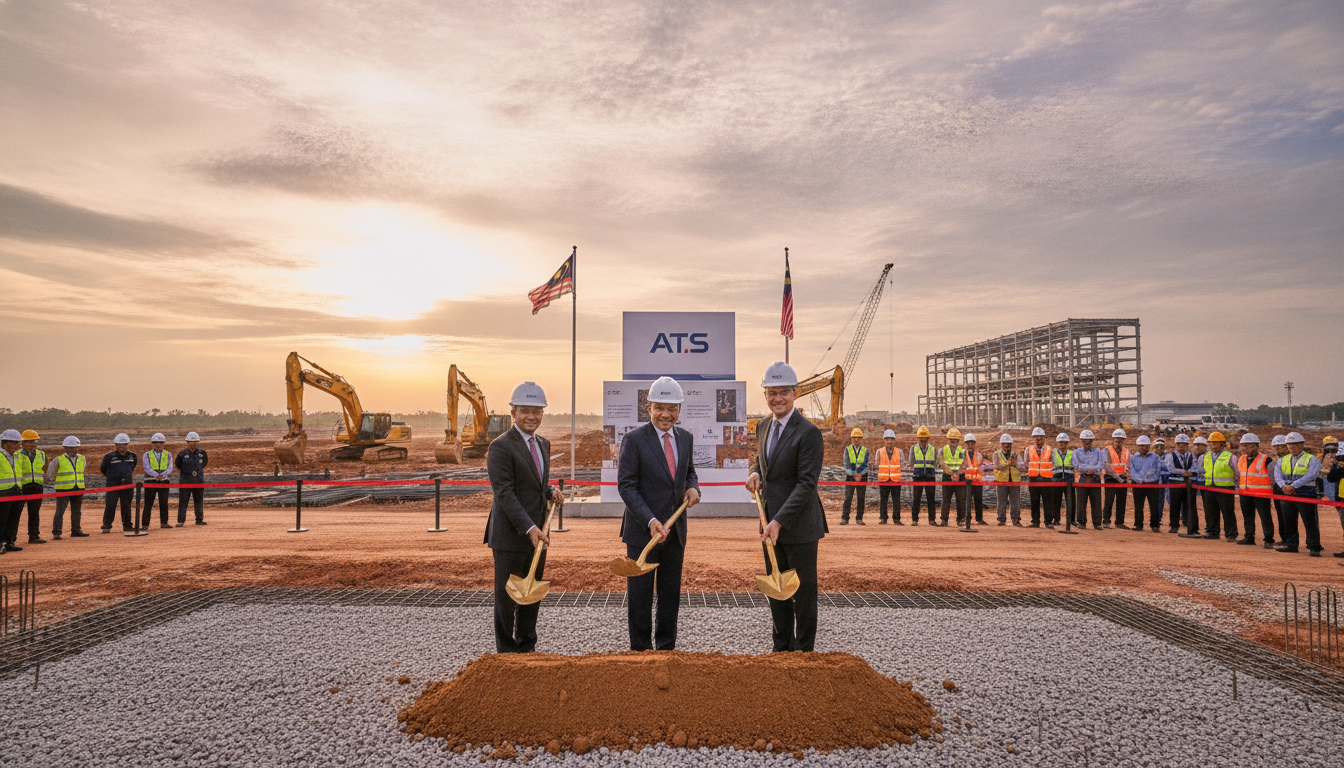
AT&S Expansion in Malaysia Aims to Ease Semiconductor Substrate Shortage
AT&S pledges up to €2 billion to expand Kulim substrate capacity as AI chip demand deepens the semiconductor substrate shortage and pressures global packaging supply chains.
Opening summary
The Austrian substrate maker AT&S announced a major expansion of its Kulim, Malaysia complex to address a growing semiconductor substrate shortage driven by surging demand for AI processors.
The company said it plans to invest up to €2 billion to add advanced IC substrate and packaging capacity, following new agreements with customers including AMD. (ats.net)
Details of the Kulim investment
AT&S said the investment will be used to fit out additional production lines at its existing Kulim plant and an adjacent, previously unused building within the Kulim industrial zone.
The company framed the move as a strategic response to multi-year customer commitments for high-end substrates that sit beneath next-generation AI chips. (ats.net)
Why AI chips are creating a substrate bottleneck
As AI processors become larger and more power-hungry, they require denser interconnects and more complex substrate designs that are harder and slower to produce.
Industry analysts and AT&S executives say packaging and substrate capacity — not only wafer fabrication — is emerging as a critical constraint on the AI hardware supply chain. (thenextweb.com)
Customer deals and supply commitments
AT&S disclosed agreements with AMD and another major technology customer that underpin the expansion and give the company visibility into future demand.
Those commitments helped the company raise its outlook for the 2026/27 financial period and justified the multibillion-euro capex plan announced in mid-June. (live.euronext.com)
Operational ramp and workforce implications
Management said the Kulim additions will reuse existing infrastructure where possible but require significant installation of cleanroom tools and advanced process lines to manufacture IC substrates.
AT&S indicated the build-out will proceed in phases, with equipment installation and qualification expected to span multiple quarters before full high-volume production begins. (ats.net)
Impact on Malaysia’s electronics ecosystem
The expansion reinforces Malaysia’s role as a regional hub for advanced electronics and could attract further upstream and downstream investment in testing, packaging and materials.
Local officials and industry groups have long courted IC substrate suppliers to deepen the country’s electrical and electronics value chain, and the AT&S commitment signals continued confidence in that strategy. (theedgemalaysia.com)
Market and geopolitical reverberations
The announcement triggered a sharp market reaction, lifting investor sentiment around companies supplying AI infrastructure and prompting analysts to highlight risks of geographic concentration and supply tightness.
Splitting capacity between Malaysia and other sites has been depicted by AT&S and observers as a hedge against supply-chain disruption and a response to customers’ geographic diversification strategies. (live.euronext.com)
AT&S’s expansion underlines a fundamental shift in the semiconductor landscape: as AI workloads scale, so does demand not only for leading-edge wafers but also for the substrates and packaging that enable multi-chip modules and dense interconnects.
If the Kulim ramp proceeds on schedule, it will add meaningful capacity to the global substrate pool, but industry participants caution that bringing advanced substrate tools to full productivity is a multi-year task with tight margins for error.

