
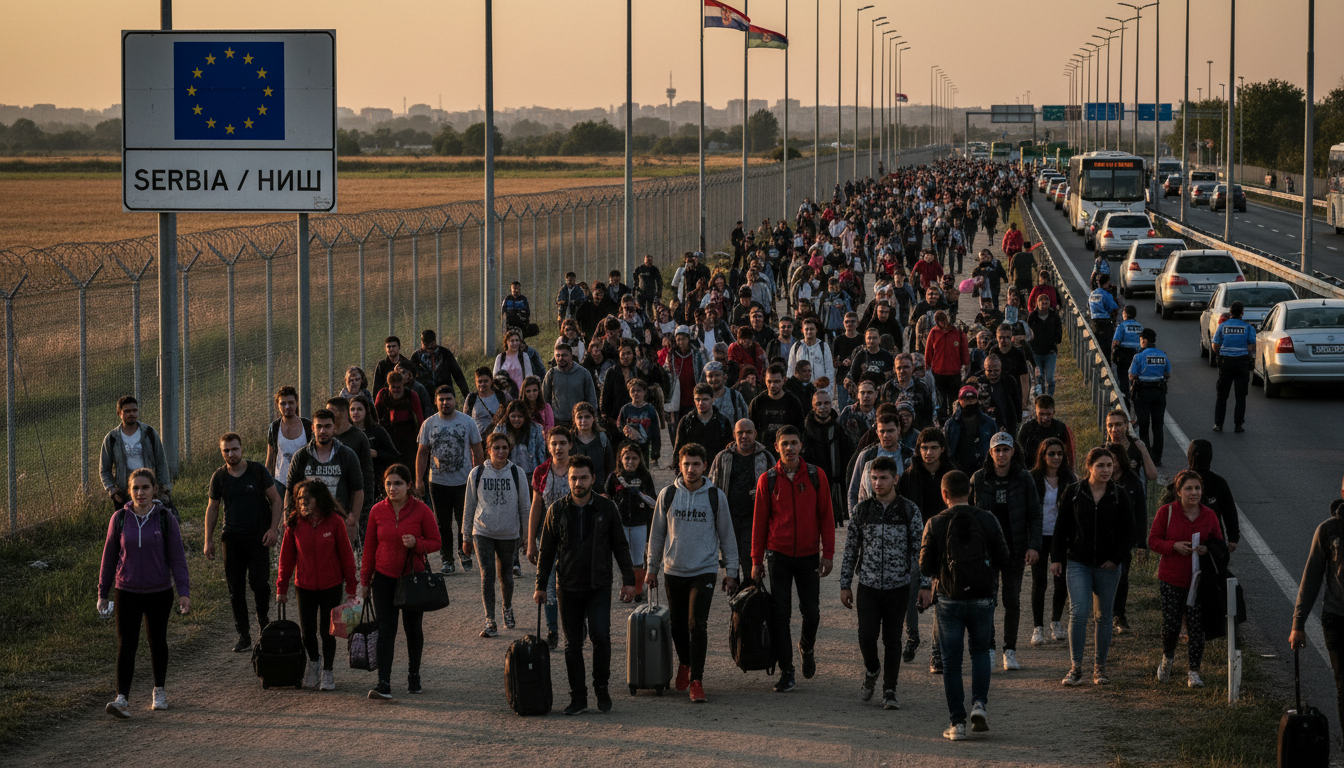
Serbia migration surge: Visa-free entry and geography turn Balkan state into a transit magnet
Serbia migration surge draws migrants to Belgrade and border regions, with visa-free access and proximity to EU states fuelling transit flows and straining local services.
BELGRADE/OBRENOVAC, Serbia — A Chinese map scrawled on the wall of a refugee settlement outside Belgrade captures a larger reality: Serbia has become a focal point in the Serbia migration surge as people from across Asia, Africa and the Middle East seek routes into the European Union. Visa-free entry for many nationalities and Serbia’s position next to EU member states have made the country both a destination and a corridor for those pursuing asylum or onward travel. Local authorities and aid groups say rising numbers are testing reception facilities and prompting tougher border enforcement by neighboring countries.
Serbia emerges as regional transit hub
Serbia’s geographic position in the central Balkans places it at the crossroads of eastern Mediterranean and Central European routes, turning towns such as Obrenovac and Belgrade into waypoints for long-distance travelers. For many migrants, the capital is where journeys pause for rest, document processing, or attempts to cross into EU territory.
Authorities and humanitarian groups describe a mix of people staying in informal settlements, state-run centers and private accommodations while they plan their next moves. That diversity — reflected by maps, languages and household items in the camps — underlines Serbia’s dual role as both host and transit country in the broader migration pattern.
Visa-free access and transport routes explained
Part of the appeal for migrants is the relative ease of entering Serbia compared with stricter visa regimes elsewhere in the region. Nationals from several countries can enter without visas or with simplified procedures, allowing them to travel overland by bus, train or private vehicle toward western and northern borders.
Transport links connecting Serbia to neighboring EU members create onward options that are appealing despite tightened controls at some frontiers. Migrants and smugglers alike exploit a patchwork of crossing points, official channels and informal routes to navigate a region where rules and enforcement vary widely from one border to the next.
Tighter enforcement at the Hungarian-Serbian border
Along the northern frontier, increased patrols and physical barriers have made crossing into Hungary more difficult than in previous years. Visual evidence of heightened security — officers on foot and vehicle checks — illustrates the pressure neighboring EU states are placing on their external borders to stem irregular entries.
That intensification of enforcement has shifted movement patterns, with some migrants seeking alternative routes through Croatia, Romania or Bosnia and Herzegovina. The result is a dynamic, often dangerous set of journeys that places migrants at the mercy of smugglers, harsh terrain and shifting enforcement priorities.
Makeshift camps and migrant settlements near Belgrade
Near Belgrade, clusters of makeshift shelters and repurposed buildings reflect a growing and improvised reception landscape. A Chinese map pinned to a wall in one settlement has become a small symbol of the cosmopolitan mix of residents — people who have traversed continents and now concentrate in a few urban and peri-urban pockets.
Living conditions vary widely: some centers offer basic services and formal registration options, while many informal sites lack reliable sanitation, heating and legal protections. These disparities complicate efforts by municipal authorities to manage public health, safety and the orderly processing of asylum claims.
Local response: municipalities and NGOs under pressure
Municipal governments have repeatedly appealed for additional resources as local budgets strain under the demands of shelter, medical care and waste management. In towns hosting large numbers of migrants, school, health and social services face increased workloads that were not planned for in municipal forecasts.
Non-governmental organizations provide much of the front-line assistance, from food distribution to legal aid, but they say funding and volunteer capacity are unpredictable. Coordination between government agencies and aid groups remains essential but sometimes cumbersome, creating gaps that affect the most vulnerable, including children and the elderly.
EU and regional governments seek coordinated approach
The migration flows have prompted renewed discussions between Serbia and its EU neighbors about border management, asylum processing and returns. Brussels and national capitals stress the importance of orderly procedures that respect international protection rules while addressing illegal migration.
Serbia finds itself balancing international obligations with domestic political pressures to control its borders and public spending. Regional diplomacy has emphasized information sharing, support for reception capacity and joint initiatives against smuggling, though implementation of coordinated measures often lags behind shifting patterns on the ground.
As migration routes adapt to enforcement and policy changes, Serbia’s role in regional mobility is likely to remain central in the months ahead. The human stories behind the flows — families sleeping in improvised tents, people consulting maps and planning the next leg of their journeys — are a reminder that policy responses will shape not only numbers but also the lives affected by this migration surge.

