
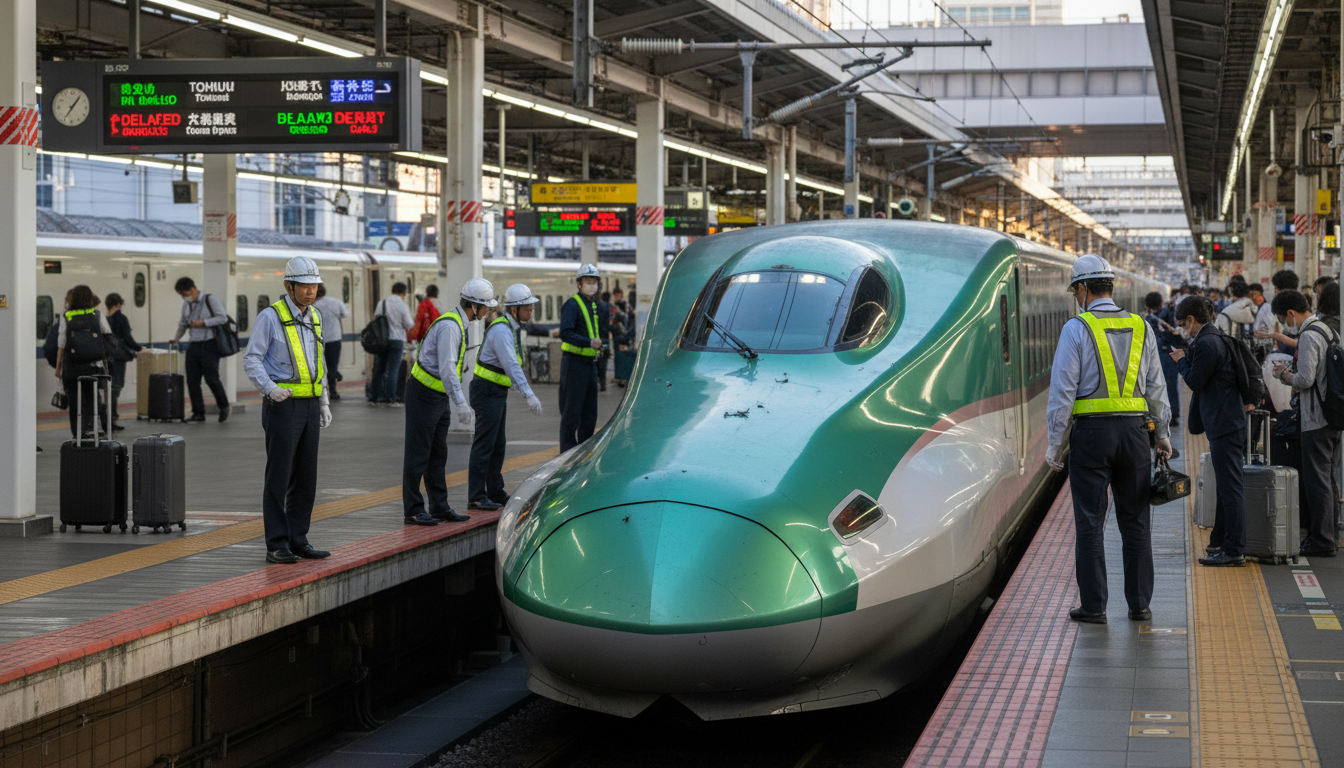
Crow Collision Halts Shinkansen at Omiya, Delaying Tohoku, Joetsu and Hokuriku Services
May 15, 2026: A crow struck overhead lines at Omiya Station, cutting power to Shinkansen trains and delaying Tohoku, Joetsu and Hokuriku services in Saitama.
A crow collision with overhead equipment at Omiya Station on the morning of May 15, 2026, briefly cut power to northbound Shinkansen services and produced delays across multiple lines. The incident occurred at about 11:00 a.m. JST when an up-bound train was approaching the platform and power supply to the catenary was interrupted. Passengers reported a sudden jolt and lights going out in carriages, and railway operators moved quickly to assess the fault and restore service.
Crow collision stops Shinkansen power at Omiya Station
JR operators reported that a crow made contact with overhead wiring inside Omiya Station’s Shinkansen area, triggering a temporary power shutdown that affected the Tohoku, Joetsu and Hokuriku Shinkansen services. The disruption forced at least one train to halt partially within the station while crews inspected the overhead lines and the affected train equipment. Service for the affected trains was suspended for roughly 25 minutes before trains were allowed to enter the platform and passengers disembarked.
Passenger account from Joetsu Shinkansen ‘Toki 314’
A passenger aboard the Joetsu Shinkansen service Toki 314, traveling from Nagaoka to Omiya for work, described the moment the train stopped and power was lost. He said the train was nearly half in the platform when there was a loud impact and the carriage lights and other systems went dark, prompting some passengers to check mobile phones and speak with staff. Train announcements later informed passengers that a bird strike on the wiring had caused the outage, and the atmosphere onboard remained calm as operators managed the situation.
Recent pattern of crow-related disruptions
Railway officials say this incident is one of several bird-related outages in recent weeks, underscoring an emerging operational challenge for high-speed services. Earlier in April, JR crews found a crow’s nest on a utility pole within the Omiya station precinct, prompting temporary suspensions while the nest was removed and inspections carried out. Other incidents around the region have included crows colliding with pantographs or overhead lines, causing additional short-term blackouts and service delays.
JR East and JR Central figures on bird-related outages
JR East has reported that bird-caused power interruptions occur roughly ten times a year on its Tohoku, Joetsu and Hokuriku Shinkansen corridors, with most attributed to crows. JR Central, which operates the Tokaido Shinkansen, has logged several similar events annually, and company statements indicate that crows are the primary species involved when avian incidents disrupt power. Both operators emphasize that while such interruptions are generally brief, they can cascade into delays across interconnected schedules during peak travel periods.
Operational response and preventive efforts
Following the Omiya disruption, railway maintenance crews inspected the catenary, cleared any debris, and conducted safety checks on the affected rolling stock before resuming normal operations. JR East has previously carried out targeted nest removals and heightened patrols around critical overhead infrastructure during seasons when bird activity increases. Railway sources say crews also consider timetable adjustments and rapid-deployment inspection teams to reduce passenger impact when avian incidents occur.
Impact on passengers and timetable restoration
Onboard announcements and staff guidance allowed passengers to disembark safely once the train entered the platform after the outage was resolved. The roughly 25-minute interruption required coordination with station staff, operations control and maintenance teams to ensure that power could be restored and services could resume without safety compromises. While service resumed for most trains, some connections and onward schedules experienced knock-on delays as operators worked to re-stabilize the timetable across affected lines.
Operators note that maintaining safety remains the priority when responding to bird strikes, and that checks on overhead wiring and pantographs are standard procedure after any contact with wildlife. Passengers were advised to allow extra travel time on days when maintenance or inspection work is underway and to follow station staff instructions when incidents occur.
The Omiya event underscores the vulnerability of high-speed rail infrastructure to wildlife interactions and the operational vigilance required to manage them. Rail companies say ongoing monitoring, seasonal inspections, and rapid response protocols are central to reducing the frequency and impact of crow-related outages on the Shinkansen network.

