
Ship Seized Off UAE, Indian-Flagged Cargo Sinks Near Strait of Hormuz
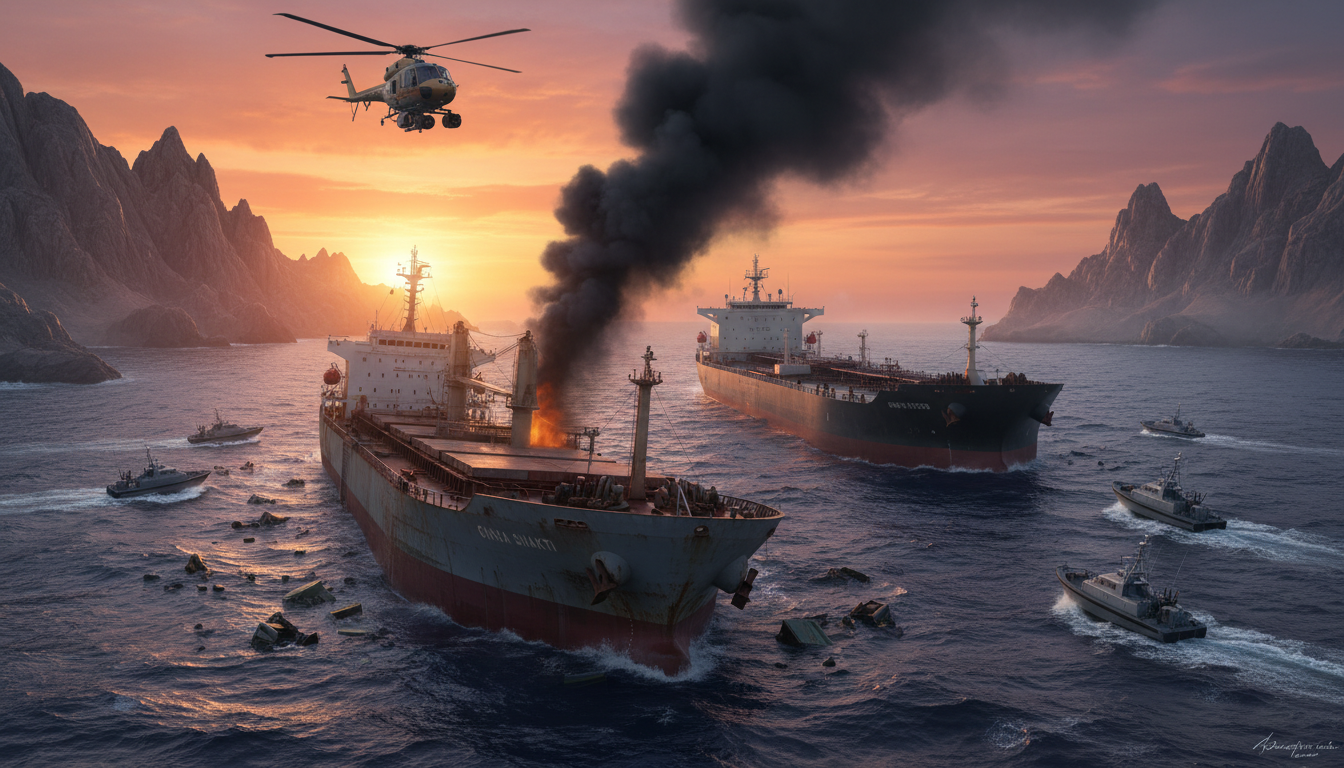
Ship seized off the UAE and an Indian-flagged cargo ship sank after attacks near the Strait of Hormuz on May 15, 2026, escalating tensions and disrupting trade.
The seizure of a vessel anchored off the United Arab Emirates and the sinking of an Indian-flagged cargo ship near Oman marked a sharp escalation in maritime incidents around the Strait of Hormuz on May 15, 2026. Reports indicate the anchored ship was taken by unauthorized personnel and was being moved toward Iranian waters, while the cargo ship caught fire and later sank after an attack. The incidents come amid heightened claims by Iranian officials over control of the vital waterway and ongoing diplomatic maneuvering involving the United States, China and regional states.
Ship Taken Near Fujairah Reported Bound for Iran
The U.K. Maritime Trade Operations center said it received reports that a vessel anchored 38 nautical miles northeast of Fujairah was taken by unauthorized personnel. The organization said the ship was heading toward Iranian waters and that investigations were underway to confirm the ship’s identity and crew status.
British naval authorities confirmed movement of the vessel toward Iran but withheld the ship’s name pending verification. Maritime security analysts warned the seizure adds to a pattern of confrontations that have disrupted commercial traffic in one of the world’s busiest oil transit corridors.
Indian-Flagged Haji Ali Sinks After Attack Off Oman
Indian authorities reported that the Indian-flagged cargo ship Haji Ali was attacked while en route from Somalia to the UAE port of Sharjah. The assault sparked a blaze aboard the vessel; Oman’s coast guard rescued all 14 Indian crew members before the ship sank, Indian shipping officials said.
India’s foreign ministry condemned attacks on commercial shipping and civilian mariners as “unacceptable” and called for immediate international action to protect merchant vessels. Investigations into the origin of the attack are ongoing, and no group has publicly claimed responsibility for the strike.
Iran Asserts Sovereignty Over the Strait of Hormuz
Senior Iranian officials reiterated claims of sovereignty over the Strait of Hormuz, with one senior vice president declaring the strait belonged to Iran “at any price.” Tehran has pressed demands in talks with the United States that included acceptance of Iranian control over the waterway and reparations for wartime losses, according to statements released by Iranian state-affiliated media.
Iran’s judiciary also defended the right to seize oil tankers it says are linked to the United States, calling such measures lawful given alleged violations of maritime norms. Tehran’s posture has raised alarm among nations that depend on open navigation through the strait and among insurers covering maritime traffic.
Diplomatic Context and Regional Alignments
The incidents occurred as high-level diplomacy unfolded elsewhere, including a meeting between U.S. and Chinese leaders in Beijing where both sides reportedly agreed the Strait of Hormuz must remain open. Iran said it had facilitated the passage of some Chinese vessels under new protocols after requests from Beijing’s diplomats, a development reported to coincide with diplomatic engagements in China.
Meanwhile, regional politics are strained by revelations of sensitive meetings and shifting security partnerships, including assertions about Israel’s role in Gulf security. Gulf states have attempted to balance public diplomacy with discreet security cooperation, complicating efforts to present a unified regional front on maritime security.
U.S. Military and International Responses
U.S. military officials told lawmakers they believed Iran’s military capabilities had been degraded but warned that Iranian rhetoric alone was deterring merchant shipping and raising insurance costs. The top U.S. commander for the Middle East said the United States retains the capability to reopen the strait and escort commercial vessels, while deferring to civilian policymakers on the appropriate response amid delicate negotiations.
International maritime agencies and shipping companies responded by issuing navigational warnings and reviewing routing and insurance policies. Industry sources said the incidents have already pushed up freight and fuel premiums and prompted some vessels to delay transits or seek alternate routes when feasible.
Economic Impact and Shipping Industry Concerns
The Strait of Hormuz previously carried about a fifth of global oil exports before the recent war, and renewed instability has jolted markets and added to fuel price volatility. Maritime insurers and charterers have reassessed risk in the region, and some shipping lines are weighing the cost of rerouting around longer southern passages versus paying higher premiums for transit.
Analysts warn that continued seizures or attacks could have broader consequences for global energy supplies and shipping schedules, affecting markets beyond the Middle East. Traders and ports across Asia and Europe are monitoring developments closely for signs that disruptions will persist or intensify.
The unfolding maritime incidents near the Strait of Hormuz underline how strategic waterways can become focal points in broader geopolitical contests. With investigations continuing and diplomatic talks at sensitive junctures, regional and international actors face difficult choices about protecting commerce without escalating military confrontation.

