
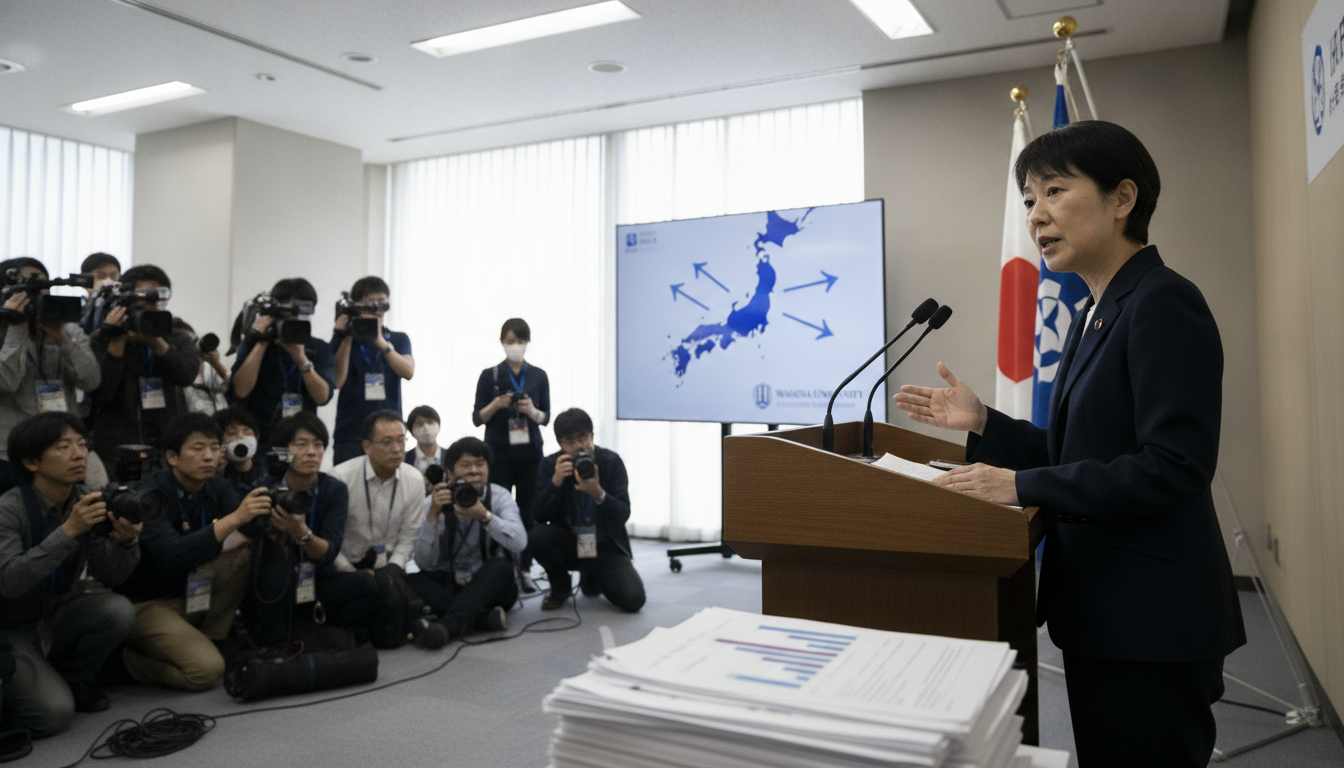
Politics, Not Public Mood, Fueled Rise of Xenophobia in Japan, Waseda Study Finds
Waseda study finds political leaders, not public opinion, ignited xenophobia in Japan. Shunsuke Tanabe’s surveys show political rhetoric shifted attitudes.
Japan’s recent surge in anxiety toward foreigners was driven more by political actors than by a spontaneous rise in public fear, according to long‑running research by Waseda University sociologist Shunsuke Tanabe. The study, based on surveys of Japanese attitudes toward foreigners and political awareness conducted every four years since 2009, finds that elite rhetoric and policy signals preceded and helped shape popular concern about immigration and multicultural change. The research challenges the common assumption that politicians simply respond to public opinion, suggesting instead that political narratives can create and amplify xenophobia in Japan.
Survey Findings from Repeated National Polls
Tanabe’s team has tracked changes in public attitudes in regular intervals since 2009, using nationally representative questionnaires to measure both general sentiment toward foreigners and perceptions of government policy. Over the cycles, researchers observed spikes in negative attitudes that coincided with intensified political debate on immigration and national identity. The timing of those spikes implies a causal link in which political messaging altered public perceptions rather than merely reflecting preexisting anxieties.
The surveys distinguished between policy preferences, perceived economic threat, and cultural concerns, allowing researchers to detect which messages resonated with different segments of the population. Results showed that targeted political messages — particularly those framing foreigners as a threat to safety, employment, or cultural cohesion — had measurable effects on respondents’ willingness to support stricter immigration measures. The pattern held across age groups, though intensity varied by demographic and region.
Political Campaigning and Party Appeals
Political figures and parties that emphasized stricter immigration controls and “Japan First” rhetoric gained visibility and support during the period studied, the research notes. Parties and leaders who foregrounded foreigner policy in campaign platforms and public statements were often rewarded with higher approval from voters concerned about identity and security. That dynamic provided incentives for further hardline messaging, creating a feedback loop between political competition and the amplification of xenophobic themes.
Tanabe pointed to the role of parties that explicitly foreground Japanese identity and sovereignty as part of their appeal, as well as high‑profile politicians who framed immigration as a policy failure that needed urgent correction. While some political actors advocated for tighter controls on residency and labor, others promoted selective openness for economic reasons, complicating public perceptions. The net effect, according to the Waseda analysis, was a politicized debate in which hardline positions set the terms of discussion.
Mechanisms of Message Amplification
The study identifies several mechanisms by which elite cues translated into broader public concern, including media coverage, legislative proposals, and symbolic parliamentary debates. Media outlets that highlighted contentious statements and policy battles helped extend the reach of political framing, while visible government moves signaled to citizens that foreigner issues were politically salient and urgent. Legislative proposals that promised stricter enforcement or tighter entry rules served as tangible reference points that reinforced rhetorical claims.
Social networks and local community exchanges also amplified messages, especially in areas experiencing rapid demographic change or increased foreign visitor presence. In such localities, personal anecdotes and media accounts combined to produce a sense of immediacy that political actors could tap into. The result was not a spontaneous mass panic but a mediated process in which political leadership and communicative channels shaped collective perception.
Consequences for Policy and Social Cohesion
The politicization of foreigner issues has produced tangible policy shifts and social effects, the research warns. Heightened public anxiety has increased support for regulatory tightening and stronger enforcement measures, even as the economy faces labor shortages that some experts say require more foreign workers. At the same time, rising suspicion toward foreigners can erode community cohesion and complicate efforts to integrate long‑term residents and short‑term visitors alike.
The study’s findings carry implications for tourism and migration policy as well. Japan’s visitor numbers and international exchanges have grown sharply in recent years, but political contestation over who should be allowed, under what conditions, and how newcomers should be described has sometimes overshadowed pragmatic policy design. That mismatch risks producing reactive measures that satisfy short‑term electoral pressures but undermine longer‑term social and economic objectives.
Responses from Scholars and Policymakers
Scholars who study political communication and migration policy say Tanabe’s research adds important empirical weight to debates about the origins of xenophobic sentiment. By documenting the temporal order of campaigns and public opinion, the work helps distinguish between bottom‑up and top‑down explanations for shifts in social attitudes. Policymakers and civil society groups, meanwhile, face a practical challenge: how to foster informed debate without inflaming fears for political gain.
Some experts recommend clearer government communication about the economic and legal realities of migration, combined with local initiatives to facilitate everyday interaction between residents and foreign newcomers. Others emphasize the importance of political leadership that resists fear‑based framing and instead advances policy solutions grounded in evidence and social inclusion. The Waseda findings suggest that such leadership can play a decisive role in altering the trajectory of public attitudes.
The Waseda University study underscores a central lesson for Japan’s public sphere: when political actors adopt exclusionary frames, those frames can cascade through media and civic life to reshape what citizens see as acceptable policy. Reversing or moderating that dynamic will require both responsible political discourse and active engagement across communities to rebuild trust and clarify the stakes of migration policy.

