
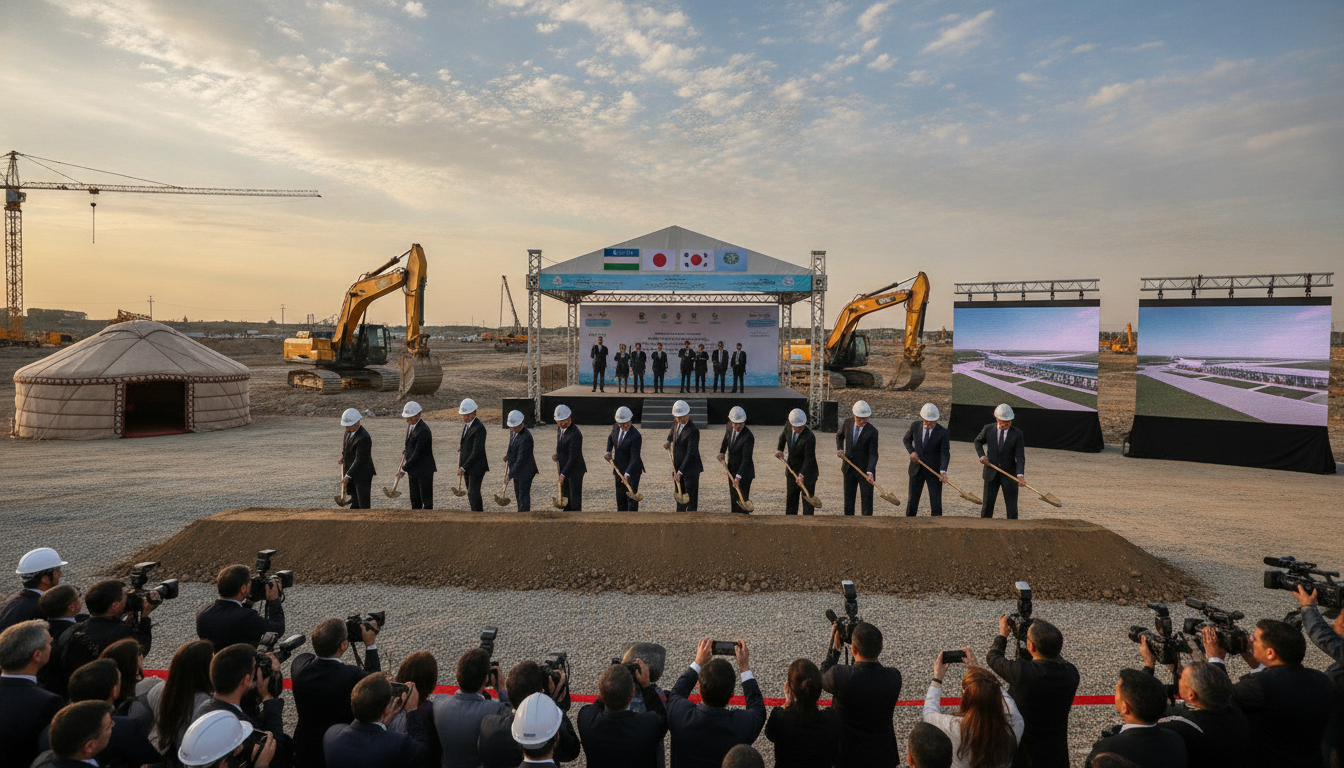
Japan, South Korea and Saudi Investors Break Ground on New Tashkent Airport
Japan, South Korea and Saudi partners break ground on the new Tashkent airport as Uzbekistan pushes to liberalize aviation and prepare its state carrier for a 2027 listing.
Uzbekistan on Wednesday marked the start of construction on the new Tashkent airport near the capital, with investment groups from Japan, South Korea and Saudi Arabia among the lead backers. The new Tashkent airport is a central element of the government’s broader push to open the aviation sector and reposition Uzbekistan as a Central Asian travel hub. Officials also confirmed plans to list the national airline in 2027, a move that international advisers say will accelerate private-sector engagement and passenger growth.
Construction and lead investors
The ground-breaking ceremony brought together representatives from state and private entities that will finance and build the new Tashkent airport. Japanese and South Korean firms are contributing technical expertise and construction capacity, while Saudi investors are expected to provide capital and experience in airport operations. The Uzbek government emphasized a public-private partnership model intended to attract long-term foreign investment and transfer know-how to local contractors.
The project is being framed as a regional gateway rather than a purely domestic facility, and investors are structuring contracts to include operations, maintenance and retail concessions. Early-stage agreements name international engineering and project-management teams to oversee runway construction, terminal design and ground transport links. Local authorities have said environmental and land-use assessments will guide the first phase, with detailed timelines to be released as milestones are met.
Aviation liberalization and policy changes
The new airport comes amid a wider set of reforms aimed at liberalizing Uzbekistan’s civil aviation industry. Regulators are revising route rights and opening codeshare opportunities to increase international connectivity. These policy shifts are designed to reduce barriers for foreign carriers and to attract low-cost and full-service airlines to expand routes through Tashkent.
Officials have also signaled reforms to air traffic management and safety oversight to align with international standards. The government is seeking to streamline permits and reduce bureaucratic hurdles that previously constrained market entry. Aviation experts interviewed by officials say these changes could catalyze a multi-year increase in arrivals to Central Asia.
State airline listing planned for 2027
The government has indicated that the national carrier will be prepared for a public listing in 2027, a centerpiece of the reform package tied to the new Tashkent airport. Preparations are expected to include corporate restructuring, enhanced financial transparency and steps to improve commercial performance. Authorities say the listing aims to attract institutional investors and to provide the carrier with capital to modernize fleets and expand route networks.
Analysts caution that timing the listing will depend on market conditions and the airline’s ability to demonstrate sustainable profitability. International underwriters and advisers are expected to be engaged to ensure compliance with listing requirements and to manage investor relations. A successful float would mark a significant milestone in Uzbekistan’s economic opening and could set a precedent for other state-linked enterprises.
Regional connectivity and passenger forecasts
Planners project that the new Tashkent airport will significantly increase passenger capacity and strengthen links across Central Asia, the Middle East and East Asia. With greater runway capacity and modernized terminals, the facility is expected to handle both transit traffic and growing point-to-point demand. Route planners see substantial opportunities for connections to major hubs in Japan, South Korea and the Gulf, leveraging the investor countries’ airline networks.
Forecasts prepared for the project suggest a multi-fold increase in annual passenger throughput once the airport reaches full operational capacity. These projections assume liberalized visa rules, improved surface transportation to Tashkent city, and targeted bilateral aviation agreements. Authorities are also exploring cargo-handling enhancements to support Uzbekistan’s export sectors, including textiles and perishables.
Infrastructure, timelines and local impact
Early project documentation outlines phased construction that will prioritize a primary runway, a main passenger terminal and access roads in the initial stage. Supporting infrastructure, such as fuel farms, cargo aprons and long-term parking, will follow in subsequent phases. Officials say design work is incorporating scalability to allow for future terminal expansions without major operational disruption.
Local economic benefits are expected to include thousands of construction jobs, increased demand for hospitality and retail, and upgraded transport links around the capital. The government has pledged community consultation processes and commitments to mitigate displacement or environmental impact. Municipal authorities plan to synchronize the airport program with urban development plans to ensure cohesive growth around the new hub.
International partnerships and geopolitical context
The consortium behind the new Tashkent airport reflects a mix of public and private interests across Asia and the Middle East, underscoring Uzbekistan’s strategy of diversified foreign partnerships. Japan and South Korea bring engineering and financing capacity, while Saudi stakeholders contribute capital and airport-management experience from large Gulf hubs. Observers note that such a mix reduces dependency on any single external partner and broadens diplomatic and commercial ties.
The timing also occurs as Central Asia gains attention from global investors seeking new transit corridors and tourism growth. Uzbekistan’s neutral foreign-policy stance has allowed it to engage a wide range of investors, and the airport project is being promoted as a commercially oriented initiative rather than a geopolitical instrument. Still, analysts will watch closely how these partnerships shape aviation policy and regional route development.
The new Tashkent airport and the planned 2027 listing of the state airline together represent a strategic push to modernize Uzbekistan’s aviation sector, expand international connectivity and attract long-term investment into Central Asia.

