
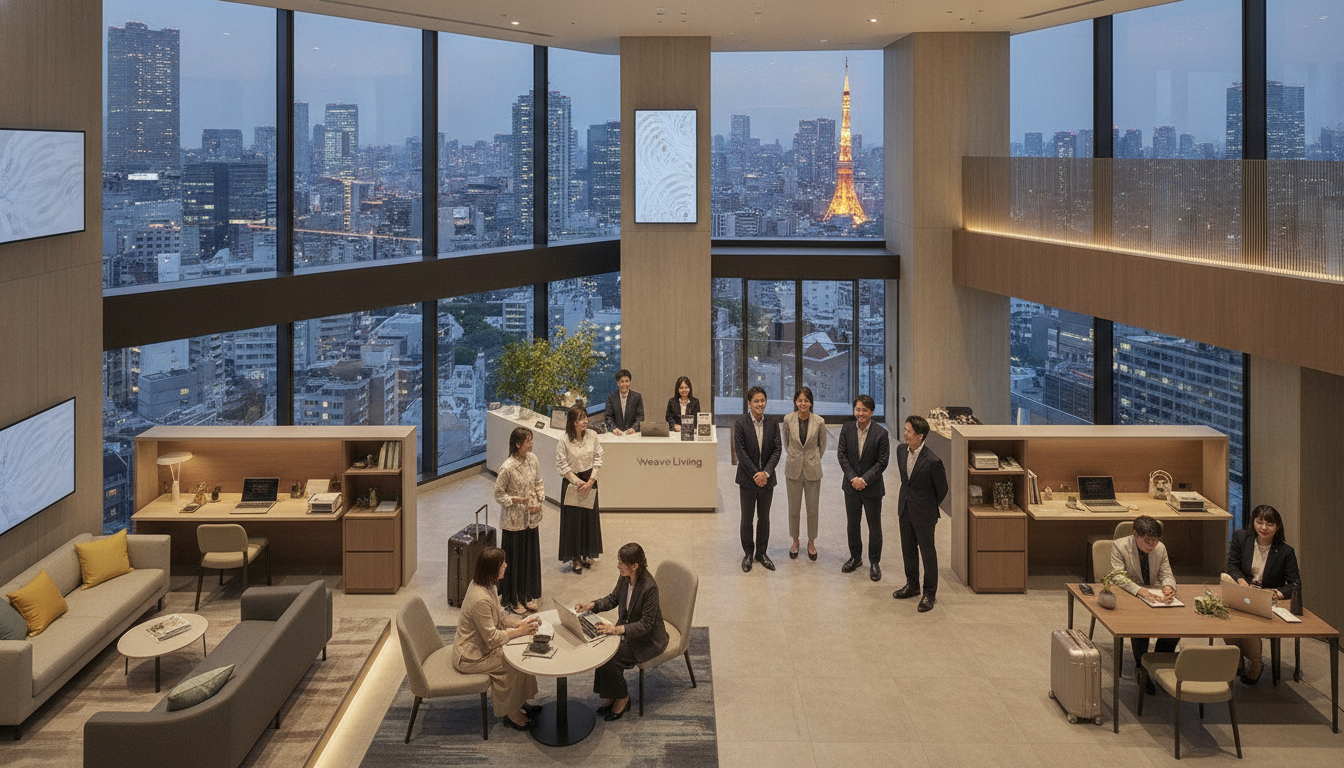
Furnished apartments in Tokyo gain traction as tourists extend stays; Weave Living offers month‑long, move‑in ready rentals
Furnished apartments in Tokyo: Weave Living offers one-month rentals with no key money, online booking, bilingual support and options across Asakusa, Ueno, Meguro.
Japan’s rising post‑pandemic tourism and a shift toward longer, slower trips have pushed furnished apartments in Tokyo into the spotlight as a preferred alternative to hotels. Weave Living, a Tokyo‑based rental operator, says demand for one‑month or longer stays is growing, and its portfolio of fully furnished units is designed to let visitors live like residents rather than short‑stay sightseers. The company’s model removes several traditional rental barriers and provides locations across central neighborhoods popular with both visitors and longer‑term arrivals.
Weave reports rising demand for month‑long stays
Weave Living leasing staff told reporters that the company has seen a steady increase in bookings from travelers who plan to stay in Tokyo for a month or more. This trend reflects a broader pattern of “slow travel” where visitors prioritize neighborhood life, longer cultural engagement and flexible remote work arrangements. Tourism officials and observers note that extended stays are changing demand from concentrated hotel bookings in tourist hubs to more dispersed, residential accommodations.
On a day of site visits across Tokyo, agents guided the reporting team through examples of one‑ and two‑bedroom apartments, showing how furnished units can double as short‑term homes. The properties visited included inner‑city addresses with access to public transit, neighborhood shops and building amenities such as rooftop terraces and small gyms. According to Weave, the ability to share units with partners or friends — a feature not always permitted in Japan’s traditional short‑term housing market — is a frequent selling point.
Industry analysts say the shift toward furnished apartments is also a response to rising hotel rates and regulatory uncertainty around vacation rentals. For travelers who need flexible leases and predictable monthly costs, a furnished apartment provides a middle ground between the expense of hotels and the complexity of standard tenancy agreements. Weave’s offering is positioned to capture guests seeking a residential experience without the long lead times and upfront costs associated with conventional rentals.
No key money or guarantor lowers entry barriers
Traditional Japanese rentals often require substantial upfront sums for deposits, key money and agency fees, and can demand a guarantor, which increases the logistical burden for foreign arrivals. Weave’s short‑term furnished model removes many of those hurdles by advertising no key money, no agency fee and no guarantor requirement for its flexible stays. The company says this approach can save tenants thousands in upfront costs and simplifies the move‑in process for visitors without local credit history.
By accepting credit card payments in local currency through an online booking system, Weave reduces reliance on local bank accounts for initial payments. The company also stresses a minimum lease term of one month, which contrasts with many conventional leases that require year‑long commitments. For temporary residents such as working holidaymakers, students on exchange programs and digital nomads, these features make Tokyo housing significantly more accessible.
Leasing representatives explained that removing financial barriers is intended to attract a wider range of guests, from families seeking a month‑long cultural stay to professionals relocating temporarily for work. The policy also aims to accommodate visitors who prefer to allocate travel budgets toward experiences and local life rather than high upfront housing costs. Observers say this transparent fee structure aligns with global short‑term rental expectations while remaining compliant with Japanese housing rules.
Online booking, bilingual support and flexible check‑in
Weave’s booking process is designed to emulate the convenience of hotel reservations, allowing guests to search dates and locations, select unit sizes and complete payment entirely online. Company staff highlighted that the platform supports English and that bilingual customer service is available throughout the booking, check‑in and check‑out process. For customers arriving from overseas, the ability to communicate in English and confirm arrangements remotely is a decisive convenience.
The operator also offers flexible move‑in options that can accommodate late‑night arrivals, noting that tenants may move in any time after midnight on their lease start date. For check‑out, Weave requires departure by 11:59 p.m. on the lease end date and arranges a final inspection either a few days before departure or at a mutually agreed time. Representatives emphasized that front‑desk or in‑building staff can assist with last‑minute questions and that many interactions, including identity verification and key handover, can be handled electronically.
Bilingual support extends to telephone and email channels, and agents say English assistance can be provided in person when required. This combination of online self‑service and human support aims to reduce the friction that many foreign tenants experience when navigating Japanese housing. Market watchers observe that this hybrid model — digital convenience plus localized human help — is particularly attractive to travelers who want certainty and responsiveness without the constraints of a long lease.
Pricing and neighborhoods across central Tokyo
Weave’s furnished properties are available throughout central Tokyo neighbourhoods, with options ranging from compact one‑bedroom units to larger two‑ and three‑bedroom apartments. Listings cover areas that appeal to different types of visitors: Asakusa and Ueno for cultural access, Roppongi and Azabu for international dining and embassies, Meguro and Shirokane for quieter residential feel, Waseda and Shinjuku for proximity to universities and business districts, and Ryōgoku and Oshiage for family‑friendly settings. These neighborhood choices allow guests to tailor their stay around daily life rather than tourist clusters.
At the time of reporting, furnished one‑bedroom apartments in outer inner‑city areas such as Kōenji were listed from approximately ¥191,000 per month, while two‑bedroom units in central historic areas like Asakusa were around ¥339,000 per month. For travelers planning extended stays or those who prefer to furnish a residence themselves, Weave also operates unfurnished Weave Base units priced lower, with one‑bedroom unfurnished apartments starting near ¥111,000 and larger three‑bedroom units reaching about ¥263,000 per month. These figures illustrate a tiered pricing approach that reflects location, size and amenity levels.
Weave’s rates are positioned between hotel nightly aggregates and the total cost of traditional year‑long leases once utilities, furniture and agency fees are factored in. For visitors staying several weeks to months, the per‑month pricing can be competitive, particularly when factoring in the included utilities and furnishings. Real‑estate observers caution that availability and exact pricing can vary by season and property, and they recommend booking early for peak travel periods.
Amenities, utilities and move‑in readiness
A core appeal of the furnished apartment model is the inclusion of household utilities, furniture and appliances so tenants can begin living immediately after arrival. Weave’s units are equipped with essentials such as beds, linens, kitchen appliances, towels and small conveniences like hair dryers, allowing guests to arrive with minimal baggage. The company also ensures that utilities are active on move‑in, sparing tenants the common hurdle of setting up individual utility accounts or waiting for installations.
Many of the properties visited featured functional kitchens intended for regular cooking, which residents cited as an advantage over hotel rooms for both budget and lifestyle reasons. Onsite facilities varied by building and included perks like rooftop terraces with city views and compact fitness rooms, providing recreational options without leaving the building. Security measures were noted as modern and robust, with electronic locks and concierge services in select locations; a reporting team member mentioned encountering an advanced rooftop lock during a site visit in Ueno.
For travelers who intend to stay longer or convert a temporary stay into something more permanent, Weave’s unfurnished Base units provide an alternative path that allows greater personalization. These unfurnished options give tenants the ability to bring or purchase their own furnishings if they plan to stay beyond a year or establish a longer household. Property managers say the combination of furnished short‑term units and unfurnished longer‑term offerings creates a pipeline for residents to scale their commitments in the city.
Residents describe a local daily life experience
Guests and guides emphasized that furnished apartments facilitate an immersion in neighborhood routines that hotels rarely provide, from weekday rush‑hour rhythms to local shop hours and community festivals. Staying in a residential building allowed visitors to discover nearby mom‑and‑pop restaurants, small grocery stores and daily rituals such as evening train station chimes. Those elements, residents say, are central to the appeal of renting a furnished apartment rather than remaining in a tourist district hotel.
Interviewed tenants described the practical benefits as well: the ability to prepare meals in a full kitchen, the convenience of a stable internet connection for remote work, and the space for family or friends to visit without the constraints of a single hotel room. Digital nomads, working holidaymakers and students reported that the one‑month minimum was ideal for settling in and exploring career or study opportunities without committing to a year‑long lease. For families, two‑bedroom units offered living areas and privacy that make everyday life more comfortable than rotating hotel nights.
City planners and tourism officials who have monitored accommodation trends suggest that furnished apartments could help distribute visitor impact across residential neighborhoods while supporting longer, higher‑value stays. That diffusion of visitors can help local businesses beyond the central tourist corridors and may encourage repeat visits from guests who develop longer personal ties to Tokyo. Observers note that municipal officials remain attentive to the balance between visitor access and neighborhood integrity as the short‑term rental landscape evolves.
Weave Living’s model responds directly to a changing visitor profile in Tokyo by offering flexible, furnished accommodation that simplifies arrival and daily life. The company’s combination of online booking, bilingual support, no key money and varied neighborhood options makes it a practical choice for travelers seeking deeper engagement with the city for stays of a month or longer. For visitors who prioritize neighborhood experience, kitchen access and predictable monthly costs, furnished apartments can provide a comfortable and efficient alternative to hotel living.

