
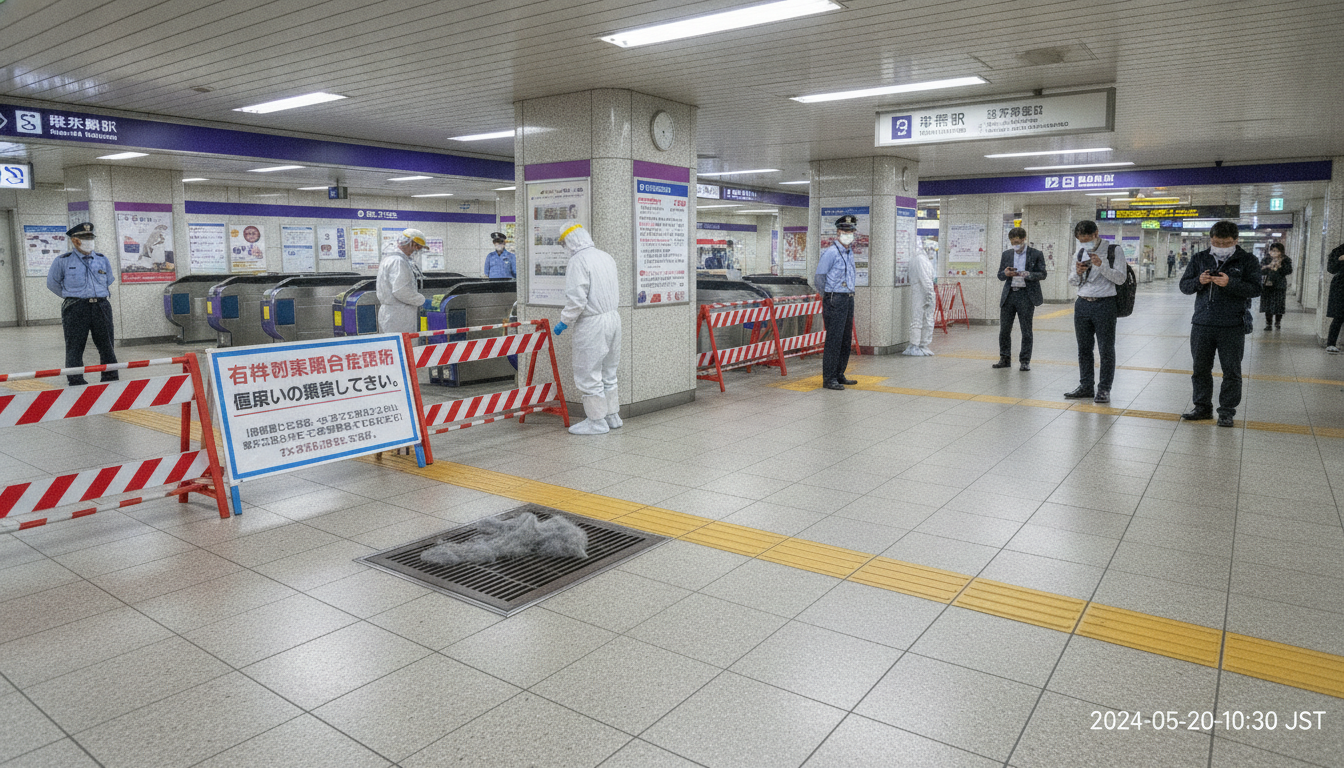
Asbestos at Hanzomon Station: Tokyo Metro suspends service after asbestos-containing lint falls onto platform
Tokyo Metro halted service at Hanzomon Station after asbestos-containing lint fell onto the platform, closing the station for about 14 hours and affecting roughly 404,000 passengers between August 11 and the temporary suspension. The incident, discovered on August 9 and confirmed as asbestos on August 10, prompted immediate cleanup and safety checks by Tokyo Metro and specialist contractors.
Incident discovered in ceiling ventilation fabric on August 9
On August 9 at about 6:00 a.m., maintenance staff found lint-like debris on the platform at Hanzomon Station on the Tokyo Metro Hanzomon Line. Tokyo Metro’s initial investigation indicated that fabric in a ceiling-mounted ventilation unit had torn, allowing material connected to an air-conditioning outlet to separate and fall onto the platform. The lint was left in place pending laboratory analysis, which later identified asbestos fibers in the material.
Asbestos confirmation and decision to suspend operations
Laboratory testing completed on August 10 confirmed that the torn fabric contained asbestos, Tokyo Metro said, prompting a precautionary operational halt the following morning. From the first service at 5:00 a.m. on August 11 the company suspended station operations and stopped train service between Shibuya and Kudanshita until safety measures were completed. The suspension lasted approximately 14 hours while cleaning and environmental assessments were carried out.
Cleanup, containment and environmental measurements
Tokyo Metro contracted qualified remediation firms to remove visible debris and to contain ventilation outlets connected to the damaged unit to prevent any further dispersal. Workers sealed the air-conditioning outlet and carefully collected lint under controlled procedures, then carried out surface cleaning of the affected platform area. Environmental monitoring by specialized contractors tested airborne fiber concentrations and reported no levels above safety thresholds before operations resumed.
Operational impact and passenger disruption
The closure and line suspension affected an estimated 404,000 passenger journeys during the disruption, with service between Shibuya and Kudanshita temporarily halted for much of the day. Tokyo Metro deployed staff to assist passengers and provided information at adjacent stations while substitute routing and other measures were coordinated. Commuters and local businesses experienced delays and crowding as transport alternatives absorbed displaced riders during peak hours.
Tokyo Metro’s inspection and replacement plan
Following the incident, Tokyo Metro announced an immediate inspection of similar ventilation and air-conditioning assemblies across its network to identify any further defects. The operator committed to replacing any components found to be degraded with parts that do not contain asbestos and to accelerate remedial work where deterioration is detected. The company also said it would review maintenance schedules and supplier records to prevent recurrence.
Health guidance and public reassurance
Tokyo Metro and contracted specialists emphasized that environmental measurements taken after cleaning showed no ongoing contamination and that the risk to passengers was low based on current readings. The operator advised anyone with health concerns to consult medical professionals and provided contact information for inquiries and testing for staff who may have been exposed. Public health authorities and Tokyo Metro reiterated standard guidance on asbestos exposure and said they would continue monitoring as a precaution.
Tokyo Metro resumed normal operations at Hanzomon Station at 7:20 p.m. on August 11 after completing cleanup and confirming measurement results were within acceptable limits. The operator said it will publish the results of inspections and the schedule for replacing affected parts, and it pledged to keep passengers informed as follow-up work proceeds.

