
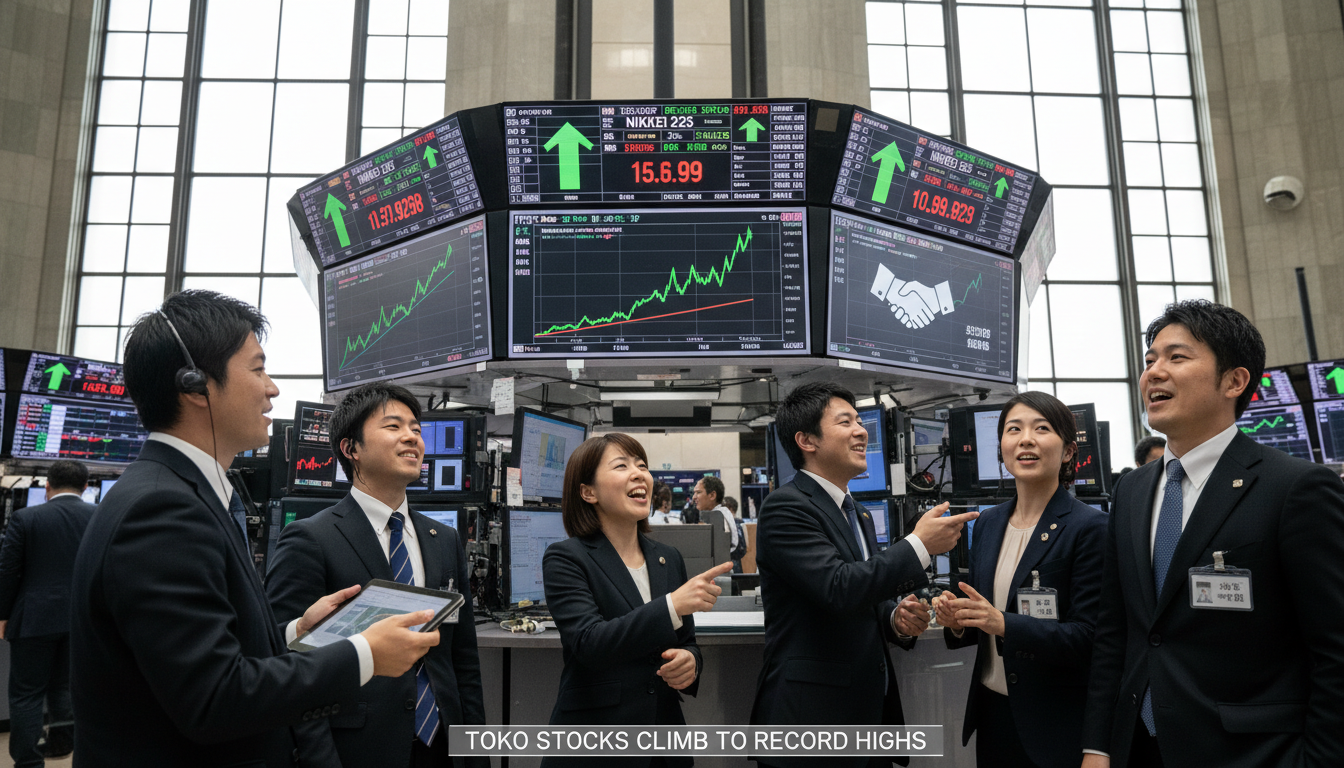
Tokyo stocks surge to record highs as U.S.-Iran talks spur risk appetite
Japanese stocks jumped to record highs on April 16, 2026, lifted by Wall Street gains and growing optimism over renewed U.S.-Iran talks, which boosted risk appetite across Asian markets. Traders said the rally pushed Tokyo benchmarks above their previous closing records as investors reassessed geopolitical risk in the Middle East. The move came alongside broad Asian strength, with Seoul notably outperforming as regional sentiment improved.
Tokyo benchmark climbs above previous record close
The main Tokyo indexes moved past their prior record closing levels early on Thursday, supported by robust domestic buying and spillover from U.S. markets. Market participants attributed the advance to a combination of reduced geopolitical risk and steady demand from institutional investors seeking equity exposure. Volume patterns suggested the rise was underpinned by both local funds and foreign inflows, according to traders tracking activity on the Tokyo Stock Exchange.
Wall Street rally provides immediate lift
A strong session on Wall Street overnight acted as the immediate catalyst for gains in Tokyo, amplifying a broader risk-on tone across global markets. Equities in the United States benefited from expectations that diplomatic engagement between Washington and Tehran could ease some premium on conflict-related risk. Analysts noted that when U.S. equity markets move decisively higher, Asian bourses often follow as investors recalibrate positions ahead of regional trading.
U.S.-Iran talks reduce premium on geopolitical risk
Renewed expectations of talks between the United States and Iran to de-escalate hostilities played a central role in lowering the geopolitical risk premium that had weighed on markets. Investors said the possibility of further engagement reduced demand for safe-haven assets and encouraged rotation into cyclically sensitive stocks. Caution remained, however, with many market participants emphasizing that diplomatic overtures are only one input among many that influence market direction.
Regional markets mirror Tokyo’s gains
Tokyo’s advance was echoed across the region, with South Korea posting notable strength and other Asian markets also moving higher. Seoul’s markets rose by roughly 2 percent as exporters and cyclical sectors responded to improved global sentiment. The synchronized regional gain reflected waning fear over an immediate escalation in the Middle East and a rebound in investor appetite for equities.
Sectors leading the rally and currency considerations
Cyclical and export-oriented sectors led the advance as investors sought exposure to companies poised to benefit from a firmer global economy. Financial stocks also contributed to the upside, supported by expectations for improved lending activity if sentiment remains constructive. Currency markets played a supporting role; traders said a steadier or softer yen can bolster exporters’ outlook, although central bank signals and macro data remain key drivers for both FX and equity flows.
Analysts urge caution despite optimism
While the market reaction was broadly positive, analysts and fund managers warned that diplomatic developments can be volatile and subject to rapid reversals. Market watchers highlighted upcoming economic data, corporate earnings reports and central bank commentary as potential near-term catalysts that could change momentum. Many investors described the current environment as an opportunity to rebalance portfolios, rather than to chase short-term gains, given the mix of geopolitical and macroeconomic risks.
Economic calendars and policy pronouncements will be monitored closely as investors parse whether the rally has staying power beyond the immediate relief rally. Market participants said liquidity conditions, foreign demand and domestic corporate news will determine whether Tokyo maintains its elevated levels into the coming weeks.

