
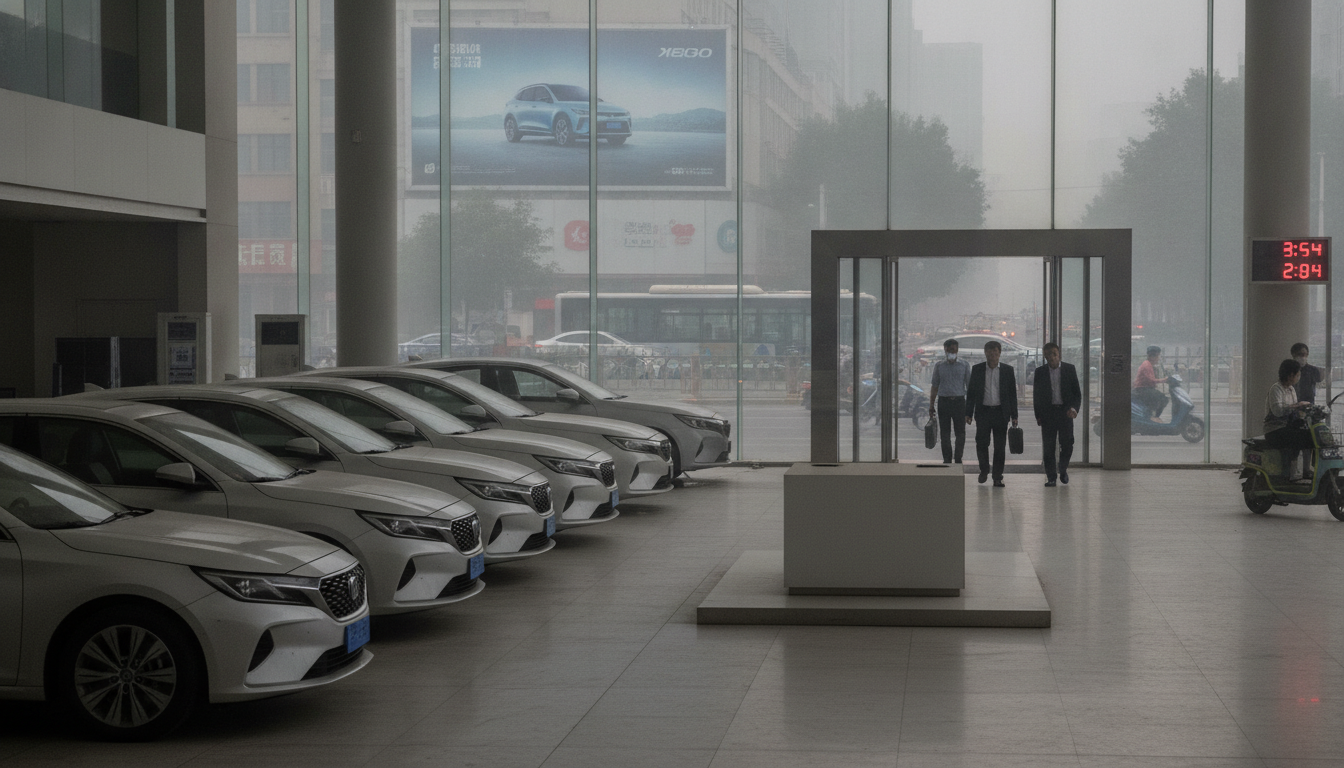
Toyota China sales fall 17% in H1 as buyers pivot to EVs amid high oil prices
Toyota China sales dropped 17% year-on-year in January–June as consumers pivot toward EVs and electrified models driven by rising crude prices and shifting market dynamics.
Toyota Motor reported a 17% decline in new-vehicle sales in China for the January–June period, reflecting a rapid consumer shift toward electric and electrified vehicles. The downturn, announced Monday, underscores growing pressure on conventional gasoline-powered models as running costs rise and market preferences evolve. The company cited changing demand patterns as a central factor in the performance drop.
Toyota China H1 decline and company statement
Toyota said the sales fall covered sales of new vehicles across its China operations and was measured on a year-on-year basis for the first half of the calendar year. The automaker attributed the change largely to consumers accelerating moves to battery-electric and other electrified models, which reduced demand for traditional internal-combustion vehicles. Company officials framed the result as part of a broader market transition rather than an isolated operational failure.
Analysts and market observers noted that a single percentage figure masks complex regional and model-level dynamics. Some segments of Toyota’s lineup—particularly hybrids—continue to perform relatively well, while pure gasoline models have seen more acute pressure. The automaker’s remarks highlighted the need to interpret the headline number in the context of rapidly evolving consumer preferences.
Shift to EVs and electrified models in China
China’s market has seen a swift expansion of battery-electric vehicles and plug-in hybrids, and that expansion is reshaping showroom demand. Consumers are increasingly favoring lower-running-cost vehicles, which a growing number of domestic and joint-venture models now provide at competitive price points. For Toyota, the shift means recalibrating sales forecasts and marketing strategies to reflect stronger uptake of electrified options.
The trend is visible in product offerings from Toyota’s local partners, including electrified models rolled out through joint ventures. Examples such as the bZ3X SUV—sold under a local partnership—illustrate Toyota’s effort to present battery-electric choices to Chinese buyers. Still, the pace of adoption and the variety of competing models has intensified market competition.
Impact of high crude prices and geopolitical tensions
Elevated crude oil prices have contributed to rising fueling costs, which in turn have pressured demand for gasoline-powered cars. Market participants pointed to geopolitical tensions, including conflict in the Middle East, as a factor behind sustained fuel price volatility. That dynamic has sharpened consumer sensitivity to total cost of ownership and accelerated migration toward vehicles with lower dependence on petroleum.
While fuel price fluctuations alone do not determine vehicle purchases, they compound other incentives and conveniences that favor electric vehicles. Government policies, local charging infrastructure expansion, and purchase incentives in certain regions all combine with fuel costs to affect buyer decisions. For automakers with large portfolios of conventional models, the aggregate effect can be a notable shift in sales composition.
Competitive pressure from Chinese EV makers and joint ventures
Domestic manufacturers and joint ventures have intensified competition by offering a wide range of EVs at differing price and feature levels. Chinese brands have aggressively expanded model lineups, often bundling advanced technology and competitive financing that appeal to urban consumers. For foreign automakers, that means contending with firms that are both price-competitive and highly attuned to local preferences.
Joint ventures also play a pivotal role in distributing electrified Toyota models, but they expose Toyota to direct comparisons with local rivals. Market participants say that speed to market, localization of supply chains, and nimble pricing strategies are critical in maintaining share. The shift in consumer taste amplifies the need for rapid adaptation in product planning.
Toyota’s strategic response in China
Toyota has signaled intentions to accelerate its electrification roadmap in China while also leveraging strengths in hybrid technology. The company’s joint-venture partnerships are central to that strategy, providing production capacity, dealer networks, and localized development. Toyota plans to expand its range of electrified models and adjust production allocations to better match demand patterns.
Beyond vehicle launches, Toyota is likely to focus on aftersales services, battery warranties, and charging-related partnerships to reduce barriers to EV adoption. Marketing approaches that emphasize total cost savings and real-world convenience may be prioritized to counter residual consumer attachment to petrol models. Observers say Toyota’s ability to align product availability with regional demand will influence its recovery in the Chinese market.
Outlook for Toyota and Japan’s automakers in China
The decline in Toyota China sales in the first half signals broader challenges for Japanese automakers that have historically relied on strong demand for gasoline and hybrid models. The market’s rapid electrification presents both risk and opportunity: firms that adapt quickly can preserve share, while slower responses may cede ground to local competitors. For investors and industry watchers, the coming quarters will be a crucial test of execution.
Toyota and its peers will also monitor policy shifts, infrastructure buildouts, and price trends in crude markets that affect consumer economics. The company’s next sales reports and product announcements will be watched closely for signs of stabilization or further transition. How Toyota balances its hybrid heritage with an accelerating EV future will shape its prospects in China.
As the Chinese car market continues to tilt toward electrified mobility, Toyota faces the twin tasks of reshaping its product mix and sharpening its competitive edge in an environment defined by rapid change and intense local competition.

