
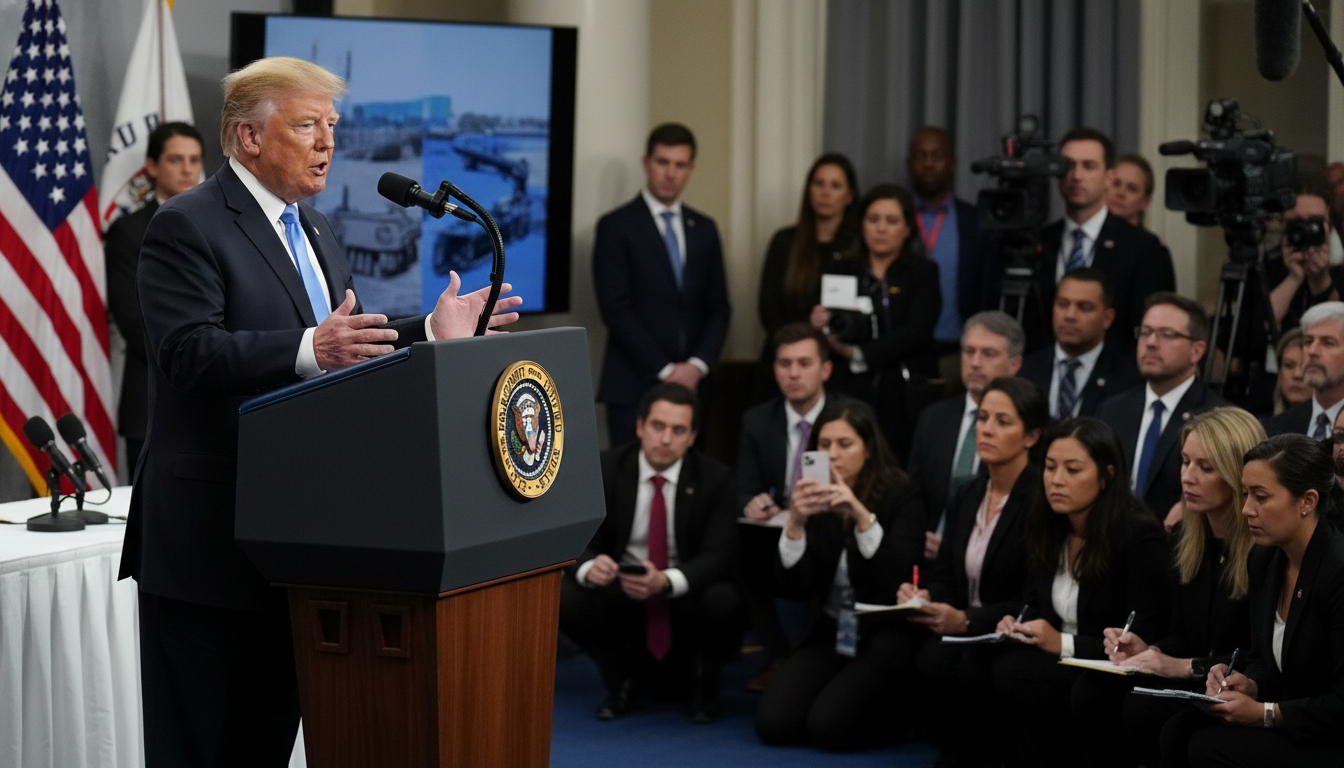
Trump-Xi summit: Trump makes no commitment on Taiwan, says arms sale to Taipei to be decided soon
At the Trump-Xi summit in Beijing on May 15, 2026, President Trump declined to make a firm commitment on Taiwan and said he would decide on an arms sale to Taipei in the near term.
The brief summit in Beijing concluded with U.S. President Donald Trump telling reporters he offered no binding pledge on the status of Taiwan during talks with Chinese President Xi Jinping. Trump said he would determine whether to proceed with a weapons transfer to Taiwan “in the next fairly short period,” a remark that immediately drew attention in Taipei and Washington. The comment underscored lingering strategic ambiguity even as the two leaders met in person in the Chinese capital.
No pledge on Taiwan made during bilateral talks
Trump repeatedly emphasized that he had not promised any change to U.S. policy on Taiwan, saying his statements should not be read as a commitment to alter long-standing practices. He framed the discussion as part of broader conversations with Xi about regional stability and bilateral ties. Officials who attended portions of the meetings said the two leaders touched on a range of bilateral issues but left several sensitive matters unresolved.
Beijing’s public stance remained cautious, with Chinese officials reiterating the centrality of the Taiwan question to China’s core interests. State media highlighted the leaders’ overall engagement and symbolic gestures, while avoiding direct commentary on the arms sale remark. Diplomats in Beijing said the outcome was consistent with a pattern of careful messaging designed to balance domestic audiences on both sides.
Timeline for possible arms sale left open
Trump told reporters he would make a decision on an arms sale to Taipei “in the next fairly short period,” without offering a precise timetable or details on the systems under consideration. U.S. export procedures and congressional review mechanisms typically shape the pace and content of such transfers, and any formal notification to lawmakers could follow internal deliberations. Analysts noted that the vagueness of the timeline leaves room for tactical flexibility by the administration.
Officials in Washington said they expected the administration to consult with the Pentagon and the State Department before moving forward, but cautioned against reading an imminent sale as certain. In Taipei, government spokespeople said they were monitoring the comments closely and reiterated the island’s call for clear and reliable U.S. security support.
Iran comments signal diplomatic positioning
Alongside Taiwan, Trump addressed other geopolitical flashpoints, insisting he was “not asking for favors” on Iran and stressing that discussions on Tehran’s behavior would be handled separately. The remark appeared aimed at framing the summit as transactional on specific security matters while insisting on independence in U.S. decision-making. Observers said the line underscores Washington’s intent to pursue a mix of pressure and diplomacy on Iran without tying it directly to broader U.S.-China negotiations.
Chinese officials reiterated that Beijing seeks a stable international environment, but they also emphasized that each country evaluates regional challenges according to its own interests. The Iran remark is likely to draw scrutiny from U.S. partners in the Middle East and Europe, who are watching how Sino-American dynamics shape responses to Tehran.
Reactions in Taipei and Washington
Taipei’s government responded cautiously, welcoming continued U.S. engagement while urging clarity and consistency in security arrangements. Political leaders on the island called for formal assurances that any U.S. decisions would preserve their defense needs and deterrence capabilities. Taiwan’s military and foreign ministry sources said preparations and contingency planning would continue regardless of the timing of any specific U.S. sale.
In Washington, members of Congress from both parties reiterated their oversight role on arms transfers to allies, noting that any package would be reviewed under U.S. law. Some lawmakers urged the administration to provide timely briefings to Capitol Hill, while others stressed that any move should avoid unnecessary escalation with Beijing. The mixed reaction signals careful legislative attention ahead.
Diplomatic optics and the Zhongnanhai meeting
The leaders’ public interactions included a walk and a brief conversation in the Zhongnanhai garden, a setting that Chinese officials typically deploy for high-profile diplomatic theatre. Photos of the encounter circulated widely, underscoring the symbolic significance of the face‑to‑face talks. For Beijing, hosting a U.S. president in such a setting projects an image of state-to-state engagement, even as substantive policy gaps persist.
Foreign policy analysts said the optics were designed to demonstrate channels of communication while managing expectations about concrete outcomes. The summit returned attention to the delicate balance China and the United States maintain: signaling a willingness to engage while protecting core strategic positions, notably on Taiwan.
Implications for U.S.-China relations and regional stability
Analysts said the lack of a firm U.S. commitment on Taiwan and the open-ended arms sale timeline preserve strategic ambiguity that has long characterized U.S. policy in the region. That ambiguity can deter unilateral moves by Taipei while also constraining Beijing’s calculations, but it also leaves allies seeking clearer signals about long-term security commitments. The summit’s mixed signals will likely shape regional defense planning and diplomatic outreach in the months ahead.
Markets and regional capitals will watch subsequent communications from both Washington and Beijing for signs of policy shifts. Any formal notification of an arms sale or new U.S. statements on Taiwan could catalyze diplomatic activity across East Asia, where stakeholders are sensitive to changes in U.S.-China dynamics.
The Trump-Xi summit in Beijing produced high-visibility interactions and carefully worded statements, but it yielded few binding outcomes on the most sensitive issues. Observers said what comes next—formal decisions, congressional consultations and diplomatic exchanges—will determine whether this meeting alters strategic trajectories or merely reaffirms an uneasy status quo.

