
Trump-Xi Summit in Beijing: Tea, Temple Tour and Market Signals as Leaders Seek Concrete Deals
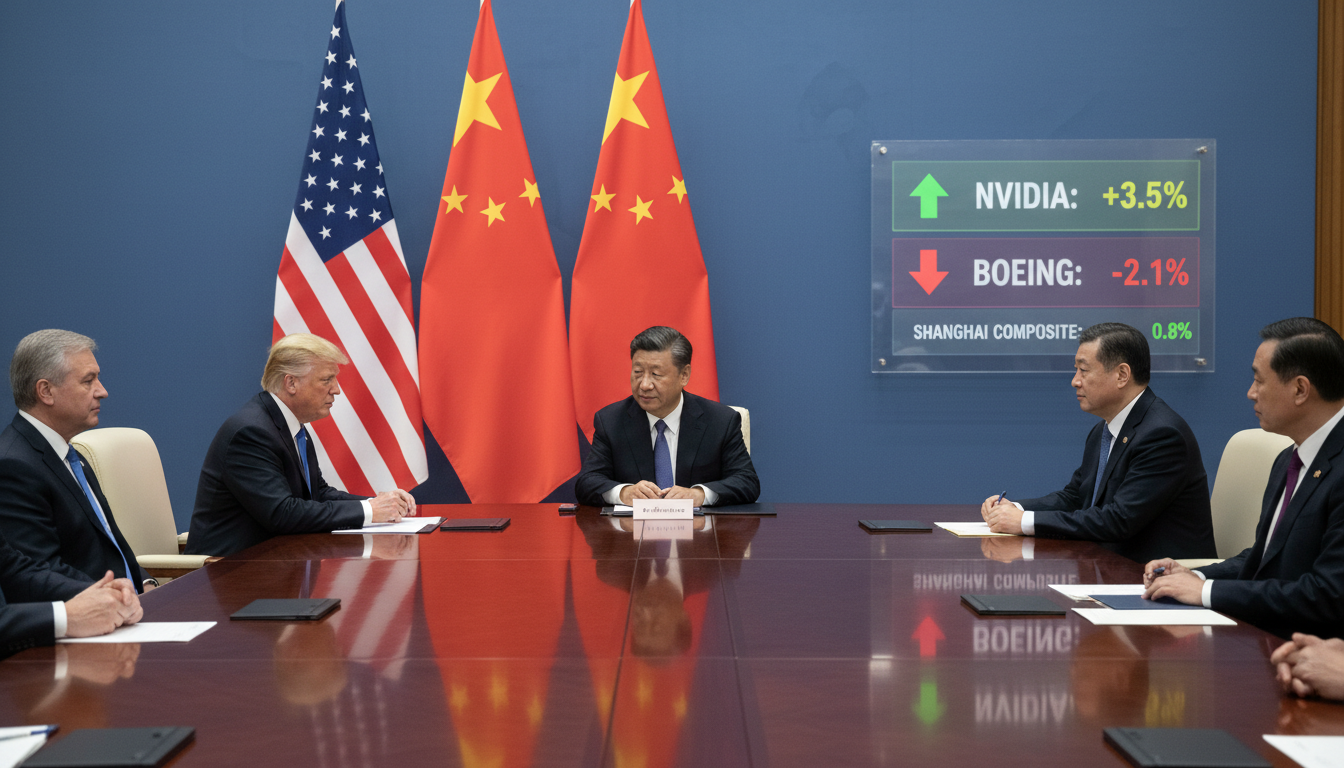
At the Trump-Xi Summit in Beijing on May 14–15, leaders held tea and lunch meetings as markets tracked potential trade and tech deals; Nvidia rose, Boeing fell.
Chinese President Xi Jinping escorted U.S. President Donald Trump on a tour of the Temple of Heaven on May 14, part of the two-day summit aimed at producing tangible outcomes. The visit’s second-day agenda included formal and informal talks, with both sides signaling a focus on trade, technology and bilateral investment. Financial markets reacted swiftly to the diplomatic optics, with shares in Nvidia climbing while Boeing shares softened amid investor scrutiny.
Summit Itinerary and Bilateral Setting
A series of ceremonial moments framed the summit’s public face, beginning with the Temple of Heaven visit and continuing into scheduled tea and luncheon sessions. Organizers said the informal settings were designed to foster candid exchanges and allow senior officials to resolve outstanding negotiation points. The timing and sequencing of events suggested an effort to balance ceremony with substantive talks across economic and strategic portfolios.
Delegation-level meetings proceeded alongside the leaders’ interactions, bringing together ministers and business envoys to translate high-level signals into practical proposals. Officials from both capitals were reported to be preparing joint statements and lists of deliverables intended to follow the summit.
Market Responses and Corporate Movements
Investors moved quickly to price the summit’s prospects, with U.S. and Asian markets registering sectoral shifts tied to trade and technology expectations. Semiconductor-related stocks posted gains on optimism about eased restrictions and potential supply agreements, while aerospace names saw mixed pressure amid continued scrutiny of export controls and procurement dynamics. Nvidia’s share uptick reflected hopes for clearer access to Chinese markets and potential collaboration in artificial intelligence supply chains.
Aerospace firm Boeing experienced downward pressure as traders weighed the implications for defense and civil aviation contracts, along with regulatory and scrutiny considerations. Market analysts said such moves were typical during high-profile diplomatic events where concrete agreements can alter long-term revenue streams for major exporters.
Trade and Technology Talks Highlighted
At the heart of the discussions were trade balances, tariffs, and the technology relationship that has shaped recent tensions. Both capitals signaled interest in finding pragmatic mechanisms to stabilize supply chains and ease friction over semiconductors and advanced technologies. Delegates reportedly discussed pathways for increased two-way investment, licensing arrangements, and safeguards that would address national-security concerns without severing commercial ties.
Observers noted that any shift toward cooperation in technology sectors would require detailed implementation steps and reciprocal assurances. The summit’s private sessions were expected to drill into technical arrangements rather than deliver headline-grabbing accords.
Business Delegations Pushed for Deals
Corporate representatives and trade officials used the summit window to press for concrete outcomes that could unlock contracts and investment flows. Industry groups reportedly sought commitments on market access, patent protections and dispute-resolution processes that would make doing business more predictable. The presence of high-profile captains of industry underscored the commercial stakes attached to any summit-level breakthroughs.
Beyond headline agreements, commercial negotiators focused on follow-up memoranda, pilot projects and working groups that could convert political momentum into enforceable arrangements. Business leaders emphasized the need for timelines and transparency to reduce investor uncertainty.
Security and Strategic Issues on the Sidelines
While the summit foregrounded economic matters, strategic concerns remained on the agenda and in the background of discussions. Officials were understood to have touched on regional security dynamics, maritime stability and arms-control considerations, seeking to avoid escalation while maintaining clear national positions. Diplomacy in ceremonial settings provided an opportunity to reset tones and reopen channels for more technical security dialogues.
Analysts cautioned that any progress in strategic areas would likely be incremental and tied to advances in economic talks, with verification mechanisms and third-party involvement under consideration for sensitive items.
Agreements, Follow-ups and Timelines
Both governments signaled an intention to produce deliverables and to establish follow-up processes, though participants emphasized that many items would require further negotiation. Commitments on joint working groups, timelines for regulatory reviews and preliminary letters of intent were among the outcomes described by officials familiar with the discussions. The summit was thus framed as a platform to move from conceptual alignment to actionable steps.
Observers will be watching official communiqués and subsequent meetings in the coming weeks for clarity on the scope and enforceability of any agreed measures.
The summit’s mix of ceremonial engagement, focused bilateral talks and active business participation produced cautious optimism among investors and officials, even as experts noted the complexity of converting summit momentum into sustained policy change.

