
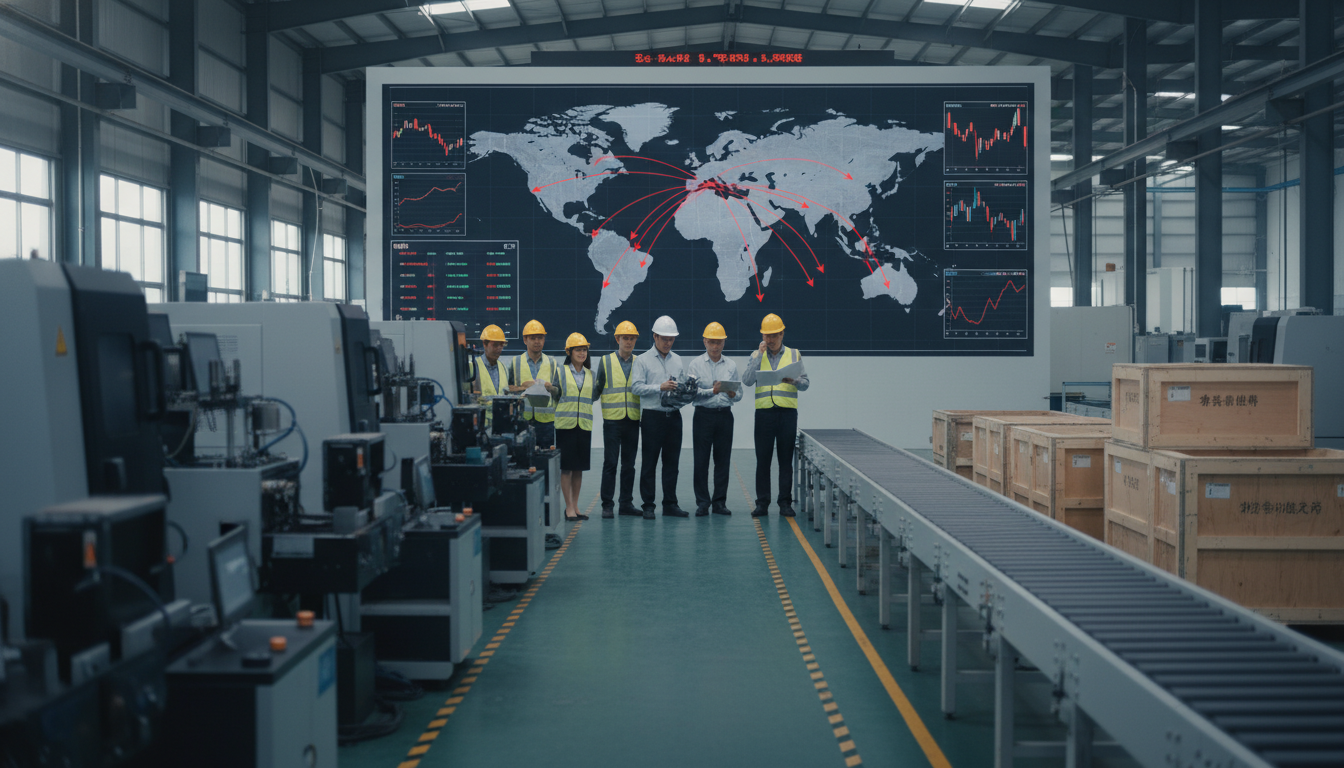
China rare earth export controls cut shipments and heighten supply risks ahead of Xi‑Trump summit
China rare earth export controls have cut shipments of key elements and magnets, prompting manufacturers to diversify suppliers and stockpile before a summit.
China rare earth export controls introduced a year ago have coincided with a measurable drop in exports of several rare-earth elements and related permanent magnets, according to industry trade data and market analysis. The decline has intensified concerns among global manufacturers that rely on these materials for electric vehicles, wind turbines, consumer electronics and defence components. With a high‑profile meeting between Xi Jinping and U.S. President Joe Biden looming, market participants say the summit outcome could determine whether tensions ease or supply disruptions deepen.
Export controls and shipment decline
The Chinese government introduced export restrictions in April 2025 on a subset of rare‑earth elements and associated permanent magnets, citing industrial and strategic considerations. Since that move, customs and trade flows show a fall in outbound volumes for the affected categories, particularly higher‑grade elements and finished magnet products used in advanced motors and generators. Global buyers say the reduced flows have tightened access to processed materials more than to raw ore, underscoring China’s dominant role not only in mining but in refining and magnet manufacture.
Market analysts note the controls are selective rather than comprehensive, but their impact has been magnified by the concentrated nature of the supply chain. Many processing steps—from separation to magnet fabrication—are geographically clustered, making even targeted curbs disruptive to downstream production lines. Companies with limited material buffers have reported production slowdowns or the need to redirect sourcing plans in response.
Manufacturers confront supply‑chain strain
Automakers, renewable‑energy firms and electronics suppliers are among those most exposed to disruptions in permanent magnets and specific rare‑earth mixes. Engineers say these materials are critical for lightweight, high‑efficiency motors and for components where alternatives would add cost or reduce performance. In the short term, manufacturers face choices between slowing production, paying premiums for scarce inventory, or redesigning components to substitute less‑constrained materials.
Procurement teams report accelerated orders, extended lead times and greater use of contract clauses to secure priority supply. Some firms are increasing inventory levels of magnet assemblies and key oxides to smooth production, while others are shifting assembly work to regions closer to alternative suppliers. Such operational adjustments add expense and complexity, and they will likely remain in place until supply lines stabilise.
Industry moves to diversify supply and boost recycling
Responding to heightened supply risk, industrial actors are accelerating efforts to broaden the supplier base and to develop domestic processing capacity outside China. Mining projects in Australia, North America and parts of Southeast Asia have seen renewed commercial interest, and downstream investments aim to capture higher‑value processing stages previously dominated by Chinese refiners. Governments in consuming countries are also weighing incentives and regulatory steps to foster a more resilient rare‑earth industrial footprint.
Recycling and materials‑efficiency programs are gaining momentum as complementary responses. Programs to recover magnets from end‑of‑life products, and research into magnet designs that use smaller quantities of heavy rare earths, are attracting private and public funding. While recycling cannot replace primary production overnight, industry experts say it can progressively reduce reliance on constrained supply streams and provide strategic stock for critical applications.
Geopolitical stakes and the upcoming summit
The diplomatic dimension of the rare‑earth issue is now prominent, with policy choices tied to broader trade and security discussions between Beijing and Washington. Observers view the upcoming summit as a potential pivot point: a breakthrough could prompt a relaxation of tensions and gradual restoration of trade flows, while a stalemate or escalation might trigger further export measures or countermeasures. Either path carries implications for market confidence and supply planning.
Political risk has been embedded into commercial forecasts, prompting procurement and strategy teams to model scenarios across a range of outcomes. Companies that assumed stable access to certain compositions of rare earths now have to factor in the possibility of sudden limits or the re‑introduction of export licensing that would lengthen lead times. This strategic uncertainty is weighing on investment timing for both extractive and processing projects.
Short‑term market reactions and longer‑term outlook
In the near term, traders expect price volatility for the most affected elements and finished magnet products as inventory adjustments play out. Premiums for guaranteed delivery and for alternative processed grades may persist while buyers reconfigure supply chains. The cost impact will be uneven across sectors, hitting those with the least flexibility or the highest performance requirements hardest.
Over the longer term, the episode is likely to accelerate structural shifts already underway: onshoring of critical processing, diversification of mining sources, and intensification of recycling and material‑saving design. These transitions require time and capital, but many firms and governments now view them as strategic priorities rather than optional resilience measures. The pace of change will depend in part on policy decisions in Beijing and Washington, and on the commercial viability of new processing capacity outside China.
The coming weeks will be telling for global manufacturers as they weigh the immediate cost of hedging supply against the longer‑term investments needed to lessen dependence on a concentrated supply chain.

