
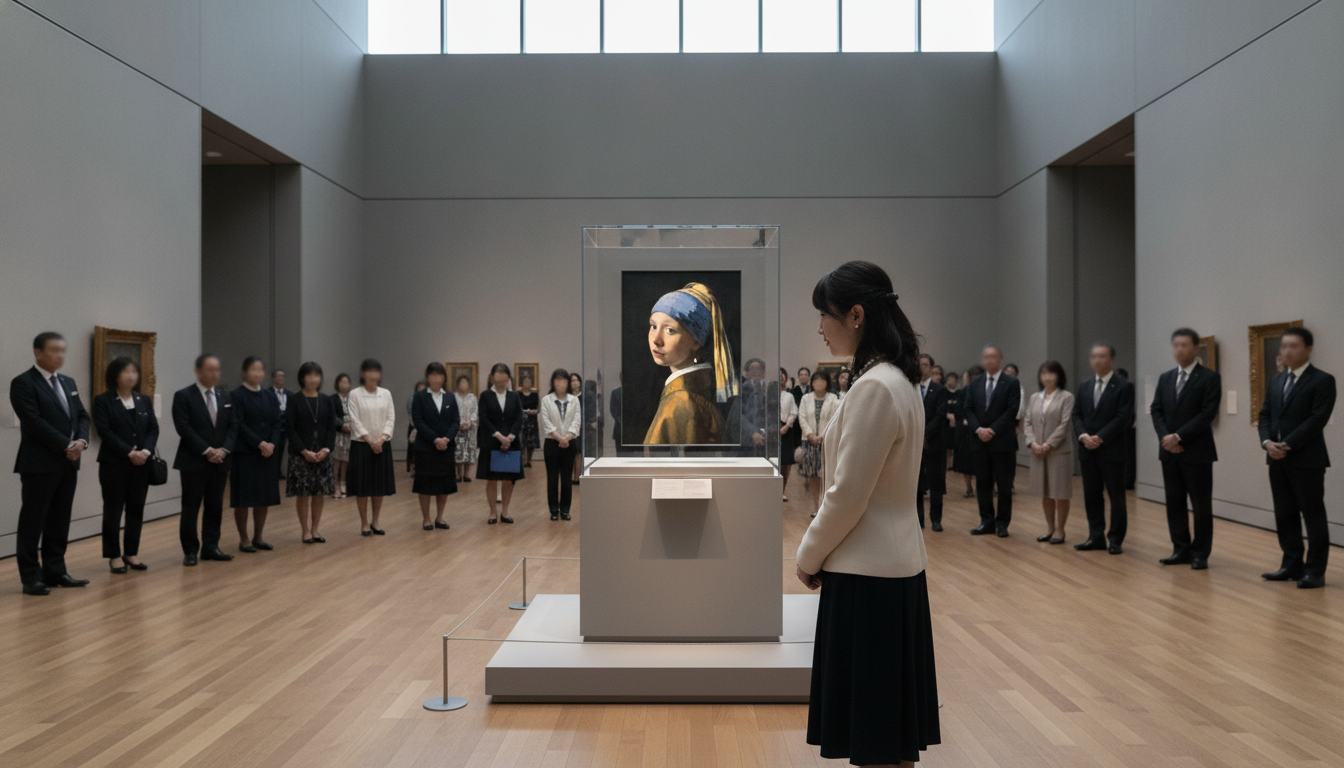
Vermeer exhibition opens in Osaka with "Girl with a Pearl Earring" on display; Princess Aiko attends
Vermeer exhibition in Osaka features the Mauritshuis masterpiece alongside ten Dutch Golden Age works; Princess Aiko attended the opening on August 20, 2026.
The Vermeer exhibition opens to the public in Osaka on August 21, 2026, featuring Johannes Vermeer’s iconic painting Girl with a Pearl Earring brought from the Mauritshuis museum in The Hague. The exhibition opening ceremony was held on August 20, 2026, and Princess Aiko attended a preview and viewed the work in person. Visitors will be able to see the Vermeer masterpiece alongside early and rare works from the Dutch Golden Age during the limited run at the Osaka Nakanoshima Museum.
Royal preview at the opening ceremony
Princess Aiko attended the opening ceremony and a private viewing on August 20, 2026, joining museum officials and curators for an up-close look at the Vermeer painting. She met with Martine Gosselink, director of the Mauritshuis, who guided her through the galleries and answered questions about technique and historical context. Observers noted the princess’s attentive interest in artistic methods and the social backdrop of 17th-century Dutch painting.
Key works and international loans
The centerpiece, Girl with a Pearl Earring, is on loan from the Mauritshuis and returns to Japan for the first time in 14 years. The exhibition also includes Vermeer’s early composition Diana and her Nymphs and a selection of nine other Dutch Golden Age pieces, including Rembrandt’s etching The Laughing Man. Curators emphasize the rarity of viewing several of these works together, presenting a concise portrait of Dutch art at its seventeenth-century peak.
Curatorial themes and historical context
Exhibition curators frame the display to highlight both artistic technique and the social fabric of the Dutch Republic in the 1600s. The show explores advances in oil painting, the use of light and color, and how domestic and mythological subjects reflected a prosperous, mercantile society. Wall texts and audio guides aim to connect those historical developments with broader themes of civic life, religion and artistic patronage.
Cultural diplomacy and museum leadership
Martine Gosselink, director of the Mauritshuis, commented on the long-standing cultural ties between the Netherlands and Japan and framed the loan as an expression of shared values. She said that art flourishes under conditions of peace and democratic institutions, remarks underscoring the exhibition’s soft-diplomacy role. Museum officials from Osaka stressed that the loan involved extensive conservation and transport planning to ensure the works’ safety during the international transfer.
Public programming and merchandise collaborations
Alongside the paintings, the exhibition includes public programs intended to broaden audience engagement, from curator talks to guided tours aimed at general and student visitors. The museum is also offering collaboration merchandise, notably featuring the Dutch character Miffy and themed items inspired by the manga Frieren: Beyond Journey’s End. Officials say the merchandise strategy is intended to appeal to a broad cross-section of visitors while supporting museum operations.
Ticketing and visitor guidance
Tickets are sold on a date-and-time-specific basis to manage gallery capacity and protect the delicate works on display. The museum has arranged an additional ticket lottery through Ticket Pia for select dates; prospective visitors are advised to consult official channels for the latest availability and queuing procedures. The institution recommends reserving early time slots and arriving with identification to expedite entry.
This Vermeer exhibition brings a rare convergence of celebrated works of the Dutch Golden Age to Osaka, offering both aesthetic pleasure and a platform for cultural exchange. The presence of Girl with a Pearl Earring alongside other masterpieces provides a unique opportunity for Japanese audiences to study Vermeer’s technique and the broader art-historical currents that shaped seventeenth-century Europe.

