
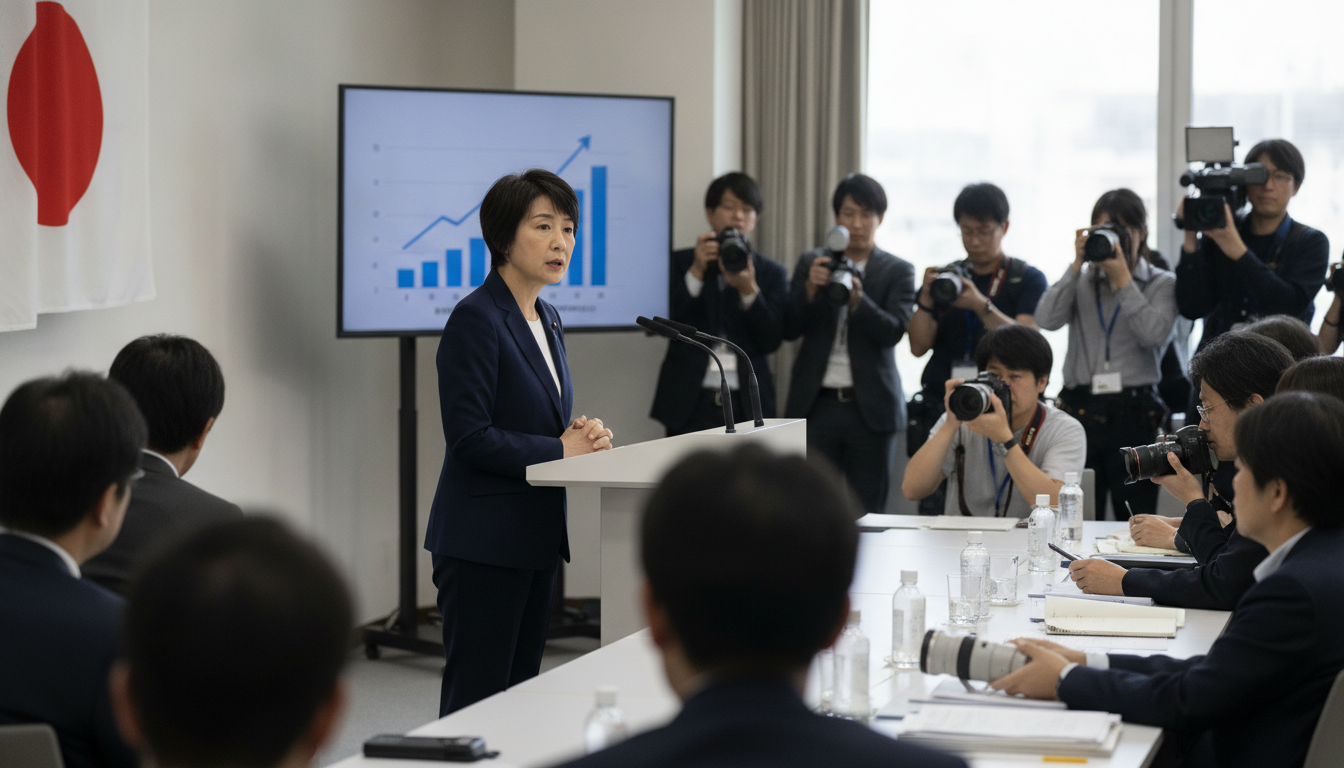
Takaichi Sidesteps Endorsement of Consumption Tax Cut in Party Leaders’ Debate
Prime Minister Sanae Takaichi did not endorse a proposed consumption tax cut during the July 15 party leaders’ debate, leaving the fate of the 1% food tax reduction to further deliberation.
The party leaders’ debate on July 15 focused on a proposed consumption tax cut for food and broader economic concerns, but produced no decisive shift in government policy. Prime Minister Sanae Takaichi repeatedly deferred to ongoing consultations, declining to state personal support for a plan to lower the food consumption tax rate to 1% from April 2027. Opposition leaders pressed for clarity as market risks such as yen depreciation and rising long-term yields framed the exchange.
Tamaki Demands Clarity on 1% Food Tax Plan
Yuichiro Tamaki, leader of the Democratic Party for the People, confronted the prime minister over the administration’s timetable for the consumption tax cut proposal. Tamaki highlighted that opposition parties had not reached consensus and asked whether the plan to reduce food taxation to 1% from April next year remained open to revision. His questioning aimed to force a clear position ahead of legislatively sensitive deadlines and public scrutiny.
Tamaki characterized the lack of agreement across parties as politically and administratively problematic, arguing that any change should reflect broad consensus. The exchange underlined opposition concerns that the government might advance a tax change without sufficient cross-party backing or detailed implementation plans.
Other Opposition Leaders Raise Alternative Proposals
Leaders of smaller opposition groups also engaged on the consumption tax cut, offering alternative approaches and pushing the government for more detailed analysis. Junya Ogawa of the Centrist Reform Union and Takahiro Anno of Team Mirai both pressed questions and suggested modifications to the 1% proposal during the debate. Their interventions emphasized the need to consider distributional effects and administrative feasibility.
Those parties argued that any reduction should be accompanied by targeted support measures for low-income households and clear mechanisms to prevent unintended market distortions. The variety of proposals signaled that while there is appetite for relief on food prices, consensus on form and timing remains elusive.
Takaichi Defers to Social Security Council and Avoids Personal Stance
Prime Minister Takaichi consistently framed the issue as one for the Social Security National Council, saying the body’s deliberations should determine the outcome. She told lawmakers that work could be completed by early August and urged council members to hold thorough discussions through July if necessary. Takaichi stressed she would not pre-empt the council’s decision and therefore did not disclose a personal preference during the televised debate.
Her refusal to commit drew criticism from opposition figures who demanded accountability from the executive ahead of any legislative timetable. Government sources described her approach as an attempt to preserve procedural neutrality while keeping the option of a consumption tax cut open.
Economic Context: Yen Weakness and Rising Long-Term Yields
The leaders’ debate also addressed the broader economic backdrop, with participants noting the yen’s depreciation and an uptick in long-term interest rates. Takaichi emphasized a growth-first stance, arguing that strengthening the economy was necessary to sustain social support systems and assist those in need. She portrayed economic revitalization as the primary engine for long-term fiscal stability.
Opposition leaders countered that rhetoric about growth alone would not calm markets, with Tamaki warning that investor confidence requires concrete policy measures rather than slogans. The exchange highlighted tensions between growth-oriented policy prescriptions and short-term relief measures such as a consumption tax cut.
Timeline and Political Calculus Ahead of April 2027
With the proposal framed as taking effect in April 2027, the political timetable is compressed and contentious. Takaichi’s assertion that the Social Security National Council could finish work by early August leaves limited time for parties to reconcile differences and for the government to prepare implementing legislation. Opposition calls for extended debate and additional safeguards suggest the prospect of protracted negotiations.
The lack of a firm endorsement from the prime minister leaves the administration vulnerable to criticism from both fiscal hawks and proponents of consumer relief. How the ruling coalition navigates intra-party dynamics and cross-party bargaining in the coming weeks will determine whether the consumption tax cut gains traction or stalls.
A consensus on the mechanics of a 1% food consumption tax cut, its fiscal offsets, and its administrative rollout remains unresolved. Lawmakers and policy experts will watch the Social Security National Council’s timeline closely as parties weigh political risk against public demand for relief.
The coming weeks are likely to see intensified discussions within the council and among party negotiators as the government seeks to balance short-term consumer relief with long-term fiscal and market stability.

