
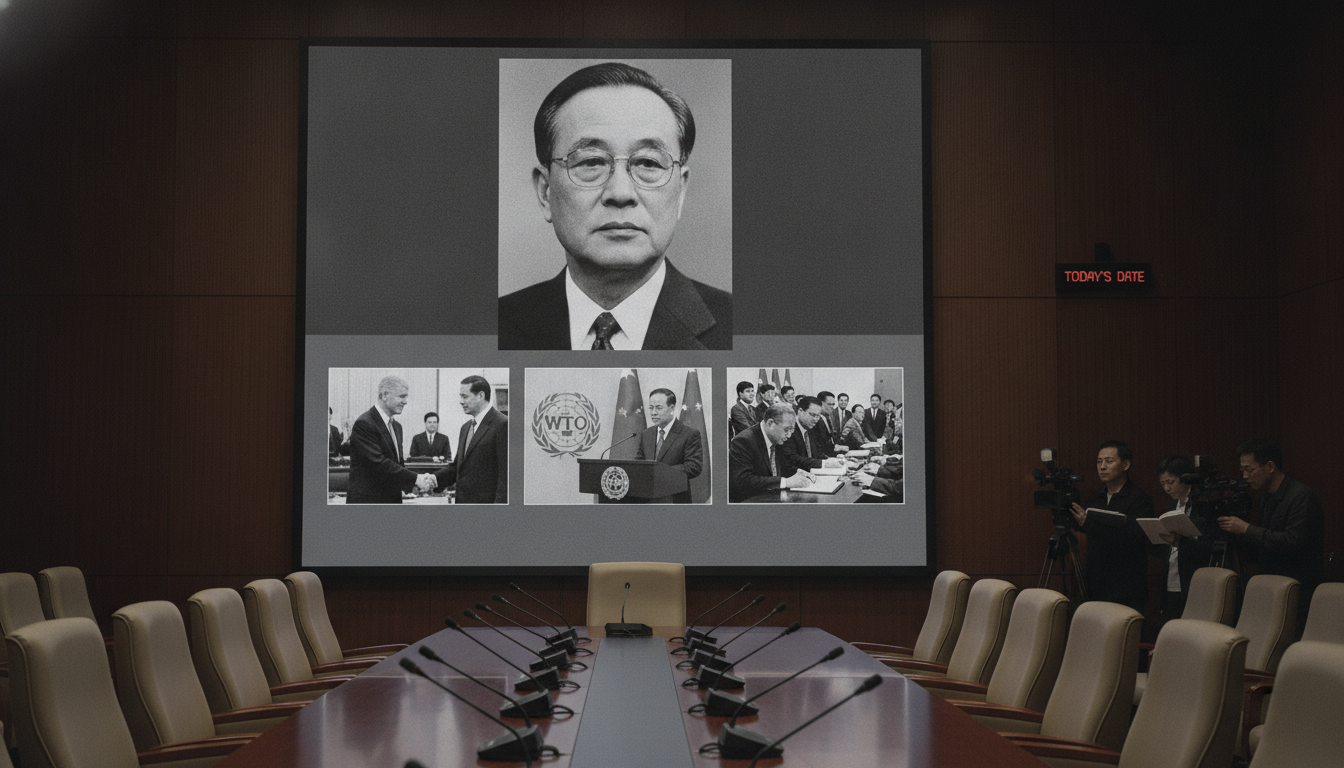
Zhu Rongji, former Chinese premier, dies in Beijing at 97
Zhu Rongji dies at 97 in Beijing on August 12, 2026; the former Chinese premier oversaw WTO accession and sweeping financial and state enterprise reforms.
Zhu Rongji, the former Chinese premier who guided Beijing through pivotal economic reforms and the country’s entrance into the World Trade Organization, died in Beijing on August 12, 2026, state news agency Xinhua reported. He was 97. Zhu’s death marks the passing of a leader credited with overhauling China’s financial system and accelerating its integration into the global economy.
Death Confirmed by State Media
Xinhua announced Zhu Rongji’s death on the evening of August 12, 2026, identifying the location as Beijing and confirming his age as 97. The agency provided few immediate details about the cause, following the standard practice for announcements of senior figures. State broadcaster coverage quickly followed, with archival footage and retrospectives highlighting key moments from Zhu’s career.
Role in China’s WTO Accession
Zhu Rongji played a central role in steering China toward membership of the World Trade Organization in 2001, a move that reshaped trade relations and opened markets to foreign investment. His administration negotiated tough terms and implemented domestic changes to comply with international norms, positioning China for decades of trade-driven growth. Officials and analysts often point to the WTO entry as a defining achievement that accelerated economic modernization.
Banking and Financial System Overhaul
During his tenure as premier from 1998 to 2003, Zhu launched ambitious reforms to stabilize and modernize China’s banking sector and public finances. He pushed through measures to clean up non-performing loans, recapitalize major state banks, and introduce stricter regulatory frameworks that aligned Chinese institutions more closely with international practices. These reforms were credited with restoring confidence in the financial system after the turmoil of the 1990s and laying groundwork for broader market development.
Restructuring State-Owned Enterprises
Zhu oversaw a significant restructuring of state-owned enterprises, encouraging efficiency and consolidation while managing large-scale layoffs and reassignments of workers. His policies included the closure or merger of unviable firms and the promotion of competitive, corporatized entities meant to operate under commercial principles. The social and economic costs of these moves were substantial, but officials contend the restructuring was essential to sustain China’s long-term industrial competitiveness.
Leadership Style and Domestic Politics
Known as a pragmatic technocrat, Zhu Rongji cultivated a reputation for bluntness and discipline, often favoring direct implementation over rhetorical flourish. He was perceived as less interested in ceremonial politics than in managerial results, and he frequently faced resistance from vested interests while pursuing reforms. His approach helped consolidate policy gains during a formative period for China’s market transition, even as it stirred controversy among stakeholders affected by rapid change.
International Reactions and Diplomatic Impact
News of Zhu’s death prompted condolences and statements from diplomatic channels and foreign policy observers who highlighted his role in opening China to global commerce. International business groups and former counterparts noted Zhu’s insistence on predictable rules and stronger institutions, which many say reduced friction in trade relations. Analysts expect his passing to spur renewed reflection on the balance China struck between state control and market engagement during his era.
Zhu Rongji’s career spanned a period of dramatic economic transformation in China, and his policies left a lasting imprint on the institutions that underpin the country’s global trade and finance presence. He will be remembered both for the tangible economic architecture he helped build and for the political resolve he displayed in shepherding contentious reforms.

