
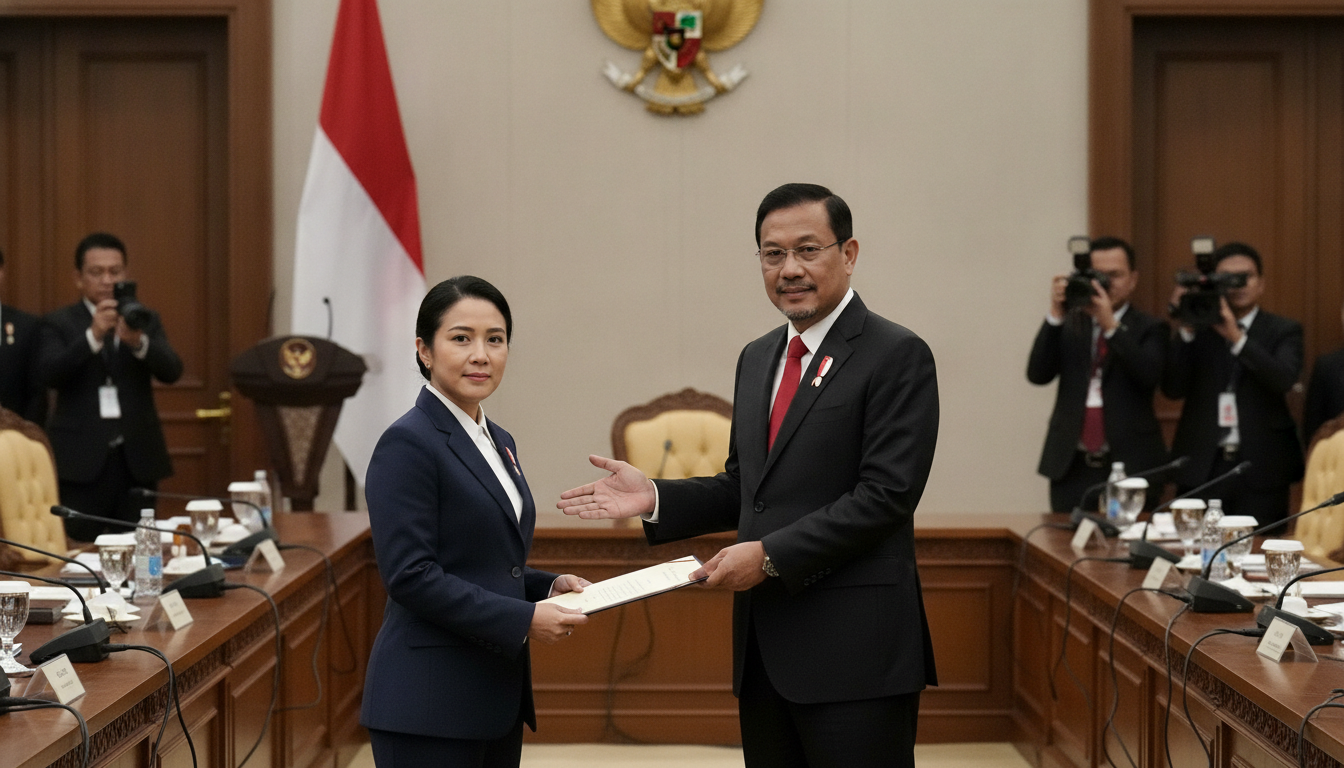
Prabowo Names Destry Damayanti as Bank Indonesia Governor, Narrowing Parliamentary Choice
Prabowo nominates Destry Damayanti as Bank Indonesia governor on Aug 10, 2026; a sole candidate submission limits the legislature’s role and signals continuity.
Destry Damayanti, currently serving as acting governor, was nominated on August 10, 2026 by President Prabowo Subianto to formally replace Perry Warjiyo, who stepped down two weeks earlier. The president submitted only one name to the national legislature, a move that effectively narrows the House of Representatives’ choice to accepting or rejecting the single nominee. The announcement raises immediate questions about the confirmation timeline and the likely direction of Indonesia’s monetary policy under Damayanti’s formal leadership.
Prabowo submits a single candidate
President Prabowo’s decision to put forward only Destry Damayanti was announced on August 10, 2026, according to officials close to the administration. By offering a sole nominee, the executive constrained the parliamentary chamber’s ability to weigh multiple contenders. The tactic reduces the House’s leverage in shaping the selection and accelerates the administrative process of filling the central bank’s top role.
Legislature faces a limited choice
With a single nomination on the table, the House of Representatives must decide whether to approve or reject Destry Damayanti without the option to select an alternative candidate. Lawmakers may still subject the nominee to hearings and scrutiny, but the lack of competing names changes the dynamics of negotiation between the executive and the legislature. Political groups within the House could use the confirmation hearings to extract concessions on oversight or monetary governance, even if they cannot propose another governor directly.
Destry Damayanti’s interim leadership
Destry Damayanti has been serving as acting governor since Perry Warjiyo stepped down, overseeing day-to-day operations at Bank Indonesia in the interim. As senior deputy governor, she has played a central role in the bank’s management and implementation of monetary policy during the transition period. Her nomination formalizes a continuity path that senior officials argue will minimize disruption in the institution’s work on inflation control and financial stability.
Implications for monetary policy and markets
Analysts say a nomination from within Bank Indonesia’s senior ranks typically signals policy continuity rather than abrupt change. Investors and market participants often interpret an insider appointment as a signal that the central bank will maintain its current approach to interest rates, reserves management, and regulatory oversight. Nevertheless, the confirmation process and any public statements made during hearings could influence market expectations for the rupiah, bond yields, and inflation forecasts in the coming months.
Political response and potential challenges
Opposition groups and some parliamentary factions have the option to scrutinize Damayanti’s record and probe the circumstances surrounding Warjiyo’s departure. The single-candidate approach may draw criticism from lawmakers who favor broader consultation or more competitive selection. At the same time, parties aligned with the president are likely to emphasize stability and a smooth handover at the central bank to avoid undermining investor confidence.
Next steps in the confirmation process
Following the nomination on August 10, 2026, the House is expected to schedule hearings to evaluate Destry Damayanti’s qualifications and agenda for Bank Indonesia. The timing and format of those proceedings will determine how quickly a final appointment can be formalized. If the legislature approves the nomination, Damayanti would transition from acting governor to the full governorship, providing legal clarity and a mandate to continue implementing monetary policy.
The selection of Destry Damayanti marks a pivotal moment for Indonesia’s central bank as it moves from a period of interim stewardship to a potentially longer-term leadership arrangement. Observers will watch the parliamentary review closely for indications of political support, the future course of monetary policy, and the broader implications for financial markets and economic stability.

