
Rooftop Solar Installations Surge in Philippines as Energy Crisis Drives Rapid Uptake
Rooftop solar installations in the Philippines have surged as an Iran war energy shock pushes businesses and households to cut rising electricity bills. Companies report installation volumes rising by several hundred percent over the past six months, with both commercial rooftops and residential systems booked out in many urban areas. The spike reflects a sudden shift in energy purchasing as consumers seek to shield themselves from volatile wholesale and retail power prices.
Installations surge several hundred percent in six months
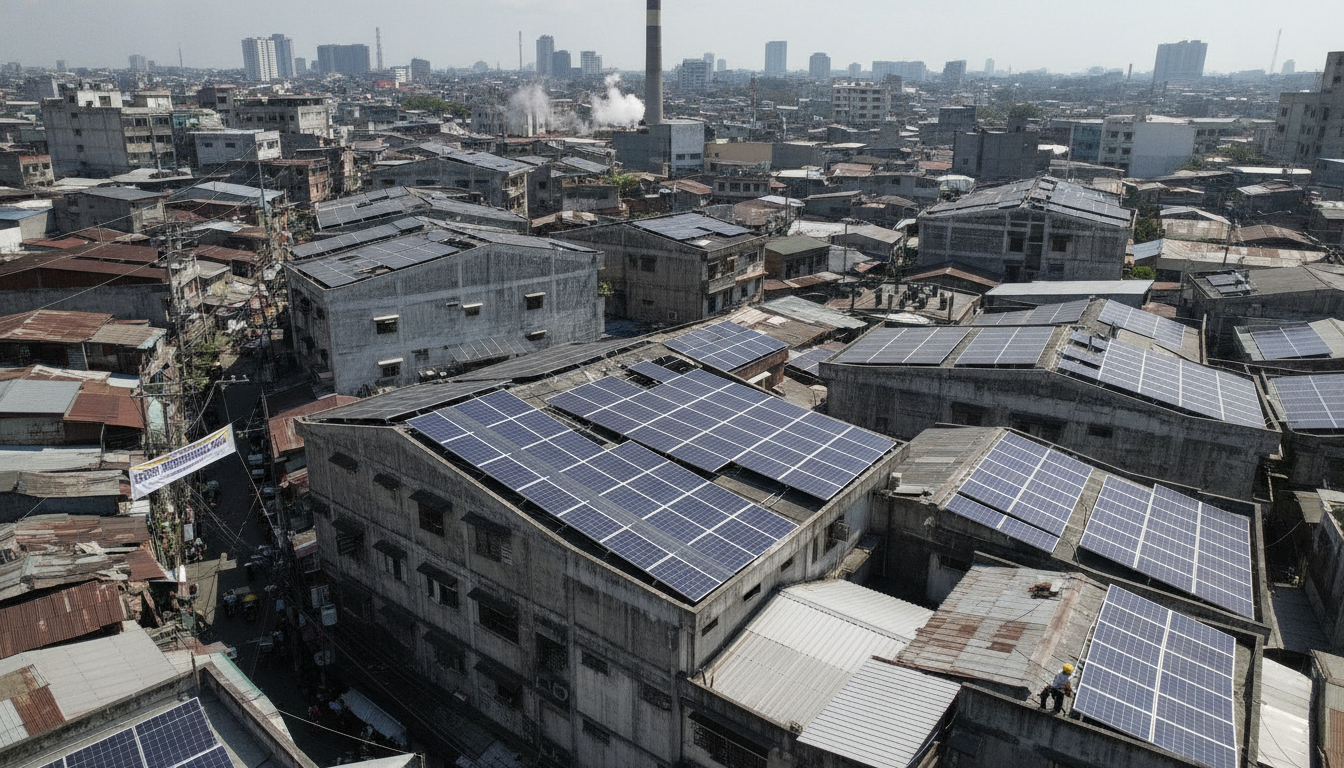
Businesses and rooftop solar contractors say installations have jumped several hundred percent in the last six months, driven by immediate cost concerns. Solar integrators report demand far outstripping their installation capacity, prompting longer lead times and expanded hiring of technicians. Photographs and industry statements show crews installing panels on homes and warehouses across Metro Manila and in surrounding provinces as orders accelerate.
Manufacturers and local distributors have raised imports to meet the surge, but supply chain bottlenecks remain intermittent. Several installers described a scramble for inverters and mounting equipment that pushed turnaround times from weeks to months. The rapid growth has also attracted new entrants offering lease-to-own and subscription-style models.
Commercial demand outstrips residential uptake
Large commercial customers led the early wave of rooftop solar adoption, citing sharply rising operating costs and predictable returns on investment. Retail and manufacturing firms have prioritized rooftop installations on warehouses and shopping centers to stabilize energy costs and reduce exposure to spot market spikes. Industry sources say commercial systems are often sized to offset daytime peak loads and can be coupled with batteries for partial backup capacity.
Residential demand has expanded rapidly as financing options have proliferated, but it still trails commercial uptake in total capacity installed. Homeowners increasingly view rooftop solar as a hedge against higher tariffs and intermittent outages, while neighborhood co-ops and condominium associations are beginning to explore shared systems. Smaller residential systems, however, face higher per-kilowatt installation costs and longer payback times without subsidies.
Energy prices and Iran war cited as key drivers
Market participants and consumers attribute the surge primarily to the global energy shock linked to the Iran war, which has pushed fuel and wholesale electricity prices higher. Electricity retailers passed elevated generation costs through to end users, prompting companies and households to seek alternatives. Traders and power market analysts have flagged increased volatility in Asian fuel markets as a direct influence on local retail tariffs.
The perception of an extended period of higher energy prices has changed investment calculus for many buyers. Where rooftop solar was previously framed as a sustainability choice, it is now often presented as fiscal risk management. This reframing has accelerated decisions that, prior to the shock, might have been deferred for regulatory clarity or falling module prices.
Financing and business models accelerate adoption
Innovative financing structures have played a central role in scaling rooftop solar deployment quickly. Leasing, power purchase agreements (PPAs), and zero-down instalment plans offered by third-party providers have lowered upfront barriers for both firms and households. Several local companies reported expanding their consumer financing arms to offer loans tied to expected energy savings, shortening the decision cycle for purchasers.
Institutional lenders and fintech platforms are increasingly underwriting solar projects, attracted by predictable cash flows from energy savings. This has prompted a growing ecosystem of installers, equipment suppliers, and financiers working together to close deals within weeks rather than months. However, some lenders warn that standardized underwriting practices are still developing, leaving room for inconsistent risk assessments.
Grid constraints and permitting slow integration
Despite the uptake, the rapid pace of rooftop solar installations has revealed bottlenecks in grid integration and permitting processes. Distribution utilities report spikes in interconnection requests that strain technical review capacity and require upgrades to local infrastructure. In some areas, anti-islanding protections and transformer capacity limits have imposed caps on how much rooftop generation can be exported to the grid.
Local governments and permitting offices face backlogs as applications surge, delaying some installations and increasing costs. Installers also cite inconsistent interpretation of interconnection standards and variable timelines for net-metering approvals. These operational frictions risk slowing deployment unless addressed through coordinated utility planning and streamlined regulatory procedures.
Policy response and market outlook
Regulators and industry groups are evaluating short-term measures to ease interconnection and permitting delays while considering longer-term grid investments. Policy options being discussed include clearer technical guidelines for distributed generation, accelerated transformer upgrades, and targeted incentives for residential systems in lower-income areas. Officials have signaled interest in aligning incentives with grid stability goals to avoid overbuilding in constrained feeders.
Market analysts expect rooftop solar installations to remain elevated as long as wholesale and retail energy prices stay high or volatile. The current surge could shift the Philippines’ generation mix incrementally toward distributed renewables, reducing exposure to imported fuels. The pace and shape of that transition, however, will hinge on financing availability, utility coordination, and the speed at which policy and regulatory frameworks adapt.
The rapid expansion of rooftop solar installations across the Philippines reflects a market responding to immediate economic pressures as much as environmental aims. Continued growth will depend on resolving technical and financial bottlenecks while ensuring that wider grid reliability and equity considerations are addressed.

