
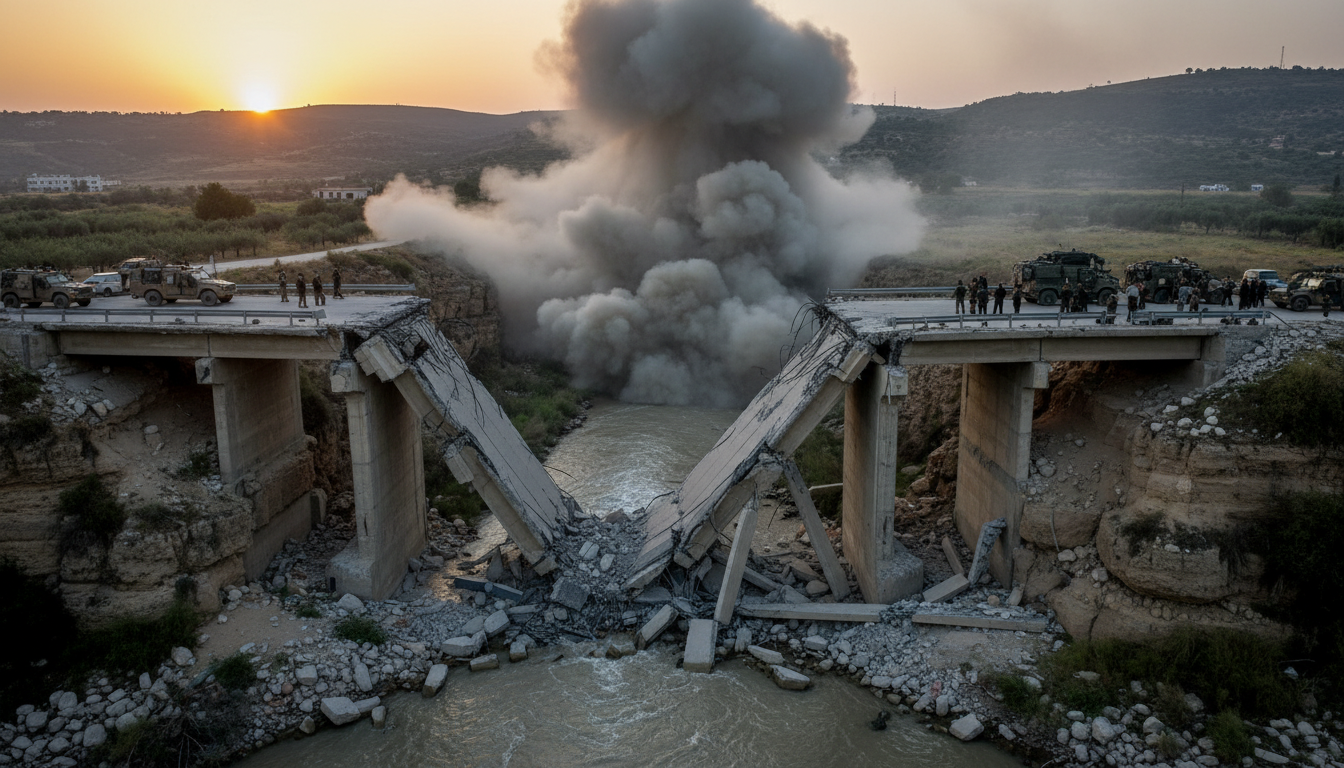
Israeli Strike Destroys Last Operational Litani River Bridge, Cutting Off Southern Lebanon
Israeli strike destroyed the last operational Litani River bridge on April 16, 2026, severing major transport links and isolating southern Lebanon communities.
The last operational Litani River bridge was destroyed in an Israeli strike on April 16, 2026, Al Jazeera reported from Tyre. The attack demolished the river crossing that connected large parts of southern Lebanon to the central road network, immediately disrupting civilian movement and commercial transport. Local officials described roads as effectively severed, leaving towns south of the Litani increasingly isolated.
Bridge Destroyed in Strike
The strike that leveled the Litani River bridge removed the final crossing point across the river that remained in usable condition. Sources on the ground in Tyre said debris and twisted metal now block the riverbanks, preventing rapid repair or temporary crossings. Witnesses reported loud explosions and a pall of smoke visible for miles after the strike.
Major Routes and Supply Lines Cut
With the bridge out of service, key highways that carried passenger vehicles, trucks and emergency services are no longer continuous between the south and the rest of Lebanon. Transport operators said long detours over smaller roads are now necessary, increasing travel times and costs for goods and passengers. Humanitarian convoys and commercial deliveries are likely to face significant delays as alternate routes are assessed for safety and capacity.
Immediate Civilian Consequences
Residents in towns south of the Litani face restricted access to hospitals, markets and administrative services that were normally reached via the bridge. Medical staff warned that transfers for specialized care will be hampered, and local clinics are bracing for potential shortages. Evacuation plans for vulnerable populations are complicated by the lack of a reliable crossing and the potential for further strikes.
Infrastructure Targeting and Military Claims
Israeli military statements in recent weeks have cited strikes on transport infrastructure as part of operations against militant targets, and the destruction of the Litani River bridge aligns with that pattern. Analysts say targeting bridges is intended to limit movement of fighters and matériel, though it also degrades civilian infrastructure critical to daily life. Military officials have not publicly detailed the specific intelligence underlying the April 16 action.
Humanitarian Access and Aid Challenges
Humanitarian groups have expressed concern that the loss of the bridge will impede relief efforts precisely when needs are rising. International organizations and local NGOs typically rely on main arteries for reliable, large-scale deliveries, and are now reviewing contingency corridors. United Nations agencies have warned that prolonged closure of major crossings increases the risk of shortages of fuel, medical supplies and food in isolated communities.
Political and Regional Implications
Lebanese authorities are expected to condemn the strike and call for international intervention to protect civilian infrastructure, diplomats said. The severing of the Litani River bridge raises political pressure on Beirut to coordinate emergency measures while navigating a delicate security situation along the border. Regional actors monitoring the conflict may view the attack as an escalation with broader logistical and diplomatic consequences.
The full extent of the damage and the timeline for any repair remain unclear, and engineers will face technical and security constraints before reconstruction can begin. In the short term, residents and aid agencies must adapt to disrupted routes while authorities negotiate access and attempt to restore essential services.

