
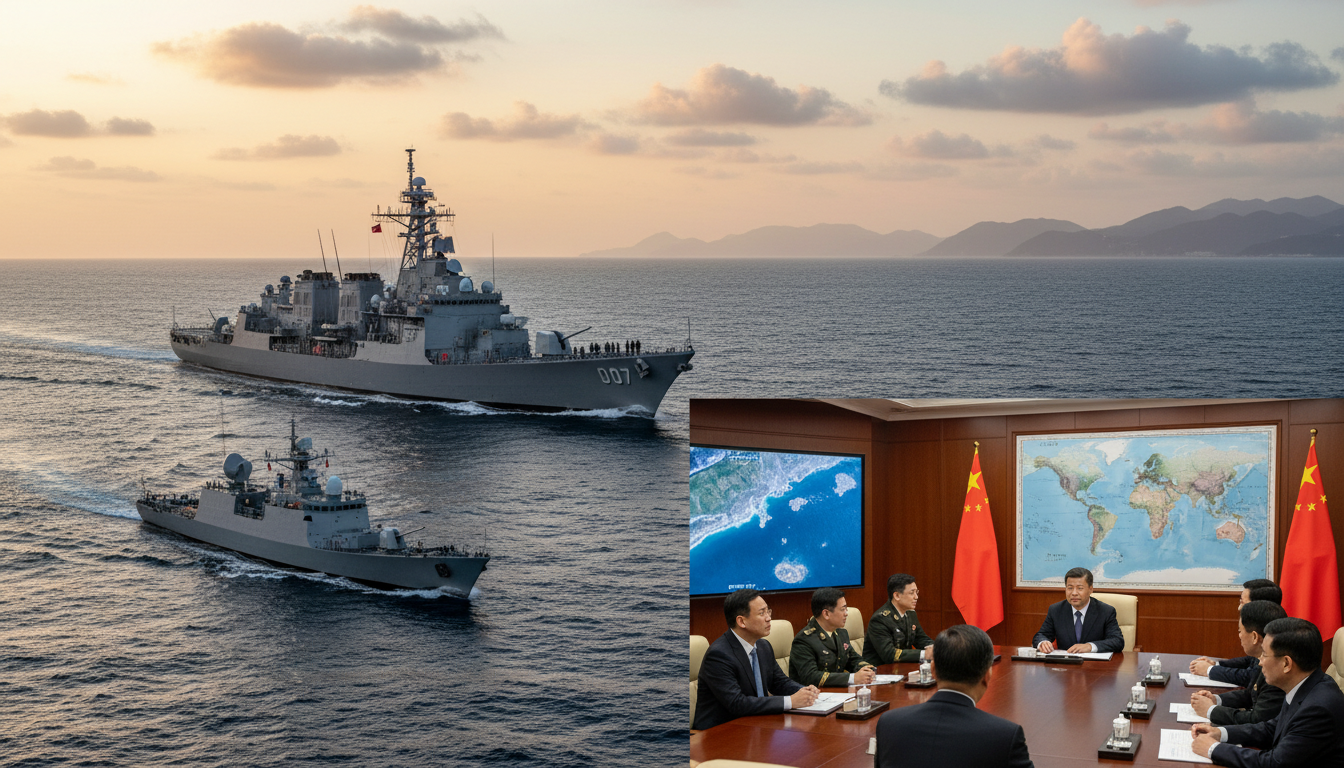
Japan Destroyer JS Ikazuchi Transits Taiwan Strait as China Calls Move Provocative
Japan’s destroyer JS Ikazuchi transited the Taiwan Strait, prompting China to label the passage provocative after the PLA monitored the vessel, highlighting rising tensions in the waterway.
Japan’s Maritime Self-Defense Force ship JS Ikazuchi sailed through the Taiwan Strait early Friday, a move that drew swift criticism from Beijing and renewed focus on security in the busy channel. The transit, which officials say took place from 4:02 a.m. to 5:50 p.m., was tracked by Chinese naval and air units, according to a statement issued by China’s military spokespeople. Beijing described the deployment as a deliberate provocation and said its forces handled the situation in accordance with law. The incident underscores lingering tensions between two of Asia’s largest economies and comes amid heightened attention to freedom of navigation in the region.
JS Ikazuchi Transits Taiwan Strait
Japan confirmed that the destroyer JS Ikazuchi conducted a routine transit through the Taiwan Strait, an internationally navigable waterway. Japanese authorities framed the movement as part of regular operations to ensure maritime security and to uphold the principle of freedom of navigation. The explicit transit window reported for the vessel — from early morning into the late afternoon — suggests a prolonged operation that drew observation from multiple regional actors. Such passages have become increasingly scrutinized in recent years as naval activity through the strait has intensified.
Chinese Military and Diplomatic Response
China’s military publicly stated that naval and air forces tracked and monitored the destroyer throughout its passage and framed the deployment as aggravating regional instability. At a regular briefing, a Foreign Ministry spokesman accused Japan of “flexing military muscle” and said the Chinese military responded in line with legal procedures. Beijing’s reaction combined both military monitoring and pointed diplomatic rhetoric, signaling that China views such transits as politically sensitive actions deserving of a firm public response. The language used by Chinese officials reflects broader concerns in Beijing about foreign military presence near Taiwan.
Japan’s Rationale and SDF Position
Japanese defense sources described the transit as a lawful exercise consistent with international norms and Japan’s maritime practices. Officials emphasized that Japan conducts operations to protect sea lines of communication and to maintain readiness in a complex security environment. The Self-Defense Forces typically avoid inflammatory public commentary, but Tokyo’s decision to carry out the passage indicates a willingness to assert operational priorities in waters it regards as open to international shipping. Analysts say Japan’s posture aims to balance deterrence with careful messaging to avoid escalation.
Regional Security Implications
The transit of a Japanese destroyer through the Taiwan Strait feeds into wider strategic calculations across East Asia, where multiple actors maintain overlapping interests. Neighboring countries and external powers watch such movements for indicators of military intent and operational patterns. Increased transits by surface combatants can catalyze more frequent monitoring missions by regional militaries, adding to the tempo of operations in the western Pacific. The cumulative effect of repeated transits and counter-moves raises the possibility of miscalculation unless communication channels and incident-avoidance mechanisms are actively employed.
Legal Context and Freedom of Navigation
Maritime law recognizes certain straits as subject to transit passage, and states increasingly cite these norms when conducting operations. Japan and many other maritime nations assert that freedom of navigation applies in the Taiwan Strait, a stance that underpins routine transits by military and commercial vessels. China, while acknowledging navigational rights, often criticizes foreign military activity near Taiwan as unnecessary interference. Legal interpretations and their operational application continue to be a source of diplomatic friction as states seek to reconcile maritime rights with security concerns.
Potential Impact on Japan-China Relations
The latest incident is likely to be absorbed into a broader pattern of competitive interactions between Tokyo and Beijing, affecting diplomatic exchanges and defense consultations. While both capitals have maintained economic ties, security episodes like the JS Ikazuchi transit complicate efforts to stabilize bilateral relations. Tokyo may continue to calibrate its maritime operations to signal deterrence without provoking direct confrontation, while Beijing’s public responses serve domestic and regional messaging purposes. Continued incidents could prompt calls from third parties for restraint and clearer communication to prevent escalation.
The transit of JS Ikazuchi through the Taiwan Strait and China’s public admonition reflect a volatile mix of legal argument, military signaling and diplomatic posture that defines contemporary regional security dynamics. Observers say monitoring the frequency and context of similar passages will be essential to assessing whether tensions persist or whether diplomatic engagement can reduce the risk of unintended incidents in the months ahead.

