
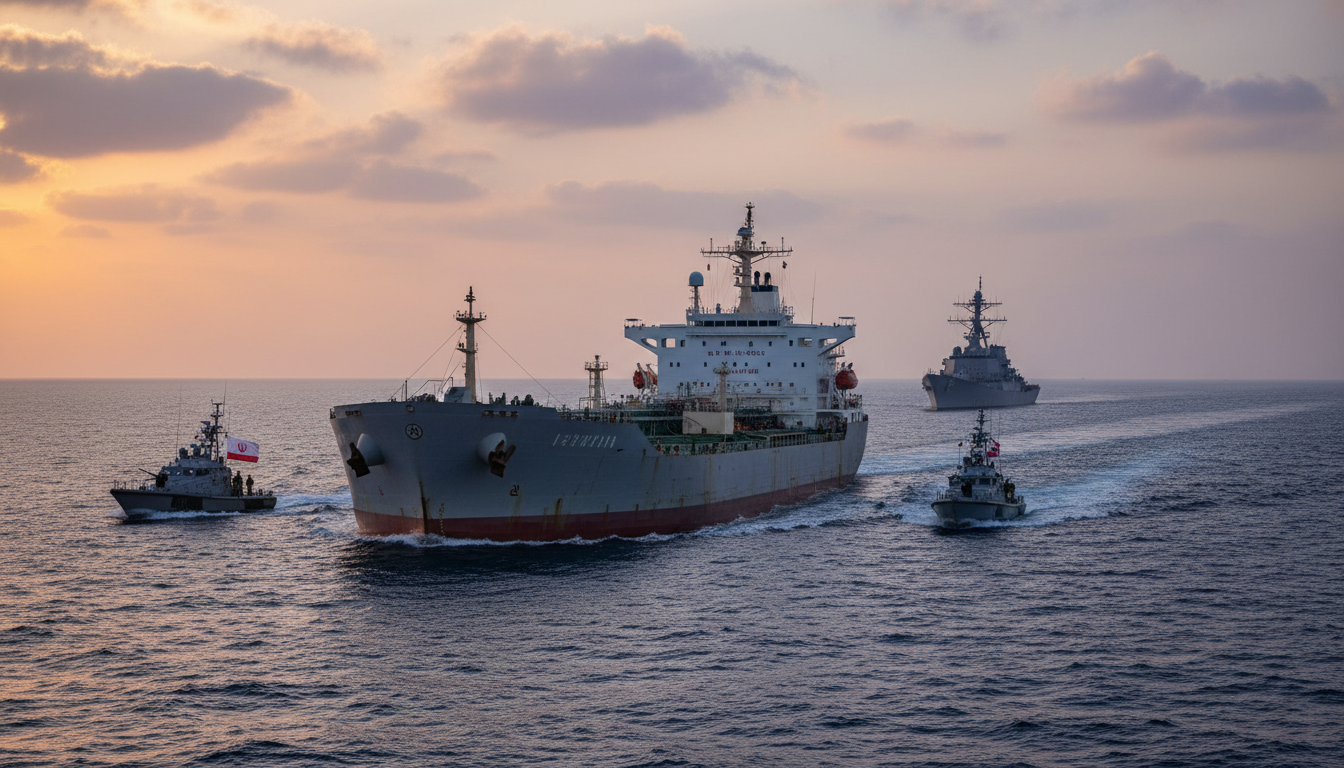
Unnatural Ship Maneuvers in Strait of Hormuz Raise Questions Over U.S. "Reverse Blockade"
U.S. naval enforcement near the Strait of Hormuz has coincided with several merchant vessels making abrupt course changes and transmitting misleading navigation data, drawing scrutiny of sanctioned ships and possible AIS manipulation.
The U.S. declaration of a limited maritime blockade on Iranian ports and subsequent enforcement in the Gulf of Oman has been followed by multiple merchant vessels reversing course or failing to broadcast clear destinations as they transited the Strait of Hormuz. Such behavior, visible on public vessel-tracking feeds, has prompted questions about whether some ships are attempting to evade the U.S. measures or obscure ties to Iranian cargoes. (apnews.com)
Unusual Vessel Tracks Near Strait of Hormuz
Several ship-tracking services recorded ships entering the narrow corridor between Qeshm and Larak islands and then executing abrupt U-turns or loitering in the Gulf of Oman.
Maritime-monitoring platforms and open-source intelligence showed instances where vessels signaled inconsistent or blank destination fields while navigating the approaches to the strait.
These patterns were noted in the hours after U.S. forces announced operations intended to block traffic linked to Iranian ports, raising immediate alarm among naval analysts and commercial operators. (apnews.com)
Sanctioned Tanker Rich Starry Draws Attention
One vessel singled out by maritime analysts is the tanker Rich Starry, which is listed by intelligence services as subject to U.S. sanctions for links to Iranian trade.
Tracking data showed the ship approach the Larak–Qeshm corridor, reverse course in the Gulf of Oman, then recommit to a transit several hours later — a sequence analysts say is consistent with vessels probing enforcement lines.
Lloyd’s List intelligence reported that the Rich Starry’s ownership and routing raised red flags, and that the ship has been associated with a so-called shadow fleet that obscures cargo origins and destinations. (lloydslist.com)
Evidence of AIS Tampering and Data Gaps
Maritime analytics firms cite prolonged periods during which some vessels broadcast misleading or no Automatic Identification System (AIS) signals, a practice known as spoofing or deliberate data suppression.
Windward and other maritime intelligence providers have documented episodes in which AIS feeds were altered or turned off for stretches exceeding several days, a pattern industry experts associate with covert ship-to-ship transfers or attempts to hide loading locations.
Analysts warn that AIS anomalies complicate verification of whether ships are carrying Iranian-origin cargoes and hamper efforts by naval forces to determine lawful targets for inspection or interdiction. (windward.ai)
CENTCOM Footage and Enforcement Actions in the Gulf of Oman
U.S. Central Command has publicly posted imagery and statements showing U.S. forces directing merchant traffic in the Gulf of Oman and reporting that multiple vessels complied with orders to change course.
Official releases said warships and embarked helicopters were used to communicate with and, in some cases, physically steer merchant traffic away from routes tied to Iranian ports, a step CENTCOM described as part of legal enforcement measures.
Those communications, and the public sharing of operational footage, underscore a deliberate tactic by U.S. forces to both deter transfers of sanctioned materials and to document compliance or noncompliance at sea. (english.news.cn)
Implications for Regional Trade and Naval Risk
The mixed picture of compliant, evasive and obscured vessel movements is increasing uncertainty for commercial shippers and insurers operating through the Strait of Hormuz.
Markets and maritime insurers are closely watching whether the enforcement posture will remain narrowly targeted at Iran-linked traffic or broaden to include vessels with suspected secondary ties, a shift the U.S. has signaled it may pursue.
A wider interpretation of enforcement authority could prompt more frequent diversions, longer voyages around the Arabian Sea, and heightened risk of miscalculation between naval forces and merchant mariners. (apnews.com)
The confluence of U.S. naval enforcement, vessels with prior sanctions links, and documented AIS anomalies has put a premium on independent maritime monitoring and timely notices to mariners.
Regional authorities, shipping companies and insurers say transparency from tracking services and clear messaging from naval commands will be essential to prevent accidental confrontations and to preserve the flow of lawful commercial trade through one of the world’s busiest energy chokepoints.
Vessel movements in and around the Strait of Hormuz will continue to be monitored by naval forces, maritime analysts and open-source platforms, and industry stakeholders say they expect additional public reporting and official guidance in the days ahead.

