
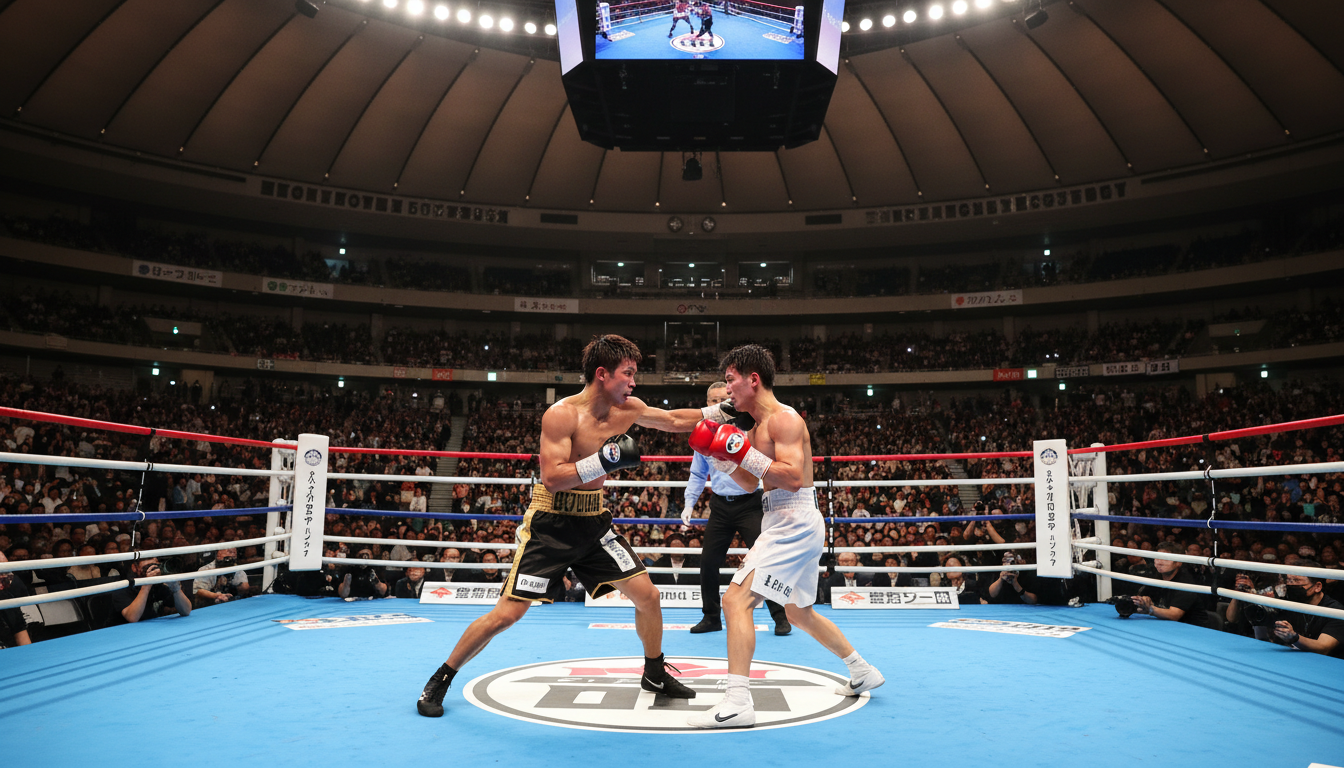
Naoya Inoue vs Junto Nakatani: Unbeaten Rivals Clash for Super Bantamweight Supremacy at Tokyo Dome
Naoya Inoue vs Junto Nakatani pits two 32-0 Japanese champions at Tokyo Dome before 55,000 fans — a historic super bantamweight showdown with global significance.
Naoya Inoue vs Junto Nakatani brings together two undefeated countrymen in a long-anticipated title fight at Tokyo Dome on Saturday, a match billed as one of the biggest in Japanese boxing history. The undisputed super bantamweight champion Naoya Inoue will defend his belts for a seventh time against the dangerous southpaw Junto Nakatani in front of a sellout crowd of 55,000. Both fighters enter with identical 32-0 records, elevating the bout from a domestic rivalry to a global championship event.
Fight night set for Tokyo Dome
The Tokyo Dome is expected to be electric as fans pack the arena for what promoters have described as a landmark moment for the sport in Japan. Organizers confirmed a full house of 55,000 spectators, underscoring the commercial and cultural weight the matchup carries for domestic boxing. The spectacle has attracted attention from international media and boxing followers who view the card as a rare meeting of two elite undefeated fighters from the same nation.
Ticket demand and ancillary events, including televised programming and fan activations, reflect growing interest in marquee Japanese boxing events. The scale of the staging at Tokyo Dome — a venue regularly used for major sporting and entertainment spectacles — signals promoters’ confidence that the fight will resonate beyond the country’s borders. Observers say the atmosphere could be comparable to the sport’s most memorable domestic shows in recent decades.
Records and titles on the line
Naoya Inoue comes into the fight as the undisputed super bantamweight world champion and will be defending his unified titles for a seventh time. His status as the division’s top fighter places added pressure on the bout, with legacy and championship continuity at stake. Junto Nakatani, a southpaw regarded for his poise and power, is the challenger with an identical professional record, making the clash a true meeting of equals on paper.
The winner will not only hold the belts but also claim clear supremacy within the division and a major boost to their international standing. For Inoue, a successful defense would further cement a reputation built on consistent dominance across weight classes. For Nakatani, an upset would immediately reposition him among the sport’s elite and rewrite expectations of the division’s competitive landscape.
Styles and tactical outlook
From a stylistic perspective the matchup presents a classic power-versus-angle test. Inoue is widely recognized for compact, explosive punching, fluid footwork and an ability to close distance quickly. Those attributes have been central to his run as a unified champion and will be key as he seeks to impose his tempo against a fellow countryman who fights from the southpaw stance.
Nakatani’s southpaw geometry and patient approach offer contrasting threats, particularly in creating awkward lines and countering orthodox forward pressure. Analysts expect Nakatani to attempt to control range with his lead hand, complicate Inoue’s entry angles and exploit any openings on the inside. Tactical adjustments by both camps will likely determine the flow of the fight, with corner strategy and mid-fight adaptations playing decisive roles.
Negotiations, promotion and a year in the making
Promoters and fight officials say the bout was more than a year in the making, with negotiations and scheduling efforts reflecting the logistical and financial complexity of staging a domestic megafight. The long buildup allowed for a sustained promotional push that emphasized the narrative of two unbeaten champions meeting on neutral ground. That narrative—paired with sold-out tickets—drove extensive pre-fight coverage across sports media platforms.
Commercial interest has been high, with broadcasting partners and sponsors circling the event as a tentpole for Japanese boxing in 2026. The project required coordination among promoters, sanctioning bodies and national regulators to align title recognition and fight conditions. The result is an event positioned to maximize both gate revenue and global viewership.
Implications for Japanese boxing and international rankings
A decisive result on Saturday will ripple through Japanese boxing, potentially redefining legacy conversations and accelerating cross-border matchmaking. If Inoue prevails, his continued dominance could prompt talks of super fights at higher weights or global crossover events that further raise the profile of Japanese champions. If Nakatani wins, a new national icon could emerge overnight, reshaping promotional priorities and creating fresh international opportunities.
Beyond national significance, the fight has implications for world rankings and future title unifications. The winner will carry added leverage in negotiating future bouts with elite opponents and may influence how other top fighters approach scheduling and weight management. Younger fighters in Japan and the region will also watch closely, seeing either outcome as a blueprint for career progression.
Both camps have emphasized preparation and respect for the opponent, framing the match as a sporting contest between two accomplished athletes rather than mere spectacle. Officials and pundits have noted the potential for a defining moment that could be replayed in discussions of the sport’s modern era in Japan.
All eyes will be on Tokyo Dome when the two unbeaten fighters step through the ropes, and the result is likely to shape narratives for months to come. The matchup between Naoya Inoue and Junto Nakatani offers a rare clarity of stakes: championship belts, national pride and the forging of legacy, all set against the backdrop of one of Japan’s most iconic sporting venues.

