
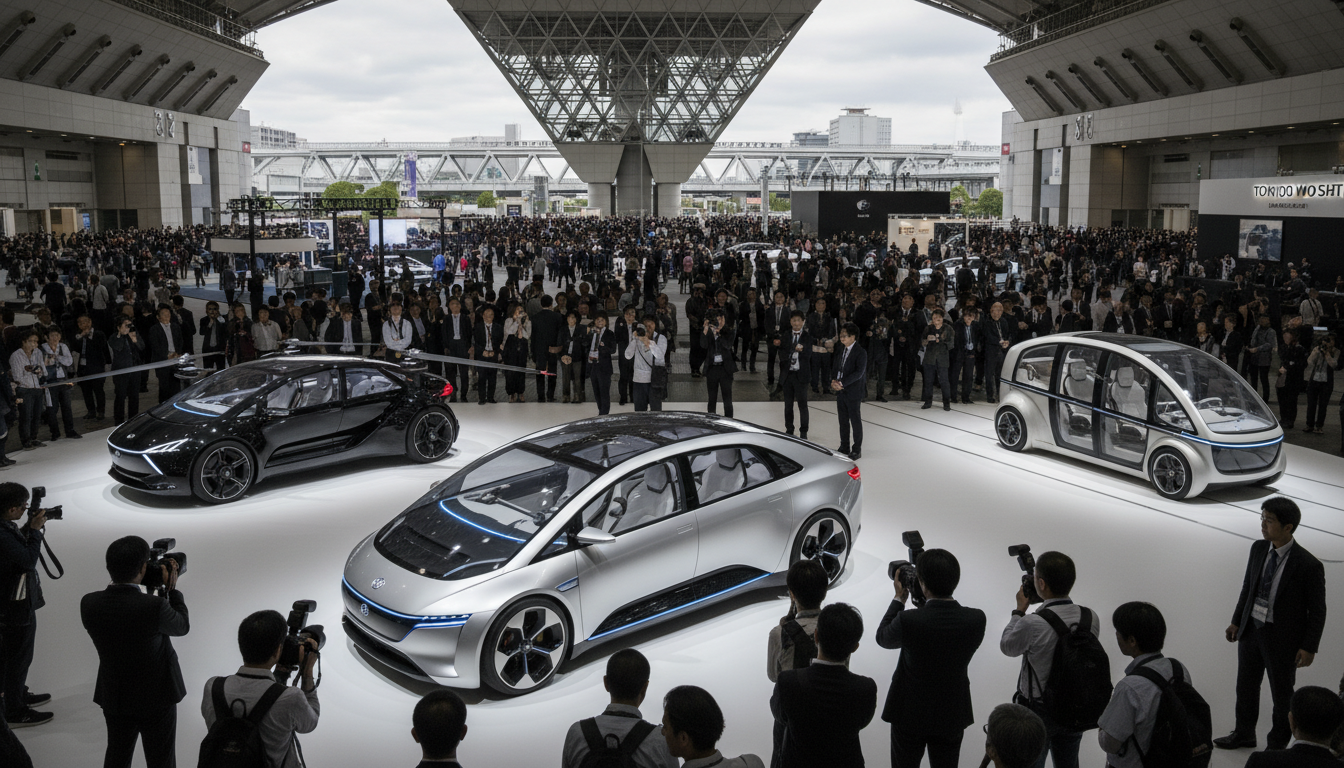
Tokyo Motor Show Returns to Tokyo Big Sight This October, Showcasing Futuristic Concept Cars
Tokyo Motor Show returns to Tokyo Big Sight this October with concept cars, cutting-edge mobility tech, and global manufacturers unveiling their visions for transport.
The biennial Tokyo Motor Show returns to Tokyo Big Sight this October, bringing an array of concept cars and mobility demonstrations from domestic and international manufacturers. The Tokyo Motor Show will highlight futuristic design, electrification, autonomous driving technologies, and experiential exhibits aimed at both industry insiders and the general public. Organizers expect the event to serve as a major platform for manufacturers to present concept vehicles and prototypes that point to the next decade of automotive innovation.
Organizers Outline Exhibition Focus and Format
The Tokyo Motor Show is structured as a showcase of concept vehicles, technology demonstrations, and public programming that emphasizes future mobility. Organizers have stressed a continued focus on concept cars that explore new design languages and alternative propulsion systems.
Press and trade days are typically followed by public exhibition days that include interactive displays, live demonstrations, and themed pavilions. The event format aims to balance industry announcements with opportunities for visitors to experience new mobility solutions firsthand.
Industry stakeholders see the Tokyo Motor Show as a venue for signaling strategic direction, with manufacturers using the stage to present their research, partnerships, and long-term roadmaps. The emphasis on concept vehicles allows brands to experiment visually and technically without committing to immediate production.
Major Manufacturers Confirm Concept and Prototype Lineups
Leading Japanese automakers are expected to bring headline concept vehicles that reflect each company’s vision for electrification and design direction. Domestic brands traditionally use the Tokyo Motor Show to present both bold styling studies and technology-laden prototypes.
International manufacturers often coordinate global reveals or regional debuts to coincide with the Tokyo exhibition, reflecting the show’s prominence in the Asia-Pacific calendar. Concept cars on display typically range from near-production EVs to radical single-seat mobility experiments.
Beyond vehicle displays, manufacturers will present accompanying technology demonstrations, including battery systems, electric drivetrains, and advanced driver-assistance features that hint at future production models. Partnerships with suppliers, technology companies, and startups will also be showcased to illustrate broader ecosystems.
Electrification, Software and Autonomous Tech Dominate Themes
The Tokyo Motor Show’s current agenda centers on electrification and software-defined vehicles as the pillars of forthcoming industry change. Concept cars are increasingly used to demonstrate how batteries, motors, and software integrate to shape performance, interior experience, and service models.
Autonomous driving and advanced driver assistance technologies remain prominent, with many exhibitors offering simulated rides or demonstrations that show the potential for driverless navigation in urban settings. These exhibits often pair hardware prototypes with software demonstrations that emphasize mapping, sensors, and AI-based decision-making.
Mobility services and connected ecosystems are also featured, indicating a shift from vehicle-centric displays to broader mobility solutions. Exhibitors explore topics such as shared electric micro-mobility, on-demand shuttle concepts, and integrated digital services.
Design Studios Present Futuristic Aesthetics and Urban Concepts
Design is a core attraction at the Tokyo Motor Show, where concept cars serve as canvases for future aesthetics and new approaches to passenger space. Designers typically experiment with proportions, lighting systems, and occupant interfaces to propose fresh ways people might interact with vehicles.
Interior concepts are increasingly focused on flexible space, blending automotive interiors with living-room sensibilities and digital interfaces that adapt to occupants’ needs. Materials innovation appears across displays, including lightweight composites, recyclable fabrics, and new approaches to sustainable manufacturing.
Lighting and exterior surface treatments are showcased as both functional and expressive elements, with dynamic lighting systems and modular exteriors that respond to use cases. These design experiments often aim to spark consumer imagination and provide a preview of brand identities to come.
Technology Startups and Mobility Services Expand the Exhibition Footprint
Alongside traditional automakers, the Tokyo Motor Show attracts startups and technology firms that contribute software, battery innovations, and new service concepts. These smaller exhibitors often present modular battery systems, fast-charging innovations, and urban mobility prototypes intended for pilot programs.
Mobility service operators and technology integrators will display concepts for fleet management, last-mile delivery solutions, and integrated mobility platforms. Exhibits are designed to demonstrate how vehicle hardware, cloud services, and urban infrastructure can work together to address congestion and emissions.
Collaborations between startups and incumbent manufacturers are a prominent feature, highlighting pilots and joint ventures that seek regulatory approval or municipal partnerships. These relationships underscore the show’s role as a marketplace for investment, partnership-building, and pilot recruitment.
Visitor Experience, Venue Logistics and Public Access
Tokyo Big Sight will host the Tokyo Motor Show this October, providing the exhibition halls and outdoor spaces needed for large-scale concept displays and test circuits. The venue’s proximity to public transportation, including the Rinkai Line and Yurikamome, makes it accessible for both local and international visitors.
Exhibits will typically include immersive installations, simulator experiences, and ride demonstrations that require advance queuing or ticketed time slots. Organizers commonly publish schedules for press days, trade sessions, and public access to streamline attendance and media coverage.
Public safety and crowd management are standard priorities, with clear signage, staff support, and designated zones for different exhibit types. Attendees are advised to plan transit routes and arrive early for popular demonstrations to make the most of scheduled experiences.
Economic and Industry Implications of the Tokyo Motor Show
The Tokyo Motor Show functions as more than a consumer spectacle; it is a bellwether for industry priorities and supplier demand. Manufacturers use the platform to articulate investment focus, which in turn shapes supplier strategies and regional employment in R&D and manufacturing.
Concept vehicle reveals can influence stockholder perceptions and policy discussions about electrification, hydrogen, and urban mobility planning. The show also attracts government representatives and municipal planners interested in learning about technologies that could be tested in city environments.
Local businesses and tourism sectors can expect increased activity during the exhibition, particularly in hospitality, retail, and transport services. Hosting major industry events reinforces Tokyo’s role as a global hub for automotive innovation and mobility discourse.
How to Navigate Major Reveals and Media Coverage
Press days at the Tokyo Motor Show concentrate major unveilings and executive statements, and international media tend to align coverage with those scheduled announcements. For attendees focused on particular manufacturers or technologies, reviewing exhibitor lists and daily programs in advance is essential.
Major reveals are often accompanied by technical briefings and product literature, enabling journalists and analysts to examine specifications, battery details, and projected timelines for commercialization. Industry observers recommend setting up meetings with manufacturer spokespeople to obtain clarifications on claims and roadmaps.
Social media and live streams extend the reach of the Tokyo Motor Show, enabling remote audiences to view key reveals in real time. However, in-person attendance provides access to hands-on demonstrations and detailed technical briefings that cannot be fully conveyed through broadcast alone.
Sustainability Initiatives and Community Engagement Programs
Sustainability has become an explicit theme at major motor shows, with organizers encouraging exhibits that minimize waste and showcase recyclable materials. The Tokyo Motor Show typically highlights initiatives that reduce the environmental footprint of the event itself, including waste separation and energy-efficient staging.
Community engagement programs are often integrated, featuring educational panels, student design competitions, and forums that explore the societal impacts of mobility transitions. These programs aim to broaden public understanding of how transportation technologies intersect with urban planning and daily life.
Manufacturers also use the platform to present sustainability commitments, such as lifecycle assessments, closed-loop recycling pilots, and plans for lower-emission production processes. Such commitments are increasingly scrutinized by advocacy groups and industry analysts.
What Visitors Should Expect from Concept Cars on Display
Visitors can expect a spectrum of concept vehicles ranging from near-production electric crossovers to extreme experimental designs that push aesthetics and functionality. Concept cars often demonstrate advances in battery range, charging approaches, and integration of software-driven features such as personalized driving modes.
Some concepts will be clearly positioned as design studies, focusing on form and user experience rather than detailed technical specifications. Others will be technical showcases intended to indicate imminent industry shifts toward electrified platforms and modular architectures.
Interactive elements—augmented reality displays, configurable interior demos, and simulated driving experiences—will help visitors understand how future vehicles might fit into daily routines. For enthusiasts, the Tokyo Motor Show offers a glimpse of the trends likely to shape consumer choices over the coming decade.
The exhibition’s blend of spectacle and technical depth makes it a critical stop for industry professionals, journalists, policymakers, and consumers keen to track the evolution of mobility. The Tokyo Motor Show’s emphasis on concept cars ensures that many of the most forward-looking ideas will be on public display.
For planning purposes, attendees should monitor official announcements regarding exhibition schedules, ticket releases, and health and safety guidelines as the event approaches. Organizers typically provide updates on transportation, special events, and exhibitor lists to help visitors optimize their time at Tokyo Big Sight.
The Tokyo Motor Show’s return to Tokyo Big Sight this October promises a concentrated look at how carmakers and tech firms envision the future of transportation through concept cars, demonstrators, and collaborative displays. The event will offer both spectacle and substance to audiences eager to see how design, electrification, and digital technologies converge in the next era of mobility.

