
Tokyo events this week: Asakusa yabusame, Kamakura Festival and Earth Day (Apr 13–19, 2026)
Tokyo events this week (Apr 13–19, 2026): Asakusa yabusame, Kamakura Festival mikoshi parades, Earth Day Tokyo, flower festivals and cultural performances.
Tokyo’s spring calendar is crowded with traditional pageantry and community events this week, and Tokyo events this week offer something for residents and visitors alike. Highlights include the horseback archery display in Asakusa, processions of mikoshi during the Kamakura Festival, and a range of Earth Day Tokyo activities focused on sustainability and community action. The week also features seasonal flower celebrations, classical music and folk performances, and several charity-driven gatherings across the city.
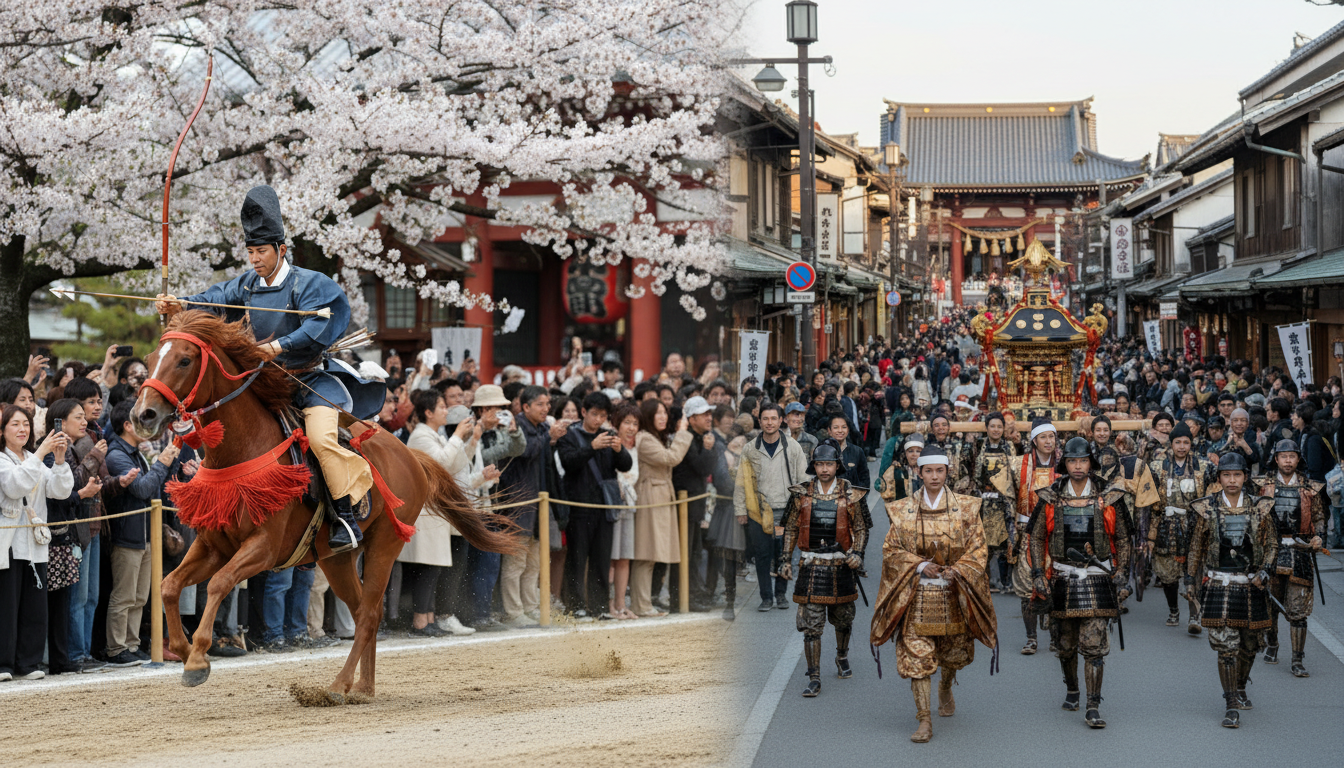
Asakusa yabusame returns to Sumida Park on April 18
Asakusa’s yabusame—mounted archers shooting at wooden targets while galloping—will be staged at Sumida Park on April 18, giving spectators a rare view of a demanding traditional discipline. The display is billed as both a cultural demonstration and a living link to samurai-era equestrian techniques, drawing both local enthusiasts and tourists. Organizers note that viewing areas will vary from free standing zones to reserved seating priced up to ¥4,000, with some vantage points available at no charge.
The event follows strict safety and logistical preparations to accommodate horses, riders and crowds along the riverfront promenade. Security and crowd-management measures will be in place; attendees are advised to arrive early and use public transport to avoid congestion. The yabusame program typically lasts several hours and includes brief ceremonies and explanations that contextualize the ritual for modern audiences.
Kamakura Festival features mikoshi parade and street processions
This week’s Kamakura Festival brings centuries-old shrine processions back to the coastal city, with teams carrying mikoshi through streets lined with spectators. The portable shrines are carried by local associations in a rhythm of chants and coordinated steps that create a powerful communal atmosphere. The festival route takes participants past historic temples and shrines, strengthening ties between Kamakura’s religious institutions and the neighborhoods they serve.
Festival organizers emphasize both tradition and community involvement, with younger residents and long-standing ward groups joining veteran carriers. Food stalls, traditional music ensembles and pop-up crafts markets typically complement the main procession, offering families reasons to linger in the area. Those planning to travel from Tokyo should expect increased rail and road traffic to Kamakura throughout the day.
Earth Day Tokyo events aim to mobilize residents and businesses
Earth Day Tokyo programming this week is focused on practical sustainability, combining public workshops, park cleanups and corporate initiatives to encourage low-carbon lifestyles. Events range from educational booths in public plazas to hands-on recycling demonstrations and bicycle-led neighborhood tours. Several civic groups and private partners are staging collaborative projects that invite residents to test eco-friendly products and learn about waste-reduction strategies.
The city-supported activities are timed to capitalize on spring weather and higher foot traffic in parks, making turnout and participation central goals for organizers. Volunteers are being sought for cleanup operations and information kiosks; interested participants should check individual event bulletins for registration details and meeting points. Event coordinators have underlined the inclusive nature of the program, welcoming families, school groups and workers seeking evening events.
Flower and seasonal festivals brighten parks and neighborhoods
Spring flower festivals across Tokyo will continue to celebrate cherry blossoms and later-blooming varieties at parks and shrine precincts through the week. Local wards are hosting guided walks and floral displays that emphasize both horticultural interest and photographic opportunities. Lesser-known flower events highlight azaleas, wisteria and early iris beds, offering quieter alternatives to heavily visited cherry-viewing sites.
Many of these smaller festivals operate with free admission, though some botanical gardens and private venues charge modest entry fees for special exhibits. Weekend schedules frequently include short lectures by horticulturists, children’s planting activities and artisan booths selling local food and garden supplies. Visitors are encouraged to respect signage and stay on designated paths to protect fragile plantings and ongoing restoration work.
Traditional music and cultural performances scheduled across the city
This week’s cultural lineup includes performances of gagaku, koto recitals and chamber ensembles presenting both classical and contemporary repertoire. Venues range from shrine stages to municipal halls and community centers, creating multiple opportunities to hear traditional music in intimate settings. Organizers often pair performances with short talks or demonstrations that explain the instruments and historical context for audiences unfamiliar with the forms.
Ticketed concerts are generally affordably priced and some institutions are offering free or donation-based entry to encourage wider attendance. Several programs are specifically designed for families, featuring interactive segments that introduce children to rhythm and melody. Audience members should consult event schedules for start times and potential language accessibility services, such as English program notes.
Accessibility, travel and practical advice for attendees
Public transport is the recommended way to reach most events this week, as special festivals tend to increase private vehicle traffic and reduce parking availability. Major rail lines connecting central Tokyo with Asakusa and Kamakura will operate as usual, but passengers should expect crowding on event days, particularly late mornings and early evenings. Event organizers advise purchasing reserve seats for shows where available and arriving at outdoor sites well before peak times.
Weather in mid-April can shift rapidly, so attendees should bring a lightweight rain jacket and layered clothing for both cool mornings and warmer afternoons. Many festival sites will provide guidance stations and first-aid points, but visitors with specific medical needs should carry required medications and a written note in English and Japanese if possible. Cash remains useful for small food stalls and admission fees, though larger venues increasingly accept electronic payment.
This week’s program offers residents and visitors a compact overview of Tokyo’s cultural calendar as the city moves from cherry-blossom season toward late spring activities. The combination of spectacle—such as mounted archery and mikoshi processions—and community-focused programming around Earth Day makes the week a balanced mix of heritage and civic engagement. For anyone planning to attend multiple events, mapping routes in advance and noting train service times will help maximize the experience.
Practical ticketing and registration notes are important for popular performances and workshops. While many displays and processions offer free viewing, seated areas or guided components sometimes require advance booking to manage limited capacity. Event organizers typically publish final details and any day-of changes through official bulletins and local ward offices; prospective attendees should confirm arrangements the day before travel.
Local businesses and charities frequently partner with festivals to provide food, drink and fundraising opportunities during this week. Several events include charity runs, donation drives and volunteer-led marketplaces that allocate proceeds to community projects. Attendees wishing to contribute are encouraged to check the beneficiary information at each site and to use official donation points to ensure transparency.
Safety measures at larger gatherings will include basic bag checks and a visible staff presence to assist with lost items or directions. Organizers aim to maintain a welcoming atmosphere while ensuring public safety, and clear signage is generally posted to guide spectators to viewing zones and restroom facilities. Those traveling with strollers or mobility aids should look for designated routes and accessible viewing areas to avoid narrow procession stretches.
Family-friendly programming across the city includes interactive craft corners, children’s music workshops and short guided nature walks in park areas. These events are often timed to fit school schedules, with many running during weekend afternoons and early evenings. Parents should verify age recommendations for hands-on activities and bring sun protection and snacks for younger children in outdoor settings.
For international visitors, many event volunteers and staff provide basic English assistance, but translation services vary by site. Printed English-language guides are becoming more common at major festivals, and some shrine and temple precincts offer multilingual pamphlets explaining ritual practices. Travelers relying on smartphone maps or train apps will find them helpful for navigation between venues and for locating nearby amenities.
Community response to this week’s events reflects a desire to blend cultural preservation with contemporary concerns, particularly around environmental stewardship. Earth Day activities that pair educational content with actionable steps underscore a municipal push to engage citizens in sustainable habits. Simultaneously, the persistence of traditional ceremonies such as yabusame and mikoshi processions demonstrates ongoing local investment in cultural continuity.
Photographers and cultural journalists should be mindful of etiquette when photographing procession participants and sacred rites. Many festival organizers request that photographers avoid entering cordoned areas and that they ask permission when photographing performers up close. Drones are typically restricted at shrine precincts and crowded riverfronts; users should assume that aerial photography is prohibited unless explicit permission is given.
Small-scale markets and food stalls accompanying the festivals often highlight regional specialties, giving visitors a chance to sample seasonal street food and craft items. These vendors provide a tangible link between urban celebrations and rural producers, and many festivalgoers treat the culinary element as a major part of the outing. Cash payment remains common for smaller stalls, so carrying small bills is advisable.
Finally, residents and visitors alike can use this week as an opportunity to engage with community organizations and local government initiatives. Volunteer sign-ups, neighborhood cleanup crews and public feedback booths are part of several event schedules, offering ways to contribute beyond attendance. Participating in these activities can deepen understanding of local priorities and build connections that extend past the festival weekend.
Whether watching mounted archers at Sumida Park, joining the crowd in Kamakura for mikoshi parades, or taking part in Earth Day workshops, this week’s program of Tokyo events offers varied ways to experience the city’s cultural pulse and civic energy.

