
Yokai Immersive Experience Exhibition Brings Yōkai to Life in Tokyo
Tokyo’s Yokai Immersive Experience Exhibition at Warehouse Terrada uses modern tech to bring yōkai, oni and tsukumogami to life — open through June 28, 2026.
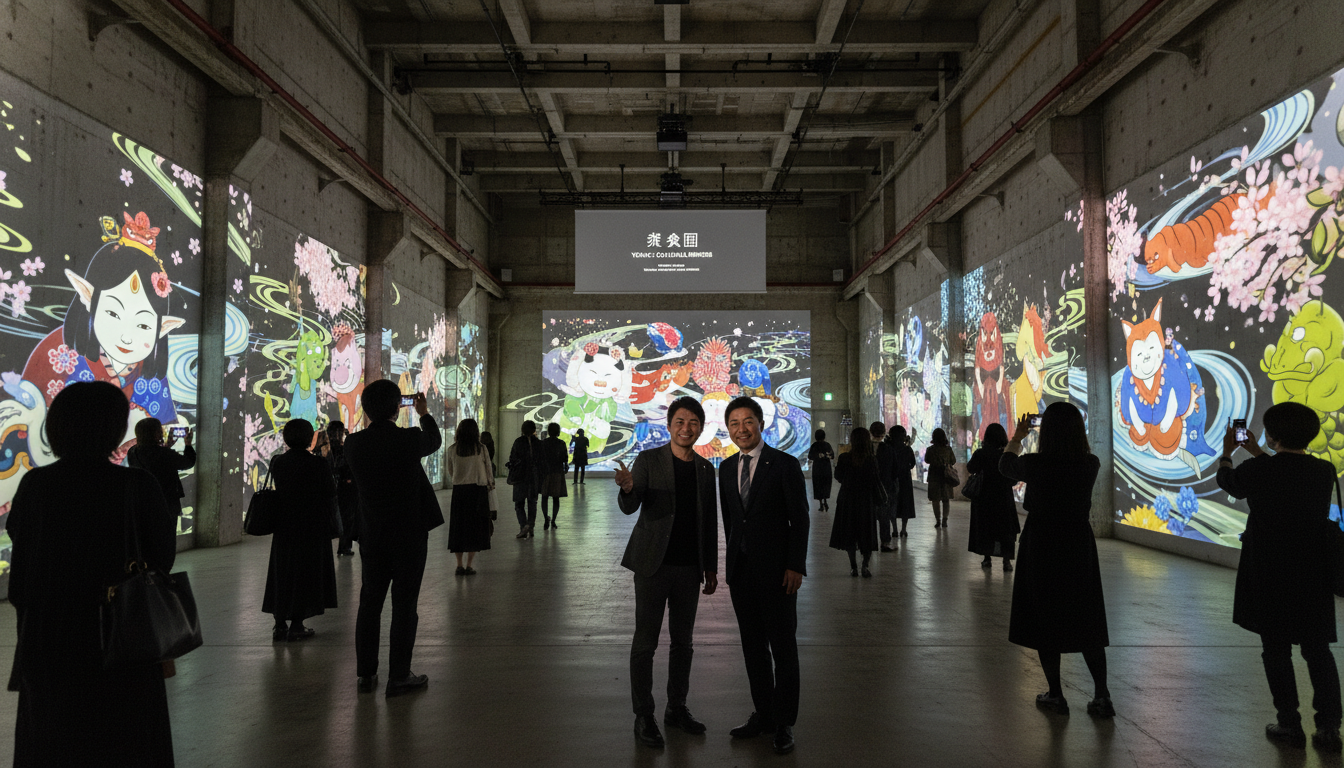
The Yokai Immersive Experience Exhibition opened in Tokyo with a central room titled “Birthplace of Yokai” where a restless cast of yōkai, oni and tsukumogami appear to frolic across the walls. The show, running at Warehouse Terrada’s G1 Building in Shinagawa Ward, frames these supernatural figures as living cultural expressions rather than mere relics of superstition.
Organizers describe the exhibition as an effort to connect traditional folklore with contemporary audiences by using modern visual and sensory techniques. The presentation emphasizes that yōkai emerged historically as a way for communities to give names and forms to what they could not explain, turning fear and curiosity into narrative and art.
Exhibition Details and Schedule
The exhibition is on view at Warehouse Terrada’s G1 Building in Shinagawa Ward and runs through June 28, 2026. It occupies multiple rooms, including the prominently featured “Birthplace of Yokai,” and presents a range of creatures from mischievous household spirits to fearsome ogres.
Curators have arranged displays to move visitors through a sequence of scenes that blend historical reference with contemporary interpretation. The layout is intended to encourage both close looking at craft and a broader reflection on how folklore adapts over time.
Design and Technology Integration
The show pairs handcrafted sets and traditional imagery with digital effects and spatial design to animate the creatures in situ. Lighting, projection and synchronized audio are used to create movement and atmosphere that draw the folklore figures out of static representation and into a staged, immersive environment.
This fusion of techniques aims to make the supernatural feel immediate without erasing the materiality of the original art forms. By combining physical artifacts and new media, the exhibition explores how technology can extend the storytelling capacity of folklore.
Historical Context and Cultural Roots
The curatorial narrative situates yōkai, oni and tsukumogami within longstanding Japanese practices of storytelling and personification. Historically, these figures functioned as explanations for unexplained events and as moral or cautionary tales embedded in everyday life.
Tsukumogami—objects said to gain spirit after years of use—are presented alongside anthropomorphic monsters to underscore a distinctive cultural tendency to infuse the ordinary with agency. The show highlights how those imaginative devices reflect social anxieties and communal values across different periods.
Curatorial Narrative and Interpretation
Rather than presenting creatures as supernatural threats, the exhibition frames them as mirrors of human concerns and creativity across generations. Interpretive panels and staged sequences emphasize continuity: fears and wonders once expressed through folklore are now reinterpreted through art and technology.
Curators aim to prompt visitors to consider the processes by which communities name the unknown and negotiate change. The presentation encourages viewing yōkai as part of an ongoing cultural conversation rather than a closed archive.
Visitor Experience and Public Engagement
The exhibition is designed for a wide audience, including families, students of culture and visitors with an interest in contemporary art. The sensory approach—combining visual spectacle with contextual information—seeks to appeal to both casual viewers and those looking for deeper historical background.
By placing familiar creatures in immersive contexts, the show invites visitors to reflect on the role of folklore in modern urban life. It also offers a platform for renewed dialogue about how traditional narratives are adapted and preserved in contemporary practice.
Significance for Contemporary Art and Heritage
The Yokai Immersive Experience Exhibition underscores a broader trend in which cultural heritage is mediated through new technologies to reach diverse audiences. The blending of craft, narrative and technology presents a model for how museums and galleries can reinterpret intangible cultural elements for present-day contexts.
The exhibition’s approach points to the potential of immersive design to revitalize interest in folklore and to position traditional motifs within current conversations about identity, memory and creativity.
As the show continues through June 28, 2026, visitors have an extended opportunity to see how yōkai and related figures are being reimagined at the intersection of art, history and technology. The exhibition offers a compelling case study in how old stories can be retold for new generations while preserving their role as tools for making sense of the unknown.

