
Sanriku earthquake off Aomori: JMA revises magnitude to M7.7 after strong shaking
A powerful Sanriku earthquake struck off the coast of northeastern Japan on April 20, 2026, at 4:52 p.m. JST, producing strong shaking in Aomori and prompting updated assessments from the Japan Meteorological Agency. The JMA has revised the quake’s magnitude to M7.7 and its focal depth to 19 km after detailed analysis, and continues monitoring for aftershocks and related hazards.
Initial event and local intensity
The earthquake occurred on April 20, 2026, with the Japan Meteorological Agency registering the origin time as 4:52 p.m. Japan Standard Time. Seismic intensity of shindo 5-strong was observed in parts of Aomori Prefecture, indicating strong shaking that may have caused unsecured items to fall and made standing difficult for some residents.
The epicenter was located offshore in the Sanriku area, with the JMA estimating an initial depth and magnitude based on early waveform data. Local monitoring stations and seismic networks relayed rapid measurements that allowed authorities to issue preliminary information within minutes of the event.
JMA updates magnitude, depth and origin time
Following a detailed review of seismic records, the JMA adjusted the earthquake’s magnitude upward from an initial estimate of M7.5 to M7.7. The agency also corrected the focal depth from 10 km to 19 km and revised the origin time from 4:53 p.m. to 4:52 p.m. JST after cross-checking sensor data.
The JMA explained that these revisions were made after more complete waveform data became available and further computational analysis reduced uncertainty in the initial parameters. Such iterative updates are standard practice as agencies refine earthquake parameters using denser datasets and improved processing.
Observed effects and regional monitoring
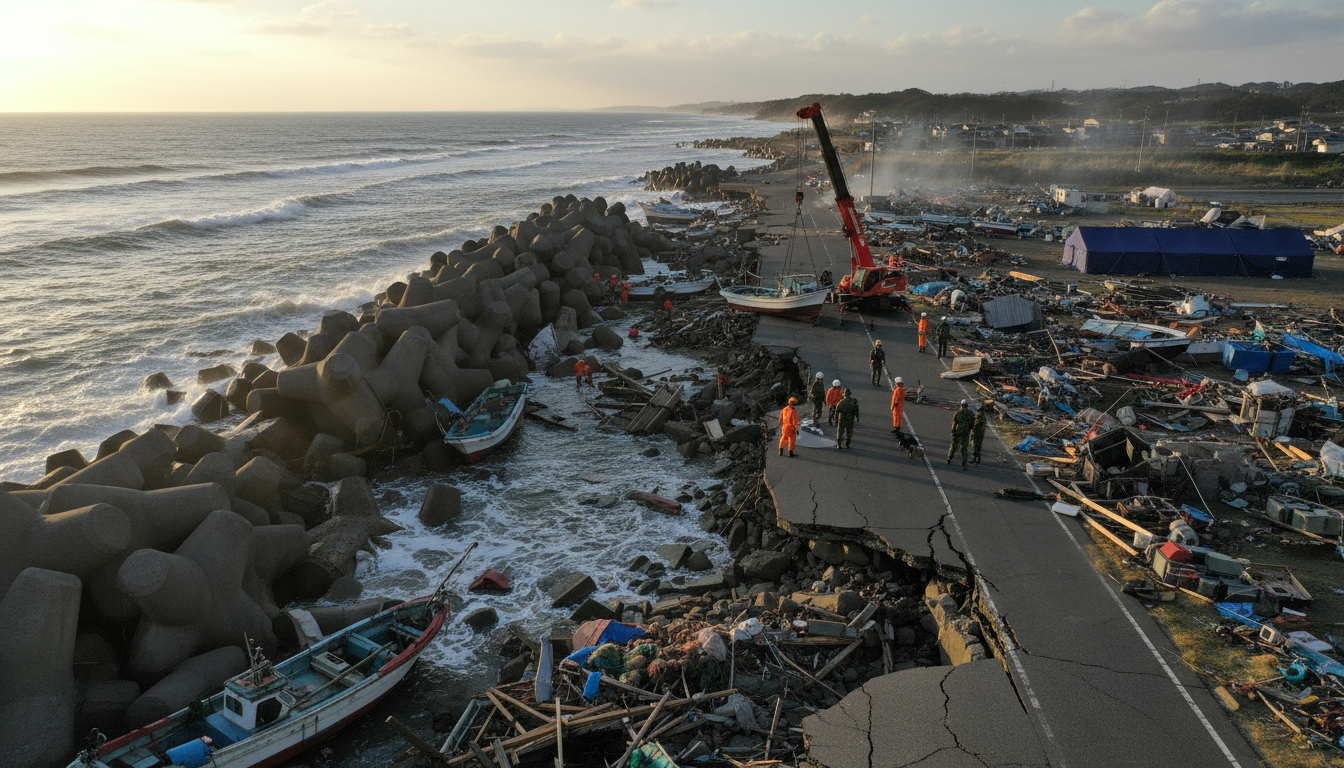
Reports from Aomori indicated significant ground motion consistent with a shindo 5-strong reading, though comprehensive damage assessments remain ongoing. Local utility companies and municipal offices began rapid inspections of critical infrastructure, and transportation operators implemented safety checks on rail and road systems in affected zones.
Regional monitoring centers continued to analyze seismic records from surrounding prefectures to determine the extent of shaking and any secondary impacts. Emergency communication channels were activated to relay safety guidance to residents while authorities collected field reports to inform response priorities.
Seismological context and aftershock outlook
Earthquakes of this magnitude commonly produce aftershock sequences that can persist for days to weeks, and the JMA emphasized the likelihood of continuing seismic activity in the region. Aftershocks may produce additional strong shaking locally, particularly near the rupture zone, and residents were urged to remain vigilant and prepared for further events.
Seismologists note that focal depth and rupture characteristics influence the distribution of shaking and potential damage, and the updated depth of 19 km will factor into ongoing assessments of ground motion patterns. Monitoring institutions are conducting real-time analyses to refine forecasts of aftershock probability and intensity distribution.
Response by local authorities and public guidance
Prefectural and municipal emergency services mobilized to coordinate inspections and assist affected communities following the initial measurements. Officials advised residents to check for hazards such as gas leaks, structural damage, and landslide risk in vulnerable areas while reporting urgent needs through established local hotlines.
Public information channels urged people to secure their immediate surroundings, avoid using elevators, and follow instructions from local authorities. Emergency shelters and support centers were placed on standby where needed, and transport operators continued condition checks before resuming full services.
This earthquake event and the subsequent updates from the Japan Meteorological Agency underscore the importance of preparedness and rapid information sharing during strong seismic events. Residents in Aomori and along the Sanriku coast are advised to stay informed through official channels as authorities complete damage assessments and issue any necessary safety advisories.

