
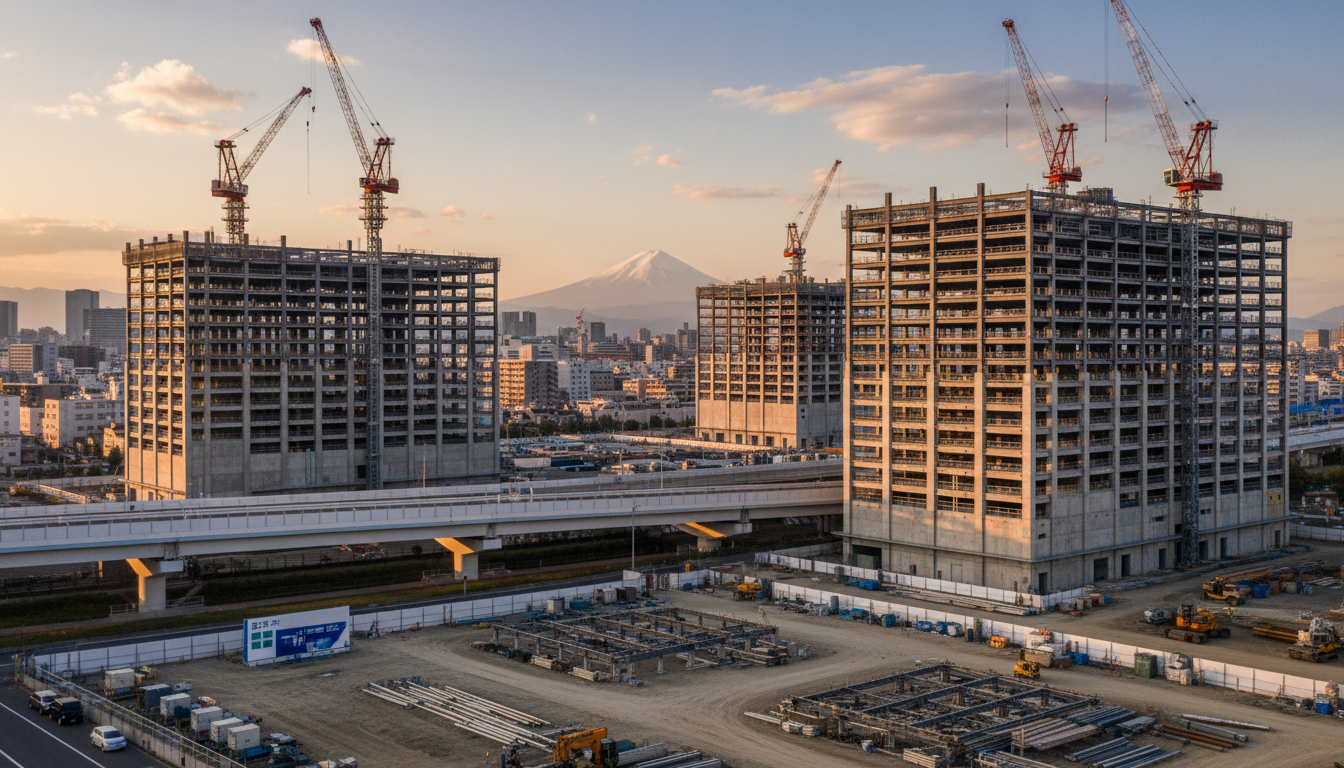
GLP Japan: Tokyo Logistics Hub Costs Projected to Surge Nearly 80%
GLP Japan’s Tokyo logistics hub faces a projected cost surge of roughly 80%, pushing total investment above $8 billion as materials and labor prices climb.
GLP Japan’s planned Tokyo logistics hub is set to see development costs rise about 80% from initial estimates, a move that could lift total investment in the project to more than $8 billion. The increase reflects sharp inflation in construction materials and a tightening labor market, prompting the developer to reassess budgets and timelines for its Tokyo-area Alfalink facility. The planned site, billed as the company’s fifth location under the Alfalink brand, now faces renewed scrutiny from investors, tenants and local planners.
Costs projected to climb 80% for Tokyo logistics hub
The developer reports that earlier cost assumptions no longer hold as input prices and on-site labor expenses have jumped, leaving the Tokyo logistics hub vulnerable to a steep escalation in capital requirements. This recalibration translates into a near doubling of some line-item budgets, affecting foundation work, structural steel, and interior fit-outs that are vital for modern logistics operations. GLP Japan’s reassessment suggests that the original financial model will require substantial revision before construction proceeds at the scale initially planned.
Materials and labor cited as primary drivers
Sources close to the project say increases in steel, concrete and other key building materials have been the largest single factor in the revised estimate, while extended procurement lead times have added cost through expedited shipping and storage. At the same time, a tight construction labor market in the Tokyo metropolitan region has pushed wage rates higher and limited contractor flexibility, forcing developers to factor in premium labor costs and higher contingency allowances. Together, these pressures have altered unit costs across the development schedule, from site preparation to the high-bay racking and automated handling systems that logistics clients demand.
Budget now expected to top $8 billion
Preliminary calculations now put the total investment for the Tokyo logistics hub above $8 billion, an amount that would mark one of the larger single-site logistics commitments in the region in recent years. Such an increase has direct implications for financing structures, potentially shifting the mix of equity and debt or prompting the pursuit of long-term leasing commitments from major tenants prior to breaking ground. Lenders and institutional investors will likely seek more detailed cost breakdowns and additional risk-mitigation measures before approving the larger exposure implied by the revised budget.
Alfalink expansion: fifth Tokyo-area site altered by the revision
The project is set to be the fifth GLP Japan site branded under Alfalink, the company’s logistics property platform, which aims to offer modern warehouse technology and proximity to distribution corridors. The increased cost forecast raises questions about the pace of the Alfalink rollout in Greater Tokyo and whether future sites will be delayed, scaled back or subject to design changes to control spending. GLP Japan will need to balance maintaining the Alfalink product standards against the financial realities of construction inflation to preserve the brand’s value proposition to occupiers.
Investor and tenant implications for the logistics market
A significant cost overrun at a major Tokyo logistics hub can prompt broader market reactions, including renegotiation of pre-lease terms and recalibration of rental growth expectations for high-spec warehouses. Institutional investors may demand higher yields to compensate for elevated development risk, while logistics operators could seek longer-term, inflation-protected lease agreements to stabilize occupancy costs. If developers pass a portion of the increased cost onto tenants through higher rents, this could feed into wider supply-chain cost pressures for retailers and third-party logistics firms operating in the Tokyo market.
Local planning and construction timeline under review
With the budget revision underway, GLP Japan and its contractors are likely to revisit project scheduling, regulatory milestones and construction procurement strategies to contain additional delays. Authorities responsible for zoning, environmental permits and safety inspections will be watching adjustments to the timeline, and any extension could intersect with labor availability windows and seasonal considerations that affect buildability. The developer may explore staged construction, alternative materials, or modular components to reduce on-site time and blunt further cost escalation while still meeting the technical requirements of a modern distribution hub.
GLP Japan now faces a complex set of choices as it seeks to reconcile ambitious logistics capacity expansion in the Tokyo region with the realities of elevated construction costs and market expectations. The outcome will shape not only the fate of this Alfalink site but also investor confidence and development strategies across Japan’s logistics sector in the months ahead.

