
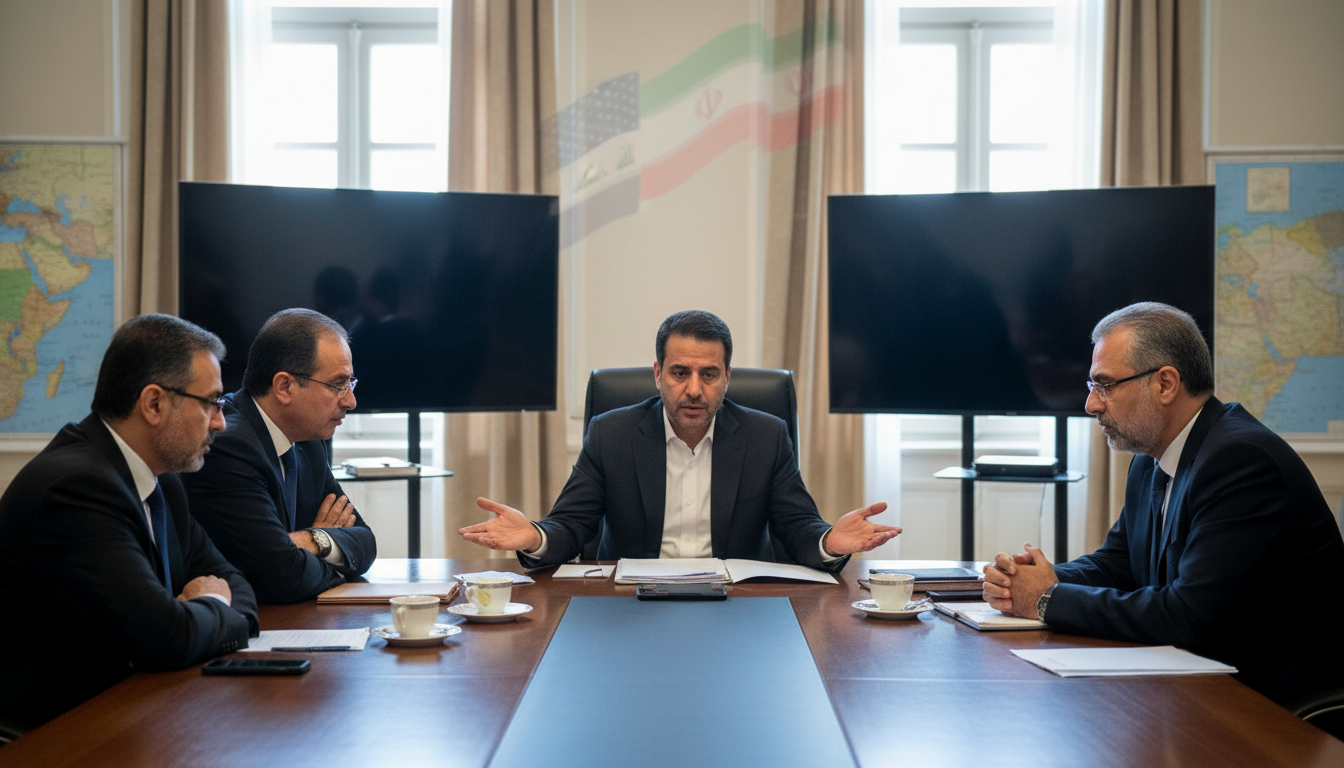
Iraq’s Coordination Framework Deadlock Threatens April 26 Prime Ministerial Nomination
Iraqi Coordination Framework faces April 26, 2026 deadline to nominate a prime minister amid internal splits, Iranian intervention and US warnings that could reshape Baghdad’s next government.
Iraq’s largest Shia parliamentary bloc, the Coordination Framework, remains deadlocked more than five months after national elections over who should be nominated as prime minister. The stalemate, tied to competing bids from incumbent Mohammed Shia al-Sudani and figures aligned with former premier Nouri al-Maliki, has placed the bloc under pressure to meet a constitutional deadline of April 26, 2026. The impasse comes as Baghdad navigates intense external pressures from both Washington and Tehran while everyday economic strains deepen across the country.
Framework faces constitutional deadline on April 26, 2026
The Coordination Framework controls roughly 185 of 329 parliamentary seats but has not agreed on a single candidate to present as prime minister. Under Iraq’s constitution, the largest bloc must be tasked with forming a government within 15 days of the president’s appointment, making the April 26 deadline critical after Nizar Amedi’s presidential confirmation on April 11, 2026. Failure to nominate a candidate by that date would prolong the caretaker status of state institutions and heighten political uncertainty.
The decision is complicated by rivalries within the Shia camp, where al-Sudani’s Reconstruction and Development Coalition and al-Maliki’s State of Law remain influential. A compromise candidate, Bassem al-Badri, has emerged inside the bloc but has not yet secured the two-thirds backing required by the Framework’s internal rules.
Iran’s Quds Force envoy sought to break the impasse
Several sources say Ismail Qaani, commander of Iran’s Quds Force, made a recent unannounced trip to Baghdad in an effort to resolve leadership tensions within the Coordination Framework. The visit reportedly followed a request from caretaker Prime Minister al-Sudani and involved meetings with senior militia and political figures, reflecting Tehran’s active engagement in Iraq’s political process.
Iran’s involvement underscores the broader regional stakes, as Baghdad has become a site for influence competition between Tehran and Washington. Iranian-aligned armed factions—some integrated within the Popular Mobilisation Forces—retain close ties to Tehran and have shaped political calculations inside the Framework.
United States reiterates opposition to a Maliki return
Washington has publicly opposed any return to power for Nouri al-Maliki, arguing his leadership would strengthen Iranian influence and undermine US interests in Iraq. US officials have warned of potential consequences, including curtailing forms of support, if al-Maliki were to assume the premiership again.
Those warnings have intensified internal bargaining because Iraqi leaders must weigh international reactions alongside domestic alliances. The US position is a decisive factor for many politicians who fear the economic and diplomatic fallout of a government perceived as firmly aligned with Tehran.
Candidates and internal arithmetic within the Framework
Al-Badri, the head of the Accountability and Justice Commission, currently appears as a compromise option because he is seen as less able to dominate state institutions than either al-Sudani or al-Maliki. He has backing from a majority of Framework leaders but has fallen short of the eight-leader threshold needed under internal bloc rules.
The parliamentary arithmetic is further complicated by other influential figures such as Qais al-Khazali and leaders of smaller Shia blocs who demand guarantees on security and economic policies. These internal bargains are magnified by external pressure, leaving little room for unilateral decisions.
Security incidents and militia influence shape government choices
Recent attacks on US interests inside Iraq and broader hostilities linked to the US-Israel conflict with Iran have altered the security environment and intensified scrutiny of armed groups. The Popular Mobilisation Forces and their political leadership remain key power brokers whose posture toward Washington and Tehran factors into candidate selection.
Designations and sanctions aimed at militia commanders have signalled that outside actors may continue to target Iran-aligned factions independently of Baghdad’s political timeline. That dynamic raises the risk that security developments will be used as leverage in the formation process.
Economic strain heightens urgency for a functioning government
Iraq’s economy is heavily oil-dependent and has been strained by falling exports and mounting debt, making the formation of a fully empowered government urgent for budgetary and contract ratifications. New customs tariffs and restored taxes in 2026 have already pushed import costs higher and prompted nationwide trader strikes earlier this year.
Without a confirmed cabinet, large commercial deals—such as energy contracts signed under the caretaker administration—cannot be fully ratified, and public salary payments and reform programs risk disruption. Ordinary Iraqis face rising prices and uncertainty while political actors remain locked in negotiations.
The Coordination Framework’s leaders must weigh partisan advantage, external pressure from Tehran and Washington, and the growing public demand for stability as they try to deliver a nominee before April 26, 2026. If the bloc cannot coalesce around a candidate in time, Iraq will likely endure a further period of caretaker governance with mounting economic and security consequences.

